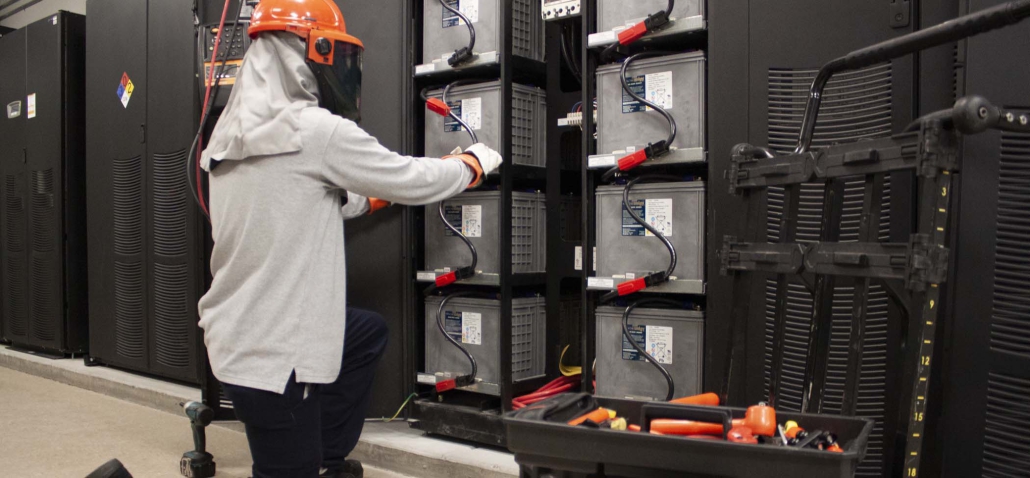
The Complete Guide to Uninterruptible Power Supply Applications in Business
Power interruptions are more than an inconvenience for modern businesses—they can result in lost revenue, corrupted data, damaged equipment, interrupted production, and even risks to human safety. As organizations become increasingly dependent on digital infrastructure and automated operations, ensuring continuous power has become a critical part of business continuity planning.
An Uninterruptible Power Supply (UPS) provides immediate backup power whenever utility electricity becomes unstable or fails completely. From enterprise data centers and hospitals to manufacturing facilities and telecommunications networks, UPS systems keep critical equipment running until generators start or normal utility service is restored.
This guide explains the most common uninterruptible power supply applications, compares UPS topologies, and explores why lithium battery technology is rapidly becoming the preferred solution for modern business power protection.
The Quick Answer
An Uninterruptible Power Supply (UPS) is an electrical apparatus that provides emergency power to connected equipment when the primary utility source fails. The most important uninterruptible power supply applications include protecting data centers, telecommunications infrastructure, healthcare equipment, and industrial automation systems from downtime, data loss, and hardware damage by using internal battery energy storage to bridge the gap between utility failure and backup generator startup.
What Is an Uninterruptible Power Supply (UPS)?
A UPS is designed to provide continuous electrical power during disturbances such as:
- Complete power outages
- Voltage sags
- Brownouts
- Power surges
- Frequency fluctuations
- Electrical noise
Unlike standby generators, which require several seconds to start and synchronize, a UPS supplies electricity instantly from its internal battery system.
For mission-critical environments, even a few milliseconds without power can result in:
- Server crashes
- Corrupted databases
- Interrupted manufacturing processes
- Medical equipment shutdown
- Telecommunications failures
A properly designed UPS eliminates these risks by maintaining uninterrupted power until utility service returns or standby generators assume the load.
Understanding UPS Topologies: Which Is Right for Your Application?
Different business applications require different levels of power protection. Selecting the correct UPS topology depends on the sensitivity of the connected equipment, acceptable downtime, and power quality requirements.
| UPS Topology | Transfer Time | Waveform Output | Best Business Application |
| Offline (Standby) | 4 – 8 ms | Simulated Sine Wave | Desktop computers, edge routers, basic office IT. |
| Line-Interactive | 2 – 4 ms | Pure or Simulated | Small business server racks, telecom closets. |
| Online (Double-Conversion) | 0 ms (Zero transfer) | Pure Sine Wave | Mission-critical data centers, ICU medical gear, industrial automation. |
Offline (Standby) UPS
Offline UPS systems provide basic protection for non-critical equipment. Under normal operation, connected devices receive power directly from the utility. If an outage occurs, the UPS switches to battery power within a few milliseconds.
These systems are cost-effective for office workstations and peripheral equipment but are generally unsuitable for applications requiring continuous power quality.
Line-Interactive UPS
Line-interactive systems add automatic voltage regulation (AVR), allowing them to compensate for minor voltage fluctuations without switching to battery power.
They are commonly deployed in:
- Small server rooms
- Network communication cabinets
- Branch offices
- Telecommunications equipment
This topology provides a good balance between performance and cost for many commercial applications.
Online (Double-Conversion) UPS
Online UPS systems continuously convert incoming AC power into DC before inverting it back to clean AC output.
Because the inverter continuously powers the load, there is zero transfer time during utility failures.
Double-conversion UPS systems also eliminate:
- Voltage sags
- Frequency fluctuations
- Harmonic distortion
- Electrical noise
They represent the gold standard for mission-critical business environments.
Core Uninterruptible Power Supply Applications by Industry
Although every organization benefits from backup power, the technical requirements vary significantly between industries.
Data Centers
Modern data centers rely on high-density computing infrastructure where even a brief interruption can affect thousands of users and critical business operations.
Today’s enterprise facilities increasingly deploy three-phase online double-conversion UPS systems paired with lithium battery cabinets to support:
- High-density AI clusters
- Cloud computing platforms
- Enterprise servers
- Storage arrays
- Network infrastructure
These systems provide seamless ride-through power until standby generators synchronize, preventing catastrophic data loss and unplanned downtime.
Healthcare
Hospitals depend on continuous power to protect both equipment and patient safety.
Medical-grade UPS systems commonly support:
- MRI scanners
- CT imaging equipment
- Patient monitoring systems
- Surgical equipment
- Ventilators
- Laboratory instruments
Many healthcare applications require compliance with standards such as UL 60601-1, ensuring medical electrical equipment remains safe and operational during power disturbances.
For these environments, power quality is just as important as backup duration.
Industrial Manufacturing
Factory automation increasingly relies on Programmable Logic Controllers (PLCs), robotics, vision systems, and industrial computers.
Power disturbances can interrupt production, damage equipment, or ruin entire manufacturing batches.
Industrial UPS systems help protect:
- PLC controllers
- CNC machines
- Automated assembly lines
- Robotics
- Process control systems
- Quality inspection equipment
By maintaining stable voltage during power anomalies, UPS systems reduce costly downtime and improve manufacturing reliability.
Telecommunications
Telecommunications infrastructure must operate continuously to maintain voice, internet, and data services.
UPS systems commonly protect:
- Cellular base stations
- Core network equipment
- Fiber optic transmission systems
- Edge computing facilities
- Network operation centers (NOCs)
Reliable battery backup helps maintain uninterrupted communications during utility outages and severe weather events.
Sizing Your UPS Application: VA vs. Watts
One of the most common mistakes when selecting a UPS is confusing Volt-Amperes (VA) with Watts (W).
UPS manufacturers typically rate equipment using VA because the UPS must supply both real power and reactive power.
However, most electrical equipment specifies power consumption in Watts.
The relationship is straightforward:
Watts = VA × Power Factor (PF)
For example:
- 1,000 VA UPS × 0.9 PF = 900 Watts
When sizing a UPS:
- Calculate the total wattage of all connected equipment.
- Divide by the expected power factor.
- Add approximately 20–30% capacity for future expansion.
Selecting the proper capacity improves battery runtime, reduces stress on the UPS, and allows for future equipment growth.
The Role of Lithium in Modern UPS Applications
For decades, Valve-Regulated Lead-Acid (VRLA) batteries dominated UPS installations. While still widely used, lithium technology has become the preferred choice for many modern business applications.
Longer Service Life
Lithium Iron Phosphate (LiFePO₄) batteries typically deliver three times the service life of traditional VRLA batteries.
This significantly reduces replacement frequency, maintenance costs, and operational disruptions over the life of the UPS.
Smaller Footprint
Lithium battery systems can reduce battery cabinet footprint by up to 50% compared with equivalent lead-acid installations.
For data centers where every square meter has revenue-generating potential, this additional space can accommodate more IT equipment instead of battery rooms.
Reduced Weight
Lithium batteries are substantially lighter than VRLA systems, making transportation, installation, and structural loading easier—particularly in multi-story commercial buildings.
Higher Temperature Tolerance
Lead-acid batteries degrade rapidly in elevated temperatures.
Lithium batteries tolerate significantly higher operating temperatures while maintaining performance and lifespan.
As a result, businesses can reduce HVAC cooling requirements in server rooms and electrical spaces, improving overall energy efficiency.
Lower Total Cost of Ownership
Although lithium batteries typically require a higher initial investment, they often deliver lower lifecycle costs through:
- Longer lifespan
- Fewer battery replacements
- Lower maintenance
- Reduced cooling expenses
- Smaller installation footprint
- Improved operational reliability
For organizations planning infrastructure investments over ten years or longer, lithium frequently provides the lowest Total Cost of Ownership (TCO).
Summary and Further Resources
Choosing the right uninterruptible power supply for business depends on understanding your operational requirements, equipment sensitivity, and future growth plans. While small offices may only require line-interactive protection, mission-critical environments such as hospitals, industrial facilities, and enterprise data centers demand online double-conversion UPS systems capable of delivering clean, uninterrupted power under all operating conditions.
As businesses continue adopting AI infrastructure, automation, and edge computing, lithium battery technology is becoming the preferred foundation for modern UPS architecture due to its longer lifespan, smaller footprint, and superior operational efficiency.
For a deeper understanding of enterprise backup power solutions, continue exploring these resources:
- Data Center Power Solutions: UPS Systems and the Lithium Architecture
- What Is a Battery Energy Storage System (BESS)? A Guide to Utility-Scale Architecture
- Choosing the Right Lithium UPS Battery for Critical Infrastructure
- Understanding Data Center Battery Backup Systems
Conclusion
The range of uninterruptible power supply applications continues to expand as organizations become increasingly dependent on uninterrupted electrical power. From safeguarding AI-powered data centers and hospital equipment to maintaining automated manufacturing lines and telecommunications infrastructure, UPS systems form the backbone of business resilience.
Selecting the appropriate UPS topology, properly sizing the system, and adopting modern lithium battery technology can dramatically improve reliability while reducing long-term operating costs.
Whether you’re designing a new facility or upgrading existing infrastructure, investing in the right UPS solution ensures your critical operations remain protected when power interruptions occur.
Need help selecting the right UPS architecture? Contact our power specialists to evaluate your facility’s load profile, runtime requirements, and lithium battery options for a customized backup power solution.