Uninterruptible Power Supply Applications: Where and Why UPS Systems Are Essential
Power interruptions are no longer rare or trivial events. As modern enterprise businesses and critical digital services become increasingly dependent on continuous electronic systems, even a microsecond loss of utility power can result in massive data corruption, severe hardware degradation, catastrophic safety risks, or devastating financial impacts. This is exactly where an uninterruptible power supply application serves as the vital shield for facility operations.
Understanding the specific operational settings where and why a UPS is deployed is the fundamental first step toward engineering a resilient backup power strategy. Different environments place vastly different electrical and physical demands on an energy storage system. Selecting a solution based on your exact facility environment—rather than generic power capacity alone—is the key to ensuring long-term operational continuity.
Crucial Industry Verticals for Uninterruptible Power Supply Deployment
1. Data Centers and Server Rooms
Data centers and server rooms represent the most common and demanding uninterruptible power supply environments. Even a temporary power fluctuation can cause server crashes, break active data transactions, or trigger costly service outages that immediately violate client SLA uptime commitments.
In these mission-critical spaces, UPS systems are deployed to:
- Maintain the absolute continuity of server racks, networking switches, and cooling infrastructure.
- Prevent abrupt system shutdowns that cause severe hardware damage and data loss.
- Provide a reliable 10-to-15 second power bridge to allow centralized standby generators to start up and synchronize.
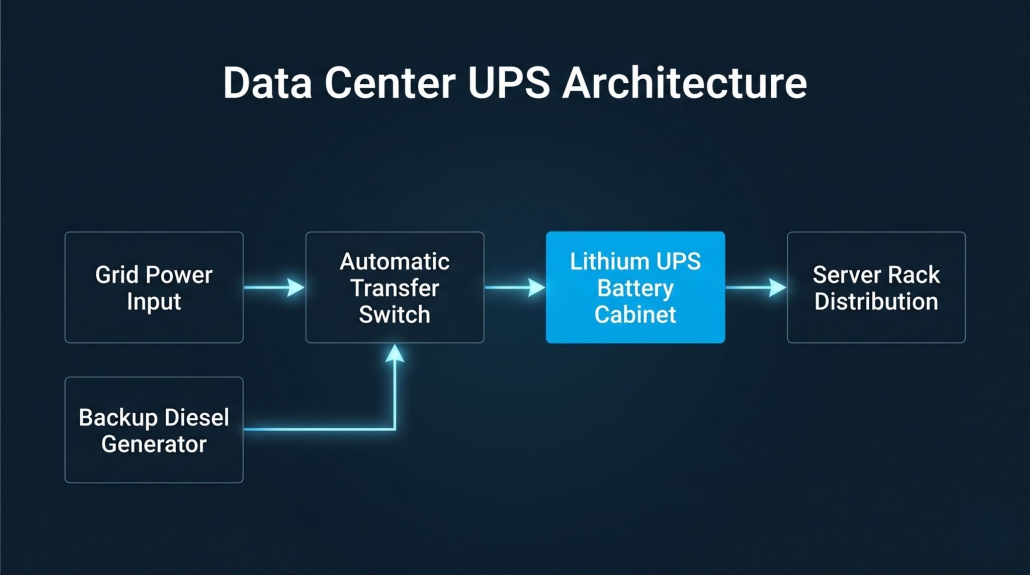
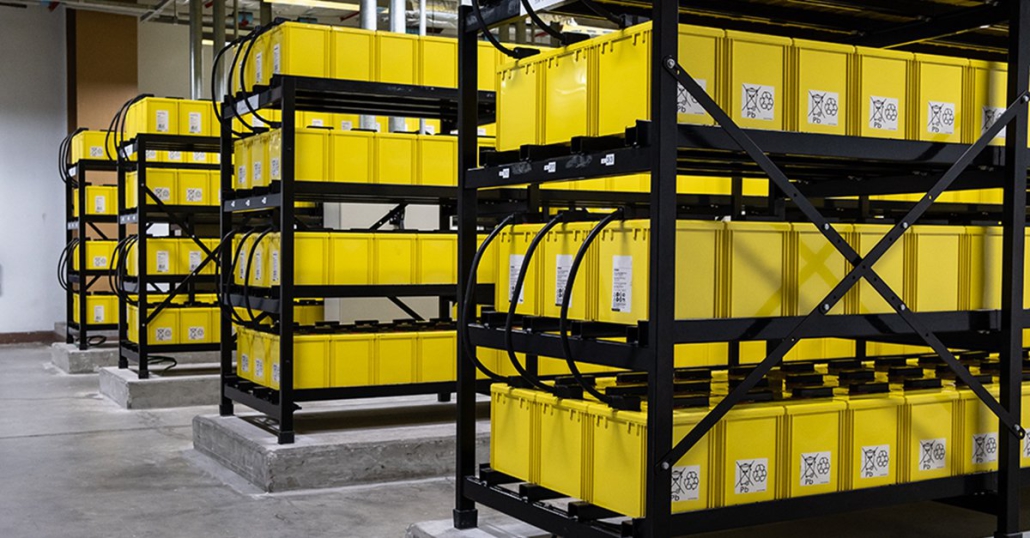
Modern high-density data centers are aggressively replacing heavy lead-acid racks with integrated lithium battery modules to save real estate. To properly evaluate these high-load spaces, read our comprehensive engineering guide on High-Capacity UPS Batteries for Servers to understand how to optimize power density, or follow our technical checklist on How to Calculate & Size a UPS for Your Data Center to balance load demands with lifecycle runtime constraints.
2. Telecommunications Infrastructure
Telecommunications networks rely entirely on continuous power to preserve global connectivity, data routing, and emergency service availability. UPS systems are distributed heavily across remote base stations, core switching facilities, and edge computing enclosures.
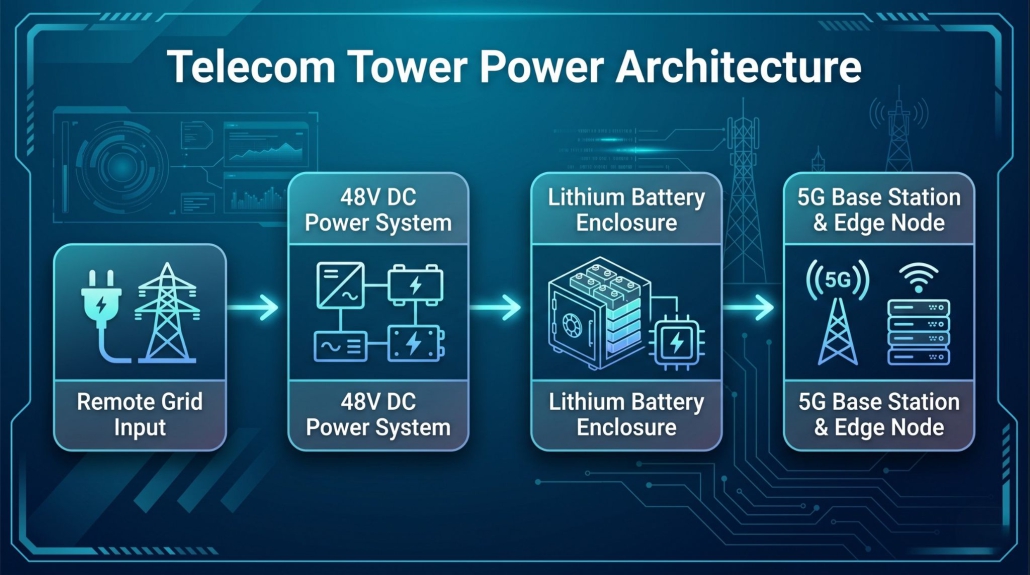
Power failure across a telecom network paralyzes consumer and industrial communications. Consequently, telecom deployments require extended runtime capabilities, minimal routine maintenance overhead, and seamless integration into native 48V DC power architectures.
3. Healthcare and Medical Facilities
In clinical environments, uninterrupted power goes far beyond preserving business data—it directly impacts patient safety and saves lives. Hospitals, outpatient surgical centers, and emergency trauma rooms depend on medical-grade UPS systems to protect:
- Life-support systems and active ventilator units in Intensive Care Units (ICUs).
- Surgical machinery, lighting arrays, and monitoring systems in operating rooms.
- Highly sensitive diagnostic imaging equipment (MRI, CT scanners) prone to calibration loss during voltage dips.
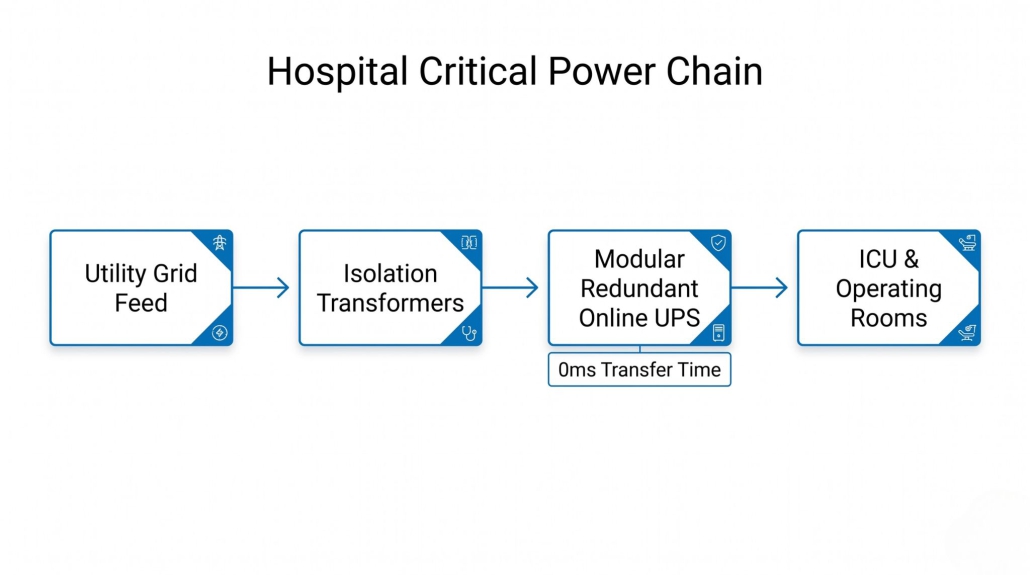
Medical applications demand absolute zero transfer time, extreme component redundancy, and compliance with strict environmental health codes. The use of stable Lithium Iron Phosphate (LFP) chemistry has become the preferred benchmark here because it eliminates toxic gas emissions, ensuring maximum sterility inside hospital infrastructure.
4. Industrial and Manufacturing Environments
Factories and heavy automated processing plants operate under unique, harsh power challenges. In industrial spaces, momentary voltage drops or transient surges are often significantly more damaging than actual complete blackouts.
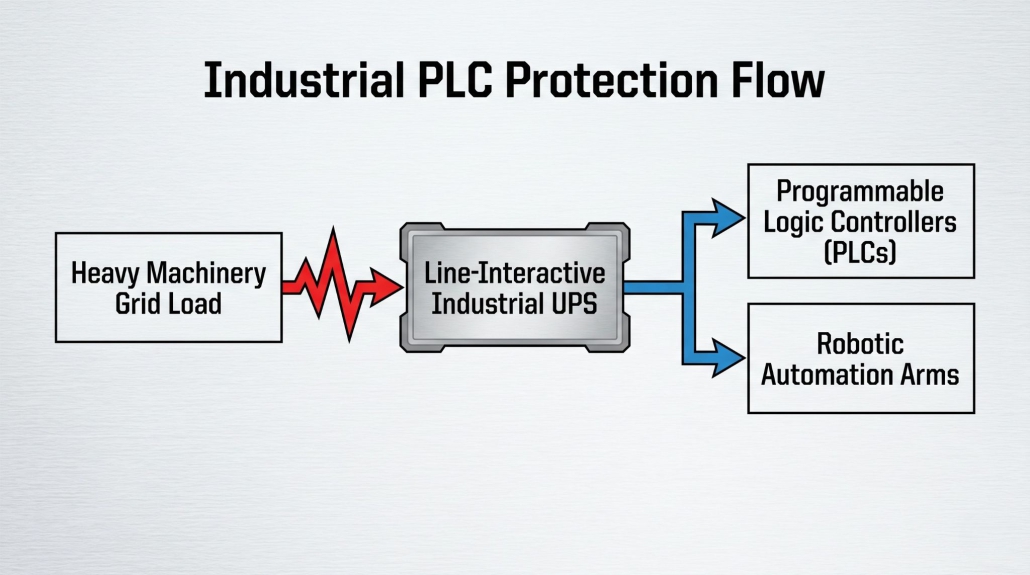
Without a dedicated industrial-grade UPS, minor voltage fluctuations can instantly reset Programmable Logic Controllers (PLCs), desynchronize robotic automation arms, and cause immediate production line stoppages. This results in scrapped materials, hours of line-clearing downtime, and severe equipment misalignments.
For manufacturing facilities looking to back up entire facility grids alongside localized machinery, integrating a larger system presents a massive financial advantage. Learn more about scaling your plant’s energy resilience in our breakdown of commercial storage systems: What Is BESS?
Critical Pitfalls in Modern System Sizing
Despite the high stakes of power protection, many procurement teams continue to make expensive sizing mistakes:
- Sizing Solely by Power Rating:Failing to account for the unique electrical inrush currents of industrial motors or medical imaging machinery.
- Using IT-Grade Hardware in Industrial Spaces:Deploying basic server-room UPS units in hot, dust-heavy factory floors where they quickly overheat and fail.
- Ignoring the TCO of Battery Lifecycles:Buying cheaper batteries with poor cycle lives, leading to frequent, disruptive replacement labor costs every few years.
To protect your facility from over-specifying or buying a system that fails to deliver under real-world pressure, review our cost-benefit analysis: When Is a Lithium UPS Battery Backup Not Worth It?
FAQ: Maximizing Visibility for Commercial Applications
To assist facility planners in running initial system assessments, we have answered the most common industry queries below:
What is the most common UPS application?
The most common and widespread application for commercial UPS systems is protecting data centers, corporate server networks, and enterprise IT infrastructure. Because modern business operations are entirely dependent on digital cloud access, server rooms require continuous protection to prevent hardware failures and catastrophic data losses during grid anomalies.
Can lithium batteries be used in industrial UPS systems?
Yes, Lithium Iron Phosphate (LFP) batteries are highly recommended for industrial UPS applications. Unlike legacy lead-acid systems, which suffer rapid performance degradation when exposed to high operating temperatures, lithium chemistries offer exceptional thermal tolerance, a 10+ year service life, and advanced mechanical vibration resistance on busy factory floors.
How long should a data center UPS run?
In a standardized data center deployment, a UPS is intentionally designed to run for 5 to 15 minutes. The operational goal of a data center UPS is not long-term duration; it is engineered to act as a highly responsive bridge that keeps server racks perfectly stable until the facility’s centralized backup generators can automatically start, stabilize, and pick up the main load.
What UPS is used in hospitals?
Hospitals utilize Double-Conversion Online UPS systems configured with true N+1 or 2N modular redundancy. This specific architecture ensures there is absolute zero transfer time (0 milliseconds) when switching from grid power to battery backup, completely shielding life-support infrastructure and active operating rooms from dangerous power fluctuations.
Conclusion: Build an Application-Driven Architecture
An effective power protection strategy never begins with comparing prices or picking a battery technology out of context. The most resilient facilities start by deeply analyzing the exact environment where the system will live and defining what specific equipment it must defend.
By moving away from generic specifications and adopting an application-driven selection framework, your business will achieve significantly higher system reliability, optimized space savings, a lower long-term total cost of ownership, and flawless operational continuity.