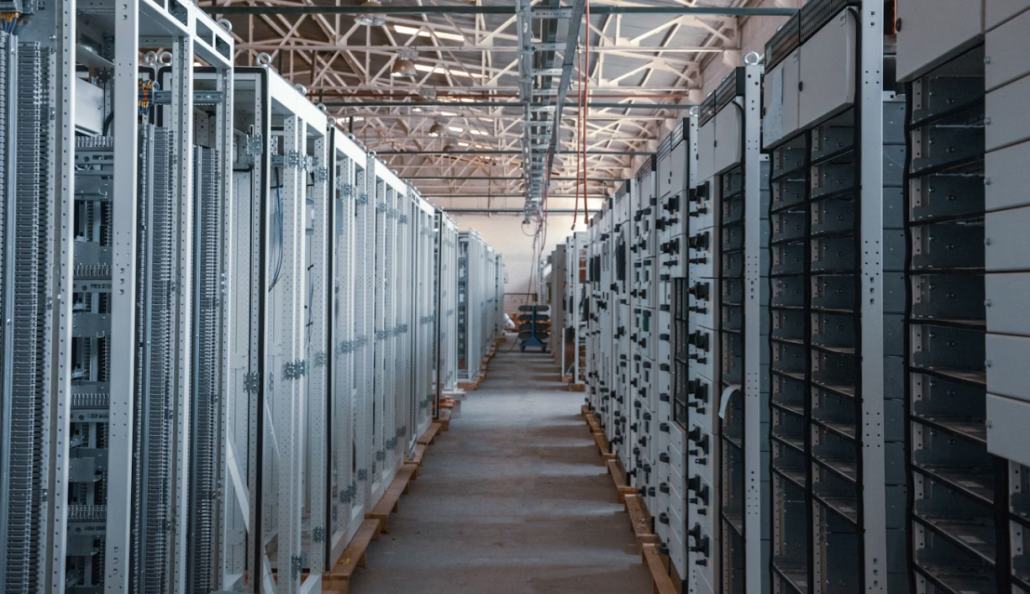
How to Calculate and Size a UPS for Your Data Center
For modern data centers, downtime is never just an inconvenience. A single outage can cost thousands — sometimes millions — of dollars per minute through operational disruption, lost transactions, damaged equipment, and reputational risk. As digital infrastructure becomes more critical, maintaining stable and uninterrupted power is no longer optional.
That is why sizing a UPS system cannot rely on estimates or guesswork. From hyperscale facilities in Northern Virginia’s “Data Center Alley” to edge computing sites in Texas, maintaining stable power during grid fluctuations is critical. Protecting servers, networking equipment, and mission-critical applications requires precise calculations based on real operating conditions, future expansion plans, and runtime expectations.
Today’s data center power solutions demand more than backup batteries alone. Operators must understand current IT loads, projected scalability, redundancy requirements, cooling demands, and long-term efficiency targets to build resilient infrastructure that can grow with the business.
Why Precise Sizing Matters for Data Center Uninterruptible Power
Selecting the wrong UPS capacity can create serious operational and financial problems. Both under-sizing and over-sizing introduce risks that directly impact data center reliability and efficiency.
The Risks of Under-Sizing
An undersized UPS system may struggle to support critical loads during utility failures or peak demand conditions. This internal risk is heavily amplified by the severe strain currently facing U.S. power grids. In major tech corridors serviced by PJM, historic demand from hyperscale infrastructure is pushing the grid from a surplus to structural scarcity, increasing the likelihood of regional power constraints. Similarly, the ERCOT grid in Texas is experiencing a massive demand shock from AI data center growth, leading to extreme transmission congestion and a higher risk of unstable voltage step loads. When your UPS lacks the capacity buffer to handle these external power disturbances, it leaves your data center fully exposed.
Generally, this can lead to:
- System overloads
- Unexpected shutdowns
- Dropped critical loads
- Reduced equipment lifespan
- Compromised server performance
- Increased risk during power disturbances
When the UPS reaches capacity limits, even minor infrastructure expansion can trigger instability across the entire power environment.
The Risks of Over-Sizing
While oversizing may seem safer, it often creates unnecessary costs and operational inefficiencies.
Common consequences include:
- Higher upfront capital expenditure (CapEx)
- Increased cooling requirements
- Higher electricity consumption
- Reduced operating efficiency at low load percentages
- Wasted rack and floor space
UPS systems generally perform best within an optimal load range. Running a large system at consistently low utilization can reduce energy efficiency and increase total operating costs over time.
The Goal: Finding the “Goldilocks” Zone
The ideal data center UPS is properly sized to support:
- Current critical infrastructure
- Expected future growth
- Desired redundancy configuration
- Runtime requirements
- Maximum operational efficiency
Achieving this balance ensures stable protection while avoiding unnecessary investment and energy waste.
Step-by-Step: How to Calculate Your UPS Size
Proper UPS sizing starts with understanding the actual electrical demand of the protected environment.
Step 1: Calculate Total Critical Load (kW vs. kVA)
The first step is identifying the total critical load your UPS must support.
This includes:
- Servers
- Storage systems
- Networking equipment
- Security systems
- Monitoring infrastructure
- Cooling equipment supporting critical operations
Many buyers focus only on server loads and overlook cooling systems, which can significantly increase total power demand.
Understanding kW vs. kVA
UPS systems are commonly rated in both:
- kW (Kilowatts) → Real Power
- kVA (Kilovolt-Amperes) → Apparent Power
Real power represents the actual usable power consumed by equipment. Apparent power includes both usable power and reactive power within the electrical system.
The relationship is determined by the power factor.
The standard formula is:
Watts=Volts × Amps × Power Factor
And:
kW=kVA × Power Factor
For example:
- Total IT load: 400 kW
- Power factor: 0.9
Required UPS capacity:
kVA=400/0.9≈444
In this case, a UPS system rated above 444 kVA would be required before adding redundancy or future growth margins.
Step 2: Factor in Future Growth
Data centers rarely remain static. Additional servers, AI workloads, edge computing infrastructure, and increased rack density can quickly raise power demand.
To avoid costly infrastructure replacement later, it is standard practice to add a future growth margin of approximately:
- 20% to 30% additional capacity
For example:
- Current load: 400 kW
- 25% growth margin
400×1.25=500 kW
This proactive approach helps operators avoid disruptive “forklift upgrades” where entire UPS systems must be replaced prematurely.
It also supports smoother scalability as business requirements evolve.
Step 3: Determine Required Runtime (Autonomy)
UPS runtime — also called autonomy — defines how long the system can support critical loads during a power outage.
Runtime requirements vary depending on facility strategy:
- Short runtime (5–15 minutes) for generator bridging
- Medium runtime (15–30 minutes) for orderly shutdowns
- Extended runtime for mission-critical environments
Battery sizing depends on:
- Total load
- Desired runtime
- Battery chemistry
- Redundancy configuration
- Generator startup time
If you are evaluating runtime requirements and battery sizing strategies, read our guide on How Long a UPS Can Last to better understand autonomy planning for critical infrastructure.
The Details of Modular UPS Technology for Datacenters
Traditional UPS infrastructure was often built around large monolithic systems. While reliable, these legacy architectures created significant inefficiencies for modern, fast-growing facilities.
The Legacy Problem
Older UPS systems typically forced operators to purchase large amounts of capacity upfront — even when actual demand was far lower.
This approach resulted in:
- Excess unused capacity
- Higher initial investment
- Increased floor space usage
- Reduced efficiency at low utilization
- Limited flexibility for future expansion
For rapidly evolving data center environments, this model lacks agility.
The Modular Solution
Modern modular UPS technology introduces a far more scalable approach.
Instead of deploying one oversized UPS unit, operators can install modular, rack-based systems that grow incrementally alongside IT demand.
For example:
- Start with 200 kW capacity
- Add additional 50 kW power modules only when needed
- Scale without replacing the entire system
This “pay-as-you-grow” architecture delivers several advantages:
- Lower upfront investment
- Improved operational efficiency
- Simplified maintenance
- Reduced downtime risk
- Faster scalability
- Better redundancy flexibility
Modular UPS systems are especially valuable for colocation facilities, hyperscale environments, and edge data centers where growth patterns can change rapidly.
Lithium Advantage for Modern Data Centers
Lithium battery technology further enhances modular UPS architecture.
Compared with traditional VRLA batteries, lithium solutions offer:
- Higher energy density
- Smaller footprint
- Lower maintenance requirements
- Longer cycle life
- Faster recharge capability
- Reduced total cost of ownership
The compact footprint is especially important in modern data centers where rack space and floor utilization directly affect profitability and operational efficiency.
Engineered for the Modern Data Center: LEOCH Lithium UPS Solutions
Finding the exact right fit for your facility’s power architecture requires reliable, high-performance technology. Our US-based engineering team supports data centers with scalable, high-density lithium UPS systems designed to seamlessly integrate into your infrastructure.
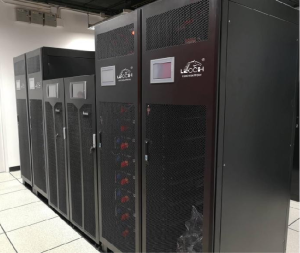
LEOCH UPS Project in UK
Whether you are upgrading from legacy systems or building a new hyperscale footprint from the ground up, our modular lithium portfolio ensures your critical load remains protected while optimizing your total cost of ownership.
Explore our dedicated lithium UPS solutions to find the precise configuration for your facility’s exact load requirements: https://leochlithium.us/ups-4/
Partnering for Reliable Data Center Power Solutions
Building resilient power infrastructure requires more than selecting a UPS product from a catalog. Every facility has unique load profiles, redundancy targets, environmental conditions, and scalability requirements.
That is why modern data center operators increasingly seek partners capable of engineering complete, scalable power architectures — not simply supplying batteries.
From load analysis and runtime calculations to modular deployment planning and lithium integration, the right engineering support helps ensure long-term operational reliability while optimizing both CapEx and OpEx.
For procurement managers, facility engineers, and infrastructure planners evaluating scalable data center power solutions, partnering with an experienced engineering team can significantly reduce deployment risk and improve lifecycle performance.
To discuss your project requirements, contact our US-based engineering support team today to schedule a site audit and receive a customized UPS load calculation.