
Total Cost of Ownership (TCO): Lithium-Ion vs. Lead-Acid (VRLA) UPS
When evaluating an uninterruptible power supply (UPS) system, most procurement teams naturally focus on upfront capital expenditure (CAPEX). On paper, traditional Valve-Regulated Lead-Acid (VRLA) batteries often appear more attractive because of their lower initial purchase cost compared to Lithium-Ion systems.
However, for modern commercial facilities, hyperscale data centers, and edge computing environments, upfront price tells only part of the story.
The real financial impact of a UPS infrastructure decision is measured through Total Cost of Ownership (TCO) across the full 10-to-15-year lifecycle of the system. Maintenance requirements, replacement frequency, cooling costs, space utilization, operational downtime, and energy efficiency all contribute significantly to long-term operating expenses (OPEX).
That is why upgrading to commercial lithium UPS solutions is no longer viewed solely as a technical upgrade. It has become a strategic financial decision that helps facilities reduce operational costs, improve scalability, and future-proof critical infrastructure.
The Lifespan Advantage (Why Replacement Cycles Matter)
One of the largest contributors to UPS lifecycle costs is battery replacement frequency.
The VRLA Reality
Standard VRLA batteries typically offer a design life of only:
- 3 to 5 years under ideal operating conditions
In real-world environments, elevated temperatures, inconsistent maintenance, and fluctuating load conditions can shorten lifespan even further.
For facilities operating on a 15-year infrastructure timeline, this often means:
- Two or even three full battery replacement cycles
- Repeated procurement processes
- Ongoing labor expenses
- Disposal and recycling costs
- Increased operational disruption risks
Each replacement event becomes a major project involving logistics coordination, system shutdown planning, safety procedures, and installation labor.
The Lithium Upgrade
Commercial Lithium-Ion UPS systems dramatically reduce these recurring replacement cycles.
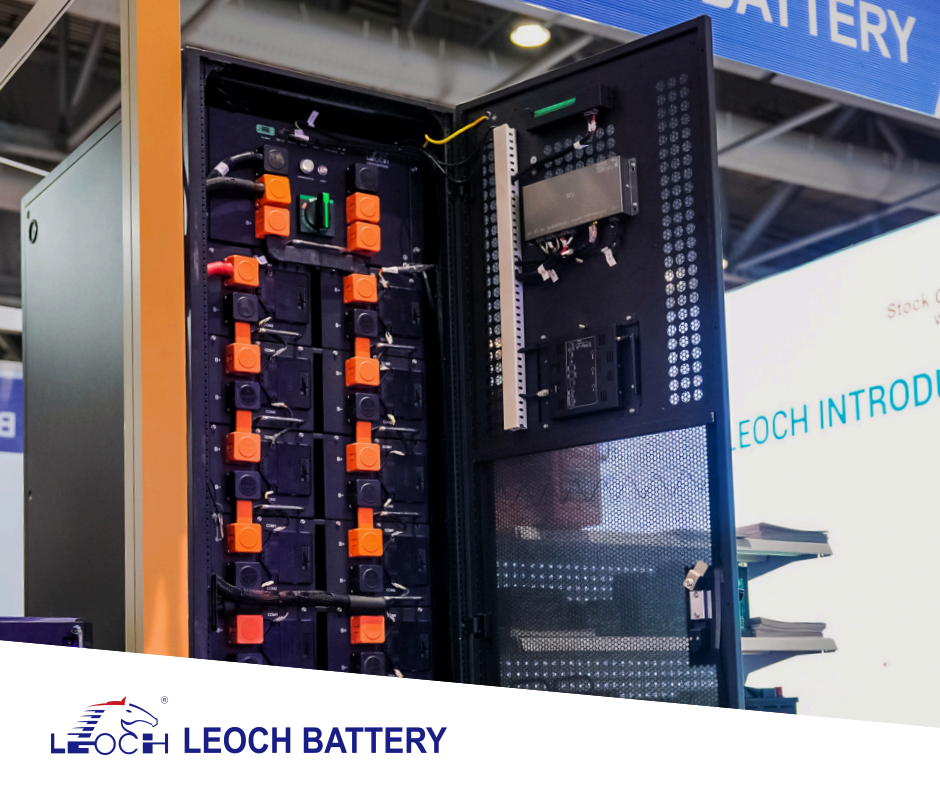
Modern lithium battery systems commonly deliver:
- 10 to 15 years of design life
- Longer cycle stability
- Better thermal resilience
- More predictable long-term performance
Instead of repeatedly replacing aging VRLA strings, facilities can often complete a single lithium installation that aligns with the entire lifecycle of the UPS infrastructure itself.
This significantly lowers operational complexity while improving long-term budget predictability.
If you are evaluating exactly how much runtime your facility needs, read our guide on How Long a UPS Can Last to better understand UPS capacity planning and autonomy requirements.
Breaking Down the Total Cost of Ownership (TCO)
While initial purchase price receives the most attention during procurement, the long-term operational expenses often outweigh the original battery investment.
Here is where lithium systems consistently outperform legacy VRLA technology.
Maintenance and Replacement Costs
VRLA systems require continuous monitoring and periodic replacement throughout their service life.
Over a 15-year period, facilities may face:
- Multiple battery refresh cycles
- Heavy shipping and logistics expenses
- Significant labor requirements
- Disposal and recycling costs
- Planned downtime windows
- Increased operational risk during replacement procedures
This is commonly known as the “forklift upgrade” problem.
Replacing large VRLA battery strings is not a simple maintenance task. It often involves moving extremely heavy battery cabinets, coordinating technicians, and temporarily impacting critical infrastructure operations.
Commercial lithium systems help eliminate these recurring replacement cycles. With a single long-life installation, operators can substantially reduce lifecycle maintenance costs and avoid repeated large-scale battery replacement projects.
Footprint and Real Estate (Space is Money)
Modern data centers operate in an environment where every square foot has financial value.
Lithium batteries provide a major advantage through significantly higher energy density.
Compared with VRLA systems, lithium solutions can deliver equivalent backup power while requiring:
- Up to 50% less physical space
- Far lower overall system weight
- Reduced floor loading requirements
For premium US colocation hubs and hyperscale clusters—such as Northern Virginia’s “Data Center Alley,” Phoenix, and Silicon Valley—this creates an immediate bottom-line benefit. While advanced intermediate technologies like Pure Lead offer slight footprint improvements over standard VRLA, they cannot match the sheer energy density of lithium. Upgrading to a lithium footprint cuts space requirements by up to 50%. This directly frees up valuable “white space” for revenue-generating server racks and high-density AI infrastructure.
In high-cost data center markets where real estate and rack density directly impact profitability, space efficiency becomes a major contributor to long-term TCO savings.
Cooling and Thermal Management
Battery operating temperature has a major influence on both lifespan and facility operating costs.
The VRLA Cooling Burden
VRLA batteries are highly sensitive to heat exposure and typically require carefully controlled ambient temperatures around:
77°F≈25°C
Maintaining these conditions requires continuous HVAC operation, especially in large-scale facilities with dense power infrastructure.
Over a decade or more, this creates substantial electricity consumption and cooling-related operating expenses.
Lithium‘s Thermal Advantage
Commercial lithium UPS systems can safely operate at higher ambient temperatures while maintaining stable performance and longer service life.
This allows facilities to:
- Reduce HVAC demand
- Improve overall energy efficiency
- Lower cooling-related electricity costs
- Simplify thermal management strategies
Across a 10-to-15-year deployment, reduced cooling requirements can generate meaningful operational savings that significantly improve overall TCO.
The Upgrade Path: When Should Your Facility Transition?
While VRLA technology still maintains relevance in certain legacy telecom or smaller backup environments, the transition toward lithium has become increasingly essential for modern critical infrastructure.
Facilities should strongly consider upgrading when facing the following scenarios.
Building a New Data Center or Edge Facility
New facilities benefit most from lithium architecture because operators can design around:
- Higher energy density
- Reduced floor space
- Improved scalability
- Longer lifecycle economics
- Lower cooling requirements
Starting with lithium eliminates future retrofit complexity while supporting long-term infrastructure growth.
Facing an Upcoming VRLA Replacement Cycle
Aging VRLA systems present a strategic decision point.
Instead of investing in another short-life lead-acid replacement cycle, many operators now evaluate lithium as a long-term modernization strategy that reduces future maintenance burdens and operational costs.
Expanding Server Density in Limited Space
As rack density continues climbing due to intensive AI workloads, physical space constraints within existing facilities become critical. Upgrading to a compact lithium configuration allows you to scale compute capacity within your existing footprint. When mapping out these density upgrades, ensure your facility calculates the exact load parameters by reviewing our step-by-step guide on How to Calculate & Size a UPS for Your Data Center.
Future-Proofing with Commercial Lithium UPS Solutions
Commercial lithium UPS architecture is no longer an emerging technology experiment. It is now a proven, mature solution deployed across modern data centers, healthcare facilities, financial institutions, industrial operations, and mission-critical infrastructure worldwide.
Beyond lifecycle savings, modern lithium systems also introduce advanced Battery Management Systems (BMS) that provide:
- Real-time battery monitoring
- Predictive analytics
- Early fault detection
- Cell-level visibility
- Improved operational safety
- Smarter maintenance planning
These capabilities offer a level of intelligence and predictive monitoring that legacy VRLA systems simply cannot match.
For organizations planning long-term infrastructure investments, lithium provides a scalable path toward higher efficiency, improved reliability, and lower operational risk.
Ready to calculate the exact ROI of upgrading your facility to lithium?
Contact the US engineering support team for a custom Total Cost of Ownership (TCO) audit and infrastructure assessment.