Industrial Energy Storage Challenges and Solutions: A Practical Guide to Improving BESS Performance and ROI
Industrial energy storage systems often face challenges such as battery degradation, thermal instability, safety risks, and inefficient energy management. The most effective solutions combine advanced battery technology, intelligent BMS/EMS integration, optimized system design, and lifecycle-based operation strategies to ensure long-term performance and return on investment.
Why Industrial Energy Storage Systems Face Operational Challenges
Unlike small-scale applications, industrial energy storage systems operate in highly dynamic and demanding environments. They must balance fluctuating load demands, integrate with renewable energy sources, and maintain stable performance over thousands of cycles.
These complexities mean that even well-designed battery energy storage systems (BESS) can encounter performance bottlenecks if not properly optimized. For commercial and industrial users, these challenges directly impact system efficiency, operational costs, and ultimately ROI.

Key Challenges in Industrial Energy Storage Operation
-
Battery Degradation and Capacity Loss
All battery systems degrade over time—but in industrial settings, high cycling frequency and partial state-of-charge operation accelerate this process.
Impact:
- Reduced usable capacity
- Shortened system lifespan
- Lower project profitability
-
Thermal Management and Heat Accumulation
Temperature is one of the most critical factors affecting BESS performance. Poor thermal control leads to uneven cell aging and increased failure risk.
Impact:
- Efficiency loss
- Safety concerns
- Increased maintenance requirements
-
Safety Risks in High-Density Systems
As energy density increases, so does the complexity of safety compliance, particularly under strict U.S. standards like NFPA 855. Risks such as thermal runaway and system imbalance must be mitigated at the cell, module, and cabinet levels through advanced fire suppression and thermal management architectures.
Impact:
- Operational downtime
- Compliance challenges
- Asset and personnel risk
-
Inefficient Energy Management (EMS Limitations)
Many systems fail to deliver their projected ROI, not because of hardware limitations, but due to rigid energy management strategies. Without an intelligent EMS dynamically responding to grid signals, facilities miss critical peak-shaving windows (such as expensive 4 PM to 9 PM Time-of-Use peaks) and fail to accurately dispatch power during lucrative demand response events or localized grid-service programs within ISOs like ERCOT or CAISO.
-
High Operation and Maintenance (O&M) Costs
Relying on reactive maintenance and manual site inspections leads to costly downtime and expensive emergency truck rolls. Modern industrial systems solve this by utilizing cloud-based predictive analytics and remote monitoring to identify cell imbalances or thermal anomalies long before they trigger a system shutdown, drastically lowering lifecycle operational expenses.
Root Causes Behind These Challenges
Understanding the root causes is essential for solving industrial energy storage challenges effectively:
- Inadequate system integration between the battery, inverter, and EMS
- Limited visibility into real-time system performance
- Suboptimal battery chemistry selection for specific applications
- Lack of scalable and modular design
- Reactive rather than predictive maintenance strategies
Proven Solutions to Improve BESS Performance
-
Advanced Battery Technologies for Longer Lifecycle
The commercial market is rapidly standardizing on Lithium Iron Phosphate (LFP) technology. Because LFP avoids volatile minerals, it offers superior thermal stability—directly mitigating the overheating risks common in legacy systems. Furthermore, LFP delivers a significantly higher cycle life (often exceeding 6,000 cycles) and maintains performance under partial state-of-charge conditions, drastically reducing degradation losses.
-
Intelligent Battery Management Systems (BMS)
A robust BMS ensures:
- Real-time cell monitoring
- State-of-charge (SOC) and state-of-health (SOH) accuracy
- Active balancing for uniform performance
This directly addresses both safety and lifespan challenges.
-
Optimized Thermal Management (Air or Liquid Cooling)
Effective thermal design includes:
- Uniform temperature distribution
- Active cooling systems
- Environmental adaptability
This is critical for maintaining performance consistency across large-scale systems. For high-density C&I deployments, localized liquid cooling combined with rigorous cell-level thermal isolation is rapidly becoming the standard to ensure successful UL 9540A fire propagation testing and localized permitting.
-
Smart Energy Management Systems (EMS)
An advanced EMS can:
- Optimize charge/discharge cycles
- Enable peak shaving and load shifting
- Improve renewable energy utilization
This is where energy storage system optimization delivers the highest financial value.
-
Modular and Scalable System Design
A modular architecture allows:
- Flexible capacity expansion
- Easier maintenance and replacement
- Reduced downtime
This is especially valuable for industrial users with evolving energy demands.
How Advanced BESS Design Solves These Challenges
Leading battery energy storage system providers are moving beyond standalone battery supply toward fully integrated solutions.
For example, modern industrial BESS platforms integrate:
- High-cycle-life lithium battery modules
- Intelligent BMS and EMS coordination
- Advanced thermal management systems
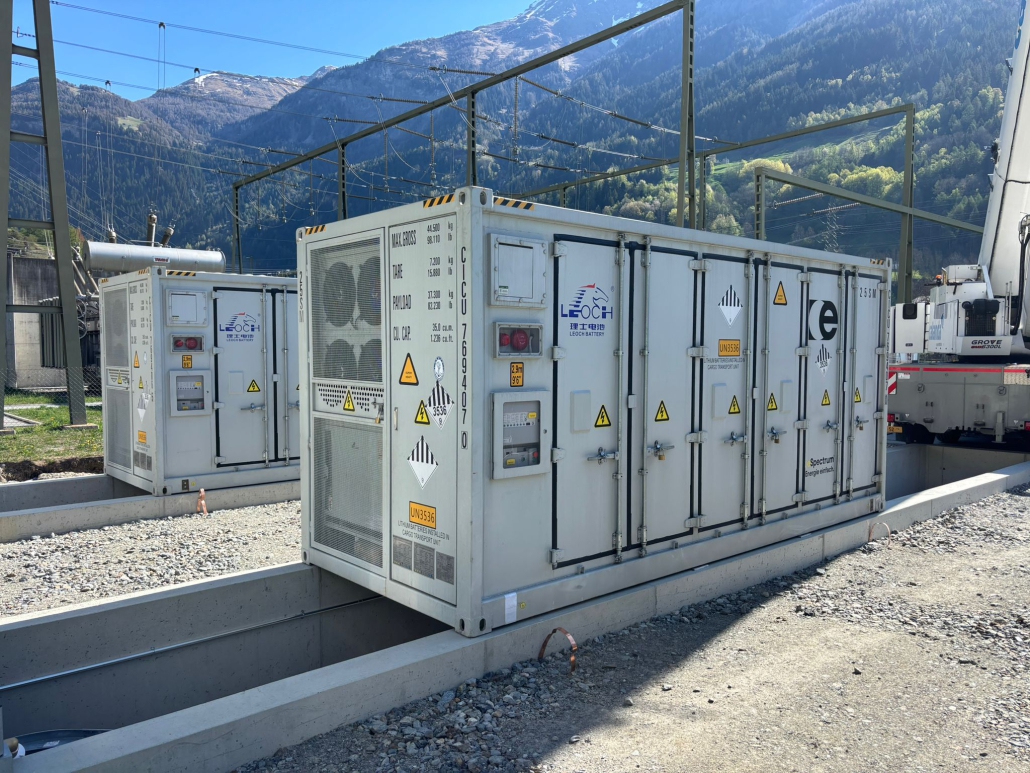
- Pre-engineered, containerized solutions for rapid deployment
For a closer look at how integrated systems are designed to address these challenges, explore our US-engineered industrial lithium BESS solutions.
These systems are engineered to improve operational efficiency, enhance safety, and reduce lifecycle costs—making them well-suited for commercial and industrial applications.
Choosing the Right Industrial Energy Storage Solution
When evaluating solutions, B2B decision-makers should focus on:
-
Lifecycle Cost, Not Just Initial Investment
- Total cost of ownership (TCO)
- Maintenance and replacement cycles
-
System Integration Capability
- Compatibility with existing infrastructure
- EMS and inverter coordination
- NERC CIP compliance and robust cybersecurity protocols for remote EMS monitoring.
-
Safety and Compliance Standards
- Fire protection systems
- International certifications
-
Scalability and Future Expansion
- Modular design
- Upgrade flexibility
-
Supplier Expertise and Support
Partnering with a US-based commercial lithium battery company ensures your facility is supported by local engineering expertise. Rather than settling for generic after-sales service, prioritize providers that offer localized commissioning, rapid parts availability, and custom site integration tailored to American grid compliance standards.
Final Thoughts: Turning Challenges into Competitive Advantage
While industrial energy storage challenges are inevitable, they are also solvable with the right combination of technology, system design, and operational strategy.
For businesses investing in industrial energy storage systems, the key is not just deploying storage—but optimizing it across its entire lifecycle.
Organizations that adopt integrated, intelligent, and scalable BESS solutions will be better positioned to:
- Maximize energy efficiency
- Reduce operational risks
- Achieve long-term ROI
In a rapidly evolving energy landscape, solving these challenges is no longer optional—it is a competitive necessity.