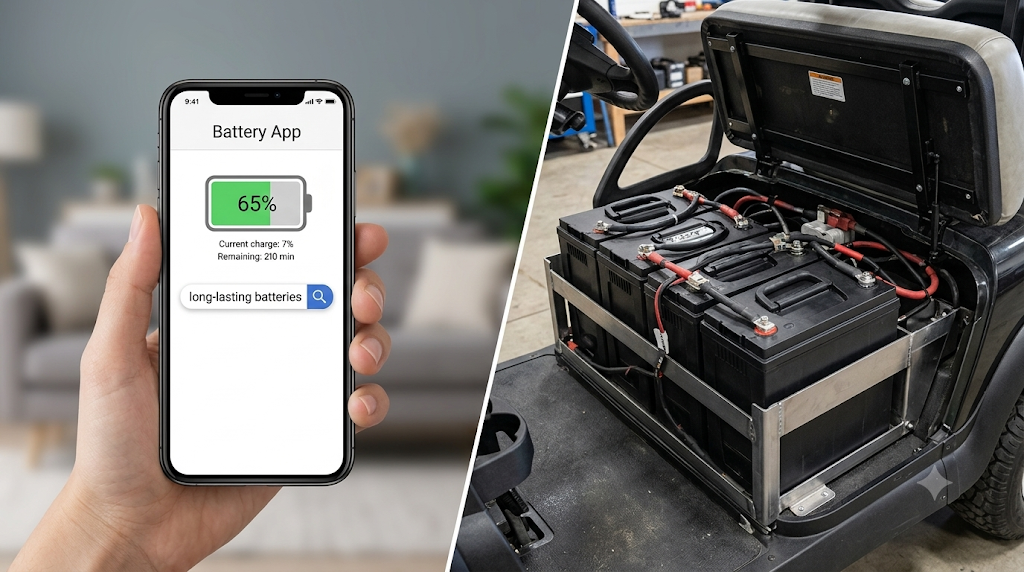
Ionic Lithium Batteries Explained: Chemistry, App Monitoring, and B2B Fleet Alternatives
Introduction: The Rise of the Smart Lithium Monoblock
The term Ionic lithium battery has become increasingly familiar among bass anglers, RV enthusiasts, and custom golf cart owners. Much of that popularity stems from the combination of lightweight Lithium Iron Phosphate (LiFePO₄) chemistry and smartphone-connected battery monitoring, allowing users to track battery status directly from their mobile devices.
For recreational users, these features offer a convenient way to monitor energy consumption and battery health. However, commercial operators face a very different set of requirements. Fleet managers, marine service providers, golf cart distributors, and industrial equipment operators must evaluate batteries based on factors such as continuous discharge capability, system integration, logistics efficiency, warranty support, and long-term total cost of ownership.
While app-based monitoring may be valuable, it represents only one component of a much larger operational picture.
What Makes the Ionic Lithium Battery Popular?
Before evaluating commercial alternatives, it’s important to understand why Ionic-style lithium batteries have become so popular among consumers.
Bluetooth Battery Monitoring
One of the most recognized features is Bluetooth-enabled Battery Management System (BMS) integration. Through a smartphone application, users can monitor battery performance in real time, including:
- State of Charge (SoC)
- Voltage
- Charge and discharge current
- Internal temperature
- Remaining runtime estimates
This level of visibility gives users confidence when spending long days on the water or operating electric vehicles away from charging infrastructure.
Emergency Starting Capability
Many lithium marine batteries include reserve-start functionality designed to preserve enough energy to crank an engine in an emergency. This feature is particularly valuable for anglers running multiple electronics, sonar displays, livewells, and trolling motors throughout the day.
Significant Weight Reduction
Lithium batteries are dramatically lighter than traditional lead-acid alternatives.
A typical marine lead-acid battery may weigh 60–70 pounds, while a comparable LiFePO₄ battery often weighs less than 20 pounds. Similar weight reductions are seen in golf carts and utility vehicles, improving acceleration, efficiency, and overall handling.
Why is LiFePO₄ the Safest Chemistry for Commercial Lithium Batteries?
The majority of premium lithium batteries on today’s market utilize Lithium Iron Phosphate chemistry.
Unlike some lithium-ion chemistries commonly used in consumer electronics, LiFePO₄ employs an olivine crystal structure. The strong phosphorus-oxygen bonds within this structure provide exceptional thermal stability and chemical durability.
Key advantages include:
- Excellent thermal safety
- Long cycle life
- Stable voltage delivery
- High charge acceptance
- Low self-discharge rates
For commercial operators, these characteristics are often more important than smartphone monitoring features because they directly affect uptime and operational reliability.
Consumer Grade vs. Commercial Grade: The Engineering Gap
Many buyers searching for an Ionic lithium battery are individual consumers. However, once battery systems are deployed across fleets, warehouses, golf courses, marinas, or industrial facilities, the evaluation criteria change significantly.
| Performance Factor | Retail “Ionic” Style Lithium Batteries | Enterprise Commercial Lithium (LiFePO4) |
| Primary Target Market | DIY consumers, single-vessel owners | Commercial marine fleets, custom cart builders, heavy logistics |
| BMS Monitoring | Consumer Smartphone App (Bluetooth) | Enterprise CAN bus / RS485 communication protocols |
| Wholesale Logistics | Retail pricing, single-unit shipping | Palletized container-load economics |
| Continuous Discharge Thresholds | Moderate (Standard recreational loads) | Extreme (Optimized for 400A+ aftermarket motor controllers) |
When a golf cart or utility vehicle is upgraded with a high-torque motor controller, it can pull massive instantaneous amperage during uphill acceleration. A standard retail lithium battery’s BMS is programmed for moderate recreational loads and will instantly trigger an overcurrent protection lockout, shutting the vehicle down entirely. Enterprise commercial blocks are structurally engineered with heavy-duty MOSFETs to sustain these extreme discharge thresholds without tripping.
For a recreational fishing boat, app visibility may be the deciding factor. For a commercial golf cart fleet, warehouse vehicle operation, or marine rental business, continuous uptime and scalable inventory support typically become the higher priorities.
Evaluating Supply Chain and Manufacturing Transparency
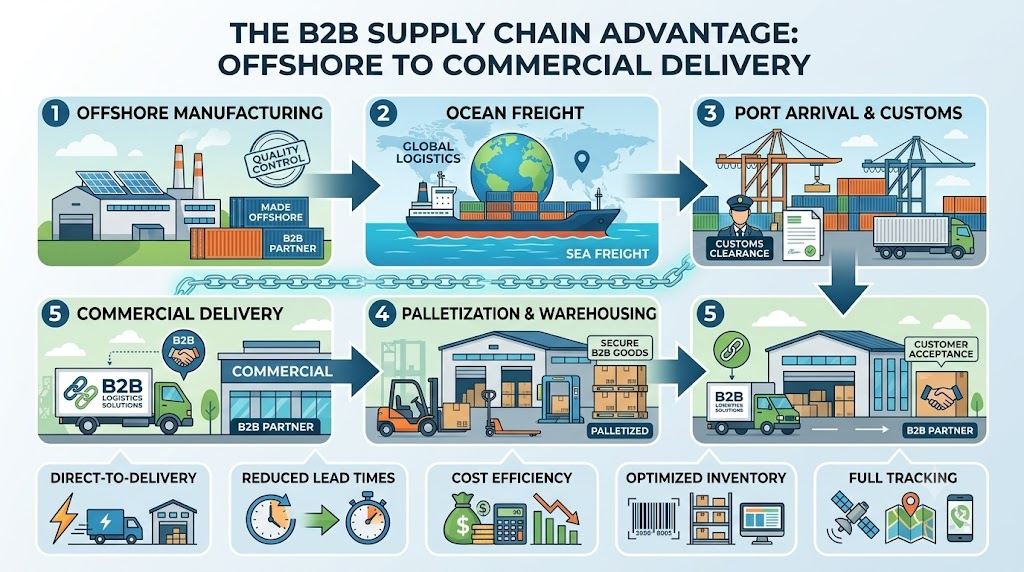
Battery performance is only one piece of the procurement equation.
Commercial buyers increasingly evaluate suppliers based on:
- Manufacturing consistency
- Quality assurance systems
- Inventory availability
- Warranty support
- Global logistics capabilities
- Long-term production stability
For fleet operators, battery sourcing is not simply about acquiring energy storage. It is about securing a reliable infrastructure partner capable of supporting expansion plans over multiple years.
Why Manufacturing Redundancy Matters
Modern lithium battery supply chains often leverage specialized production facilities throughout the Asia-Pacific region, where advanced lithium cell manufacturing ecosystems have matured significantly.

Procurement teams should seek suppliers that can demonstrate:
- Stable cell sourcing
- Multi-facility manufacturing support
- Quality traceability
- Certified production standards
- Consistent long-term availability
This level of transparency becomes especially important for distributors, commercial fleet managers, and OEM integration projects.
Beyond Bluetooth: The Role of Industrial Communications
Bluetooth monitoring works exceptionally well for a single boat or golf cart.
Commercial operations, however, often require dozens or hundreds of assets to be monitored simultaneously.
This is where industrial communication protocols become important.
Enterprise lithium systems frequently support:
- CAN Bus communication
- RS485 communication
- Remote diagnostics
- Fleet management integration
- Charger communication
- Automated fault reporting
These capabilities allow facility managers to monitor entire battery fleets from centralized management platforms rather than checking individual batteries through a smartphone application.
Enterprise Sourcing Resources
Are you outfitting a commercial fleet or managing high-volume distribution?
For material handling upgrades, read our 2026 Forklift Battery Guide: Maximizing Industrial Fleet Runtime and ROI.
For volume procurement, see our blueprint on Sourcing Wholesale Golf Cart Batteries: The B2B Distributor’s Guide to Bulk Procurement.
For open-water applications, evaluate our breakdown of How Long Do Marine Batteries Last? Lifecycles, Chemistry, and Real-World ROI.
Frequently Asked Questions: App-Monitored Lithium Batteries
Can you connect Bluetooth lithium batteries in series?
In many cases, yes. However, series configurations introduce additional complexity.
Most Bluetooth-enabled batteries communicate independently. As system voltage increases, monitoring multiple batteries can become cumbersome because each battery reports separately through the mobile application.
Enterprise battery systems designed for 48V, 72V, or higher-voltage architectures typically use centralized communication networks such as CAN Bus or RS485 to provide unified monitoring across the entire battery bank.
What is the difference between a smart battery and a commercial lithium battery?
A smart battery typically refers to a battery equipped with consumer-friendly monitoring features such as Bluetooth connectivity and smartphone applications.
A commercial lithium battery focuses on scalability, system integration, and operational reliability. These systems often support industrial communications, fleet telemetry, remote diagnostics, and infrastructure-level monitoring capabilities.
Are Bluetooth lithium batteries suitable for fleet operations?
They can be suitable for small fleets, but larger commercial deployments generally benefit from centralized monitoring platforms that provide visibility across all assets simultaneously.
Is LiFePO₄ safer than other lithium battery types?
LiFePO₄ is widely recognized as one of the safest lithium battery chemistries available. Its stable olivine crystal structure significantly improves thermal stability and reduces the risk of thermal runaway, making it a preferred choice for marine, utility vehicle, golf cart, and industrial applications.
Conclusion: Choosing the Right Lithium Platform for Your Application
The popularity of Ionic lithium batteries demonstrates how rapidly battery technology has evolved. Features such as Bluetooth monitoring, lightweight construction, and integrated Battery Management Systems have transformed expectations across recreational markets.
However, commercial operators must evaluate batteries through a different lens.
While smartphone connectivity may be valuable for individual users, fleet operators, distributors, and procurement managers must prioritize continuous performance, supply chain stability, communication architecture, and total cost of ownership.
The best battery is not simply the one with the most features—it is the one engineered to support the operational demands of the application.
Ready to Evaluate a Commercial Lithium Upgrade?
Whether you’re managing a marine fleet, sourcing wholesale golf cart batteries, upgrading industrial equipment, or expanding a regional distribution network, our local engineering team can help identify the optimal LiFePO₄ solution based on your performance requirements, deployment scale, and long-term ROI objectives.