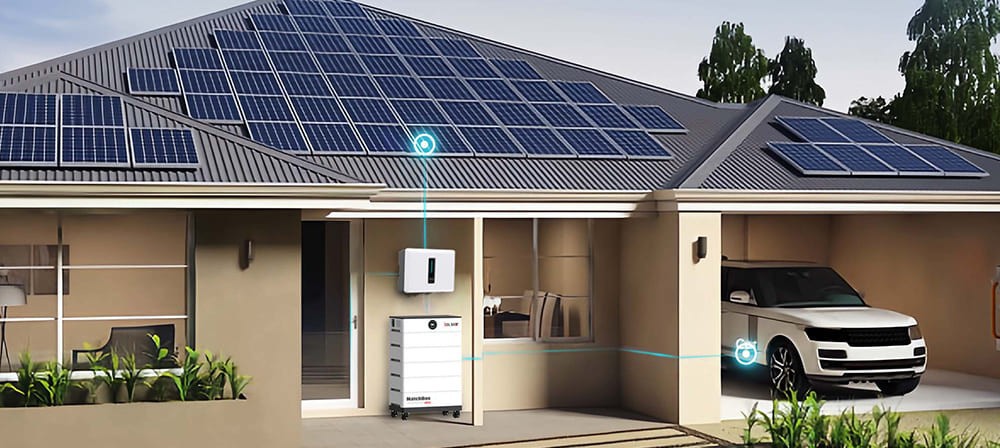
Solar Batteries for Home: An Engineering Guide to Residential Storage
Installing solar panels is a major step toward reducing electricity bills and lowering your carbon footprint—but generating clean energy is only half the equation.
Without energy storage, excess solar production is either exported to the grid or simply unavailable when you need it most. During the evening, on cloudy days, or during unexpected power outages, your home may still depend heavily on the utility grid.
This is why solar batteries for home have become one of the fastest-growing segments of the residential energy market. Rather than serving as a simple backup device, a modern home solar battery acts as the central controller of a home’s energy ecosystem—optimizing solar self-consumption, providing uninterrupted backup power, and improving long-term energy independence.
As electricity prices continue to rise and grid resilience becomes increasingly important, homeowners, installers, and builders are looking beyond solar generation toward intelligent residential energy storage systems designed for decades of reliable operation.
The Quick Answer
The ideal solar battery for a house is a Lithium Iron Phosphate (LiFePO₄) energy storage system. Modern residential battery solutions combine high round-trip efficiency (typically 90–95%), scalable voltage architecture (48V modular systems or high-voltage smart battery stacks), and advanced safety certifications such as UL 9540 to provide efficient daily energy storage and seamless automatic backup during utility outages.
Why Every Modern Solar Home Needs Battery Storage
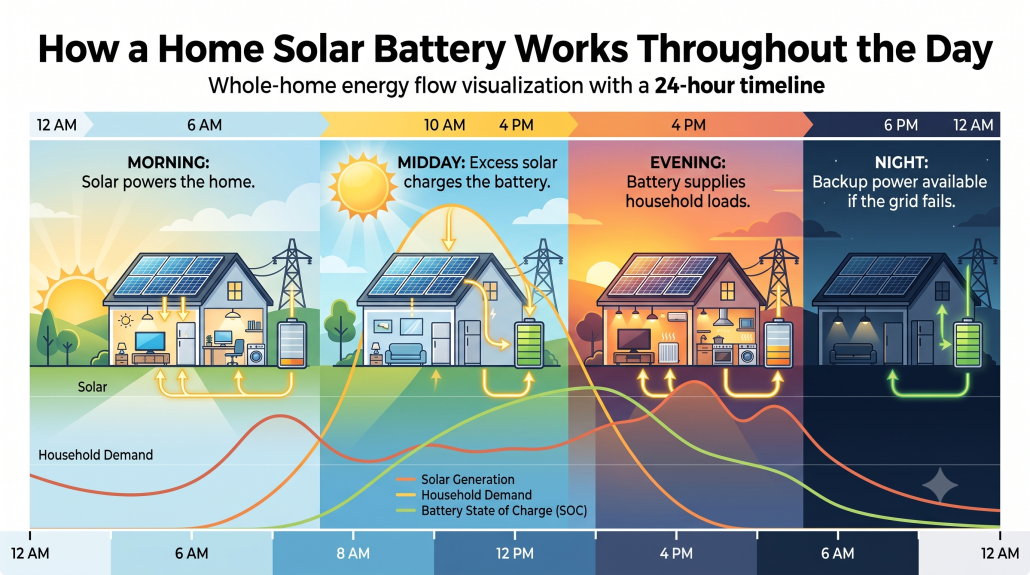
Solar panels produce electricity only when sunlight is available, but household electricity demand follows a very different pattern.
Many homes generate their highest solar output around midday, while electricity consumption peaks during the evening when families return home. Without storage, homeowners often purchase electricity during expensive peak-rate periods despite having produced abundant solar energy just hours earlier.
A solar battery for house applications solves this mismatch by storing excess daytime generation and supplying clean electricity when production declines.
Beyond reducing electricity costs, residential battery systems offer several important benefits:
- Greater energy independence from the utility grid
- Backup power during grid outages
- Improved self-consumption of solar generation
- Reduced exposure to time-of-use electricity pricing
- Enhanced resilience against extreme weather and grid instability
Instead of viewing the battery as an accessory to the solar system, many engineers now consider it the operational hub that coordinates energy generation, storage, and consumption.
System Architecture: AC-Coupled vs. DC-Coupled Storage
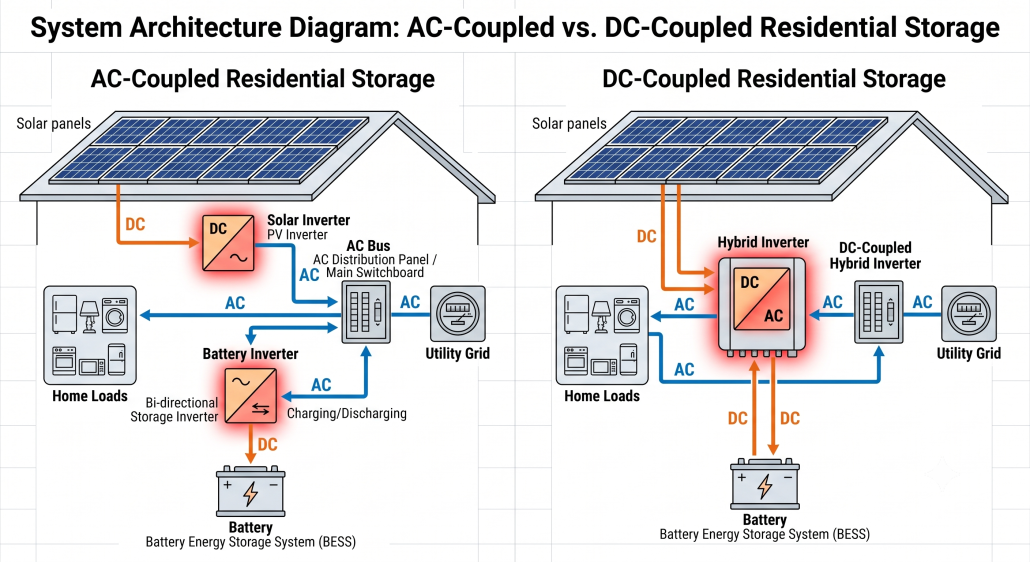
One of the most important design decisions for a residential energy storage system is whether to use an AC-coupled or DC-coupled architecture.
Although both approaches achieve the same goal, they differ in electrical configuration, installation complexity, and overall system efficiency.
AC-Coupled Systems
In an AC-coupled configuration, solar panels and the battery operate through separate inverter systems.
The electrical flow follows this sequence:
Solar Panels → Solar Inverter → AC Power → Battery Inverter → Battery
When stored energy is later used:
Battery → Battery Inverter → AC Power → Household Loads
Because existing solar systems already include a solar inverter, AC coupling is often the preferred solution when adding battery storage to an existing installation.
Advantages
- Excellent for retrofitting existing solar systems
- Minimal changes to installed PV equipment
- Flexible battery integration
- Easier expansion in many residential applications
The trade-off is that electricity undergoes multiple AC/DC conversions, introducing small efficiency losses.
DC-Coupled Systems
In a DC-coupled design, both the photovoltaic array and battery connect on the DC side of a hybrid inverter.
The electrical flow becomes:
Solar Panels → Hybrid Inverter → Battery
When household loads require electricity:
Battery → Hybrid Inverter → AC Power → Home
Because energy moves directly from the solar array into the battery without unnecessary conversions, DC-coupled systems typically achieve higher overall efficiency.
Advantages
- Higher round-trip efficiency
- Reduced conversion losses
- Simpler power flow
- Better performance in new residential installations
For new home construction or complete solar installations, DC coupling is increasingly becoming the preferred architecture.
Comparing Residential Battery Technologies: The 2026 Core Matrix
Battery chemistry has a direct impact on system lifespan, efficiency, maintenance requirements, and long-term ownership costs.
Today, Lithium Iron Phosphate (LiFePO₄) has become the benchmark for residential energy storage due to its exceptional balance of safety, longevity, and performance.
| Battery Storage Parameters | Lithium Iron Phosphate (LiFePO4) | Traditional Sealed AGM / Gel |
| Expected Cycle Lifespan | 6,000+ Cycles (10–15 Years) | 500 – 1,000 Cycles (3–5 Years) |
| Safe Depth of Discharge (DoD) | 80% – 100% Usable Capacity | 50% Maximum Usable Capacity |
| Round-Trip Efficiency | 92% – 95% | 75% – 80% |
| Thermal Runaway Risk | Extremely Low (Highly stable olivine structure) | Moderate (Prone to outgassing under overcharge) |
| Safety Certifications Required | UL 9540, UL 1973, CE | Standard BCI Guidelines |
Although AGM and gel batteries remain suitable for certain applications, they require more maintenance, offer lower usable capacity, and generally have much shorter service lives than modern lithium systems.
For homeowners seeking a long-term investment, solar storage batteries built with LiFePO₄ chemistry typically deliver a significantly lower lifetime cost per kilowatt-hour stored.
Crucial Selection Metrics: Voltage, Capacity, and Stackability
Choosing the right home solar battery involves more than simply comparing total storage capacity.
System voltage, scalability, and future expansion options all influence long-term performance and installation costs.
Low-Voltage (48V) vs. High-Voltage Battery Systems
Residential batteries are generally available in two architectures.
48V Low-Voltage Systems
48V battery systems have long been the industry standard for residential installations.
They offer:
- Mature technology
- Excellent compatibility with hybrid inverters
- Straightforward installation
- Flexible modular expansion
These systems remain an excellent choice for many homes with moderate daily energy consumption.
High-Voltage Battery Systems
Whole-home backup solutions are increasingly shifting toward high-voltage battery stacks.
Operating at higher voltages reduces electrical current while delivering the same amount of power.
This provides several engineering advantages:
- Lower cable losses
- Smaller conductor sizes
- Reduced installation costs
- Higher inverter efficiency
- Improved scalability for larger homes
As residential energy demands increase with electric vehicles, heat pumps, and smart home technologies, high-voltage systems are becoming the preferred solution for premium installations.
Modular Stackability
Energy requirements often change over time.
A homeowner may initially require only enough storage for evening solar self-consumption but later wish to add backup power for additional appliances or an electric vehicle.
Modern modular battery systems address this challenge by allowing capacity to expand without replacing the original installation.
Many systems begin with a 5 kWh base module and can be expanded by adding additional battery units in parallel or through stackable high-voltage architectures.
Depending on system design, homeowners can scale storage capacity to 20 kWh or more, enabling:
- Whole-home backup
- Electric vehicle charging support
- Greater solar self-consumption
- Future household electrification
This modular approach helps reduce initial investment while preserving flexibility for future energy needs.
Balcony Solar Storage: The Plug-and-Play Urban Solution
Energy independence is no longer limited to homeowners with traditional rooftop arrays. For apartment dwellers, renters, or those with restricted roof access, a balcony solar setting (frequently referred to as a plug-and-play solar system) offers a highly efficient path to generating and storing clean energy.
Modern balcony energy storage systems utilize compact, modular Lithium Iron Phosphate (LiFePO₄) battery hubs paired seamlessly with microinverters. Because these IP65-rated units are specifically engineered for urban environments, they feature simplified “plug-and-play” architectures—meaning the solar panels and battery plug directly into a standard household wall outlet to offset base electrical loads, bypassing complex wiring and expensive contractor installations entirely.
To comply with urban grid regulations in many regions, these systems typically cap the microinverter AC output at 600W or 800W, while allowing users to safely stack 2 kWh to 10 kWh of battery capacity to store excess midday solar energy for evening use.
Urban Energy Resource: If you are looking to bypass restrictive roof access and harness solar power from your apartment or terrace, read our complete technical breakdown on Optimizing Your Balcony Solar Setting: Microinverters, MPPT Tracking, and Plug-and-Play Storage to build your own mini power plant.
Residential Infrastructure Library
If you’re a solar installer, home builder, or homeowner planning a complete residential energy storage solution, explore our Residential Energy Storage Systems to compare modular battery capacities, physical dimensions, installation configurations, communication protocols, and advanced Battery Management System (BMS) features designed for reliable home backup and long-term energy independence.
Frequently Asked Questions: Home Solar Battery Safety
What is the best solar battery for a house?
For most residential applications, Lithium Iron Phosphate (LiFePO₄) batteries are widely regarded as the best choice.
Compared with traditional lead-acid technologies, LiFePO₄ batteries offer:
- Exceptional lifespan exceeding 6,000 charge-discharge cycles
- Maintenance-free operation
- High usable capacity
- Excellent thermal stability
- Low risk of thermal runaway
- Compliance with modern residential safety standards such as UL 9540
These characteristics make lithium storage walls particularly well suited for indoor residential installations and long-term home energy storage.
How long can a home solar battery run a house during a blackout?
The duration depends on three primary factors:
- Total battery capacity (kWh)
- Household electricity demand
- Whether the system uses a critical loads panel
A typical 10 kWh home solar battery can often power essential household circuits—including refrigerators, lighting, internet routers, communication devices, and selected outlets—for approximately 24 hours under moderate energy usage.
Homes with larger battery banks or carefully managed loads can extend backup duration significantly, while systems paired with rooftop solar may continue recharging during daylight hours, allowing multi-day resilience under favorable weather conditions.
Building a Smarter, More Resilient Home
Residential energy storage has evolved from a niche technology into an essential component of modern home energy systems.
While solar panels generate clean electricity, it is the home solar battery that determines when and how that energy is used. By storing excess solar production, providing uninterrupted backup during outages, and optimizing daily energy consumption, battery storage enables homeowners to maximize the value of their solar investment.
When selecting solar batteries for home, factors such as battery chemistry, voltage architecture, system efficiency, modular scalability, and safety certifications should all be evaluated together—not just storage capacity alone.
Whether you’re designing a new solar installation or upgrading an existing system, choosing a high-quality LiFePO₄ residential battery provides the reliability, efficiency, and flexibility needed to support today’s homes and tomorrow’s energy demands.
Ready to build a more resilient home energy system? Contact our residential energy storage specialists to discuss battery sizing, system compatibility, backup requirements, and customized solutions tailored to your home’s energy profile.