Commercial Battery Storage: Systems, Applications, and How to Choose the Right Solution for Your Business
What Is Commercial Battery Storage?
Commercial battery storage refers to energy storage systems designed for businesses, industrial facilities, and infrastructure operators to store electricity and use it when needed. These systems are typically deployed to reduce energy costs, improve power reliability, and support renewable integration.
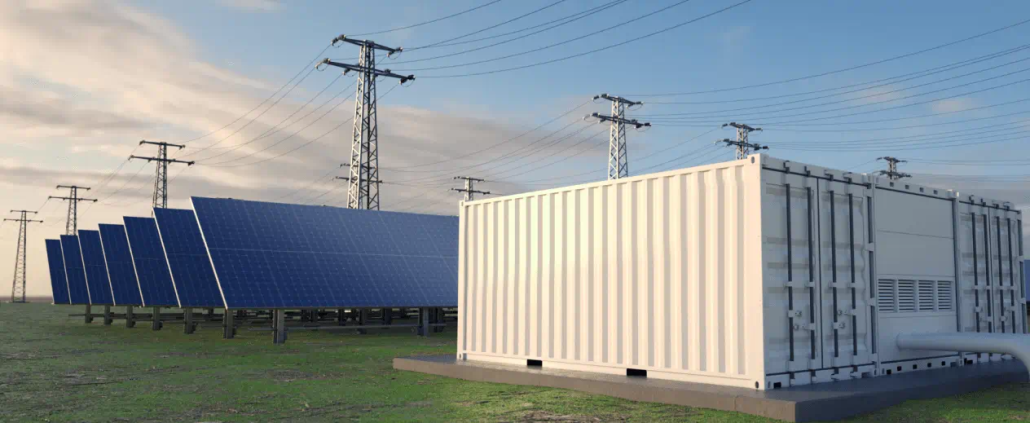
Unlike residential setups, commercial systems operate at a larger scale—ranging from tens of kWh to multi-MWh—and are often integrated with solar power, grid connections, or backup systems.
In short: Commercial battery storage helps businesses control when and how they use energy.
How Commercial Battery Storage Systems Work (BESS Explained)
A typical battery energy storage system (BESS) consists of four key components:
- Battery modules(energy storage core)
- Battery Management System (BMS)(safety and monitoring)
- Power Conversion System (PCS)(AC/DC conversion)
- Energy Management System (EMS)(optimization and control)
Electricity is stored when prices are low or generation is high (e.g., solar peak), and discharged when demand or tariffs increase.
This operational logic enables three critical functions:
- Peak shaving
- Load shifting
- Backup power supply
For B2B users, the real value of commercial battery storage systems lies not just in storing energy—but in actively managing energy costs and risks.
Key Applications in Commercial & Industrial Sectors
- Peak Shaving for Cost Reduction
Many industrial facilities face high demand charges. By deploying commercial battery storage, businesses can discharge stored energy during peak periods, significantly lowering electricity bills.
- Backup Power for Critical Operations
Data centers, hospitals, and telecom infrastructure require uninterrupted power. Battery storage systems can act as a bridge or alternative to traditional UPS systems, ensuring operational continuity.
- Solar + Storage Integration
Pairing solar generation with commercial energy storage systems allows businesses to maximize self-consumption and reduce reliance on the grid.
- Microgrid and Energy Independence
For remote sites or energy-intensive operations, battery storage supports microgrid deployment, improving resilience and reducing exposure to grid instability.
Battery Technologies: Why Lithium Dominates Commercial Storage
While multiple battery chemistries exist, lithium-ion has become the dominant choice for commercial battery storage solutions.
Lithium Batteries
- High energy density
- Long cycle life (typically 4000–8000 cycles)
- High efficiency (>95%)
- Lower maintenance requirements
While legacy facilities previously relied on heavy lead-acid strings, they suffer from a shorter lifespan and lower depth of discharge. For modern commercial and industrial applications, lithium batteries deliver a vastly superior total cost of ownership (TCO).
For most commercial and industrial applications, lithium batteries deliver a better total cost of ownership (TCO), especially in high-cycle scenarios.
How to Size a Commercial Battery Storage System
Sizing is one of the most critical—and often misunderstood—steps.
A well-designed commercial battery storage system should consider:
- Load Profile
- Peak demand (kW)
- Daily energy consumption (kWh)
- Application Objective
- Cost savings (peak shaving)
- Backup duration (hours of autonomy)
- Renewable integration
- System Configuration
- Power capacity (kW)
- Energy capacity (kWh or MWh)
For example: A factory focused on peak shaving may prioritize high power output (a higher C-rate) to discharge massive amounts of energy over a short 2-hour window. Conversely, a solar-integrated microgrid may prioritize long-duration energy capacity (a lower C-rate) to sustain the facility overnight.
Poor sizing leads to underperformance or unnecessary capital expenditure—making system design a key differentiator among suppliers.
Cost and ROI: What Businesses Should Expect
The cost of commercial battery storage varies depending on system size, technology, and integration complexity.
Key cost components:
- Battery system (40–60%)
- PCS and inverter
- Installation and engineering
- Software and EMS
ROI Drivers for US Facilities:
- Avoidance of expensive utility Demand Charges
- Federal Incentives, specifically the Investment Tax Credit (ITC) which heavily subsidizes standalone commercial storage
- Accelerated depreciation benefits (MACRS)
Typical payback periods range from 3 to 7 years, depending on usage patterns and local energy policies.
Choosing the Right Commercial Battery Storage Supplier
For B2B buyers, selecting the right partner is as important as choosing the technology.
Key evaluation criteria:
- System Integration Capability
Can the supplier deliver a complete battery energy storage system, not just batteries?
- Safety and US Fire Code Compliance
Look beyond basic certifications. Your supplier must provide systems that adhere to strict US fire codes, specifically NFPA 855, and carry UL 9540 and UL 9540A thermal runaway testing certifications at the cell, module, and cabinet levels.
- Scalability and Modularity
Can the system expand as your energy needs grow?
- Lifecycle Support
Does the supplier provide monitoring, maintenance, and long-term service?
A Practical Solution: Modular BESS for Commercial Use
For businesses seeking a reliable and scalable solution, modular systems are becoming the preferred approach.
Explore our fully integrated commercial battery storage solutions.
Designed for commercial and industrial applications, these systems offer:
- Integrated lithium battery architecture
- Advanced BMS for safety and performance
- Flexible cabinet-based deployment
- Compatibility with solar and grid systems
Such solutions simplify deployment while ensuring high efficiency and long-term reliability—two critical factors for any commercial battery storage investment.
Future Trends in Commercial Energy Storage
The commercial battery storage market is evolving rapidly, driven by:
- Increasing electricity price volatility
- Growth of distributed energy resources
- Policy incentives for decarbonization
Key trends include:
- AI-driven energy management systems
- Hybrid storage (battery + other technologies)
- Greater integration with EV infrastructure
Businesses that adopt storage early gain not only cost advantages but also greater control over their energy strategy.
Final Thoughts
Commercial battery storage is no longer optional—it is becoming a strategic asset for modern businesses.
From reducing operational costs to enhancing energy resilience, the right system can deliver measurable financial and operational benefits.
The key lies in:
- Choosing the right application strategy
- Selecting the appropriate battery technology
- Partnering with an experienced system provider