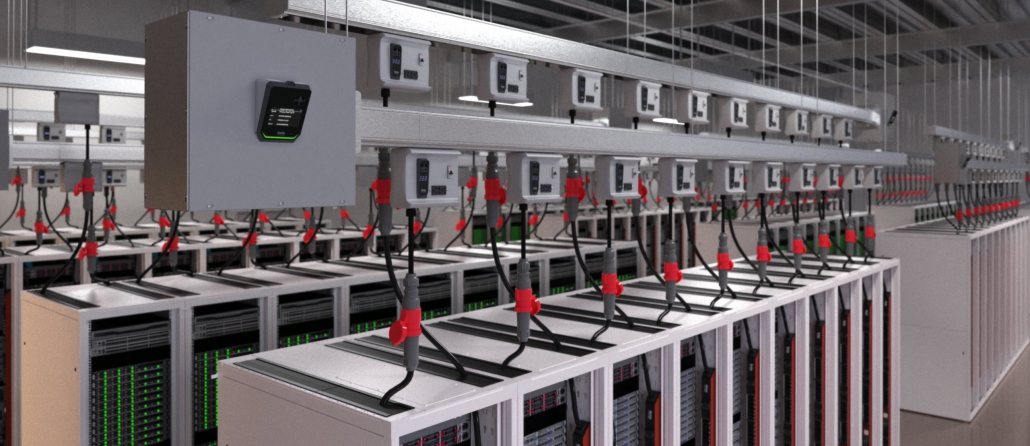
The Best UPS Battery Backup: Topologies, Power Factors, and Lithium-Ion Upgrades
Selecting a UPS Is About Risk Management, Not Just Runtime
Choosing a good battery backup is not simply about buying the largest battery or the most expensive UPS. It is fundamentally an exercise in risk management.
An improperly sized UPS, the wrong UPS topology, or a mismatched power factor can cause critical equipment to shut down during a utility power disturbance—even if the UPS appears to have adequate battery capacity.
For modern data centers, telecommunications facilities, hospitals, manufacturing plants, and enterprise IT environments, backup power systems must do far more than provide temporary runtime. They must deliver seamless power continuity, voltage stability, and predictable performance under real-world operating conditions.
This guide explains the engineering principles behind UPS selection, compares major UPS architectures, and examines why lithium-ion battery technology is rapidly replacing traditional VRLA battery systems in mission-critical facilities.
Understanding UPS Topologies: Which Architecture Is Best?
Not all UPS systems operate the same way. The way electricity flows through the system determines how effectively the UPS protects connected equipment.
Offline (Standby) UPS
An Offline UPS is the simplest and most affordable design.
Under normal conditions, utility power flows directly to connected equipment. When a power outage occurs, the UPS transfers the load to its inverter and battery system.
Key characteristics include:
- Lowest acquisition cost
- Suitable for home offices and small networking devices
- Minimal power conditioning
- Typical transfer time of 6–10 milliseconds
For devices such as routers, modems, and basic desktop computers, an Offline UPS is often sufficient. However, it is generally not recommended for critical infrastructure.
Line-Interactive UPS
Line-Interactive UPS systems add an Automatic Voltage Regulator (AVR) between utility power and the load.
The AVR corrects voltage fluctuations and brownouts without engaging the battery, extending battery life and improving efficiency.
Benefits include:
- Better voltage regulation than standby systems
- Reduced battery cycling
- Transfer times typically between 4–8 milliseconds
- Commonly used in SMB server rooms and network closets
For many business applications, line-interactive systems represent an excellent balance between cost and performance.
Online Double-Conversion UPS
Online Double-Conversion systems represent the gold standard for power protection.
Unlike standby designs, incoming AC power is continuously converted to DC and then reconstructed back into clean AC power through the inverter.
Because the inverter is always supplying the load, there is no transfer delay during utility failures.
Advantages include:
- Zero transfer time
- Continuous power conditioning
- Isolation from voltage sags, surges, harmonics, and frequency disturbances
- Mandatory for data centers, hospitals, financial institutions, and industrial automation systems
If downtime carries significant financial or operational consequences, Online Double-Conversion UPS architecture is typically the preferred solution.
Is Standby-Ferro UPS Efficiency High or Low?
A common question among facility engineers is whether Standby-Ferro UPS efficiency is high or low.
The answer is somewhat nuanced.
Standby-Ferro UPS systems generally achieve very high operating efficiency, often exceeding 90–93%, because the inverter remains inactive during normal operation. Their ferroresonant transformer also provides excellent voltage regulation and galvanic isolation.
However, modern IT equipment introduces a challenge.
Today’s servers and networking hardware use Active Power Factor Correction (Active PFC) power supplies. The large ferroresonant transformers found in Standby-Ferro systems can create phase-shift interactions with these modern loads, leading to instability, overheating, and reduced compatibility.
As a result, while Standby-Ferro designs remain highly efficient, they are largely being replaced by Online Double-Conversion systems in contemporary IT environments.
The Math Behind the Best Rated UPS Battery Backup: VA vs. Watts
One of the most misunderstood aspects of UPS selection is the relationship between Volt-Amps (VA) and Watts.
Many buyers mistakenly assume that a 10kVA UPS can support a full 10kW load.
In reality, actual usable power depends on the UPS power factor.
The relationship is:
Real Power (Watts) = Apparent Power (VA) * Power Factor (pf)
Where:
- P= Real Power (Watts)
- VA= Apparent Power
- pf= Power Factor
Example Calculation
A 10kVA UPS with a power factor of 0.8 can deliver:
8,000 watts
A 10kVA UPS with a power factor of 1.0 can deliver:
10,000 watts
This difference has major implications for rack density and equipment planning.
Why Power Factor Matters
Higher-quality enterprise UPS systems typically provide:
- Power Factor = 0.9
- Power Factor = 1.0
Lower-cost UPS systems often provide:
- Power Factor = 0.6
- Power Factor = 0.7
The higher the power factor, the more real computing power you receive from the same UPS footprint.
For modern server environments, selecting a high-power-factor UPS can reduce both capital expenditures and rack-space requirements.
Why the Best Lithium-Ion UPS Systems Are Replacing VRLA
For decades, Valve-Regulated Lead-Acid (VRLA) batteries served as the default energy storage technology for UPS applications.
That reality is rapidly changing.
Organizations searching for the best lithium ion UPS systems are increasingly replacing VRLA with Lithium Iron Phosphate (LiFePO₄) battery platforms.
Space Efficiency and Rack Density
Data center floor space is among the most expensive real estate in the world.
Traditional VRLA battery strings occupy substantial floor area and require dedicated battery rooms.
Modern lithium systems can provide equivalent runtime while reducing:
- Physical footprint by up to 50%
- Weight by up to 70%
This allows facility managers to allocate more space to revenue-generating server infrastructure rather than battery storage.
Thermal Tolerance and Cooling Savings
Temperature is one of the largest hidden costs in UPS ownership.
VRLA batteries experience accelerated degradation when ambient temperatures exceed:
77°F (25°C)
In many facilities, maintaining these conditions requires dedicated HVAC systems operating around the clock.
Lithium battery systems tolerate significantly wider temperature ranges without substantial lifespan reduction.
Benefits include:
- Reduced cooling costs
- Simplified room design
- Longer battery life
- Greater deployment flexibility
Lifecycle and Total Cost of Ownership
A typical VRLA UPS battery requires replacement every 3–5 years.
Over a 10-year operating period, facilities frequently perform multiple replacement cycles involving:
- Battery procurement
- Labor costs
- Hazardous waste disposal
- Downtime planning
Lithium systems typically offer:
- 10–15 year design life
- Significantly higher cycle counts
- Minimal maintenance requirements
Although initial acquisition costs are higher, long-term Total Cost of Ownership (TCO) is often substantially lower.
Intelligent Battery Management Systems (BMS)
A major advantage of modern lithium UPS batteries is the integrated Battery Management System (BMS).
Traditional VRLA strings can develop weak cells that remain undetected until a load test or actual outage reveals the failure.
Lithium systems continuously monitor:
- Cell voltage
- Temperature
- State of charge
- State of health
- Charge and discharge current
This real-time visibility enables predictive maintenance rather than reactive replacement.
For facilities using Data Center Infrastructure Management (DCIM) platforms, battery health information can be integrated directly into centralized monitoring systems.
Facility Procurement Resources
If you are migrating a data center architecture, read our technical breakdown on VRLA vs Lithium Battery for UPS: A Practical Guide for Data Center Backup Power.
Need to map out your facility’s service intervals? Review our UPS Battery Maintenance Comprehensive Guide.
Frequently Asked Questions: Finding a Good Battery Backup
Is Standby-Ferro UPS efficiency high or low?
A Standby-Ferro UPS generally operates with very high efficiency, often exceeding 90–93%, because the inverter is only activated during utility failures. However, its large ferroresonant transformer can create compatibility issues with modern Active PFC server power supplies, making it less suitable for contemporary IT environments.
| UPS Topology Architecture | Transfer Time to Battery | Ideal Operational Environment |
| Offline (Standby) | 6–10 milliseconds | Small office routers, basic desktops |
| Line-Interactive (AVR) | 4–8 milliseconds | SMB server rooms, network closets |
| Online Double-Conversion | Zero milliseconds | Mission-critical data centers, hospitals, enterprise IT |
What makes a good battery backup for a server rack?
A good battery backup for a server rack should use an Online Double-Conversion UPS topology with a power factor of at least 0.9. It should also provide sufficient runtime, network monitoring capability, scalable battery expansion, and support for lithium battery integration where long-term TCO optimization is a priority.
Are lithium UPS batteries safe for indoor use?
Yes. Commercial UPS systems increasingly use Lithium Iron Phosphate (LiFePO₄) chemistry, which is highly resistant to thermal runaway and offers excellent thermal stability. These systems are widely deployed in data centers, healthcare facilities, and enterprise environments.
How long do lithium UPS batteries last?
Most enterprise-grade lithium UPS battery systems provide a design life of 10–15 years, compared with 3–5 years for traditional VRLA batteries. Actual lifespan depends on operating temperature, cycling frequency, and maintenance practices.
Conclusion: The Best UPS Battery Backup Depends on Your Risk Profile
There is no universal “best” UPS for every application.
Small offices may be well served by a line-interactive system, while hospitals, financial institutions, manufacturing plants, and hyperscale data centers require Online Double-Conversion architectures.
Likewise, while VRLA batteries remain viable for some deployments, the combination of higher energy density, longer service life, reduced maintenance, and lower long-term TCO has made Lithium Iron Phosphate the preferred choice for modern critical power infrastructure.
Organizations evaluating a new UPS deployment should look beyond purchase price and focus on operational risk, lifecycle costs, facility constraints, and future scalability.
Ready to evaluate the ideal UPS architecture for your facility? Contact our engineering team to compare lithium and VRLA solutions, calculate real-world TCO, and design a power protection strategy tailored to your critical loads.