Telecom Battery Pack: Architecture, Design Considerations & How to Choose the Right System
What Is a Telecom Battery Pack? (Featured Snippet)
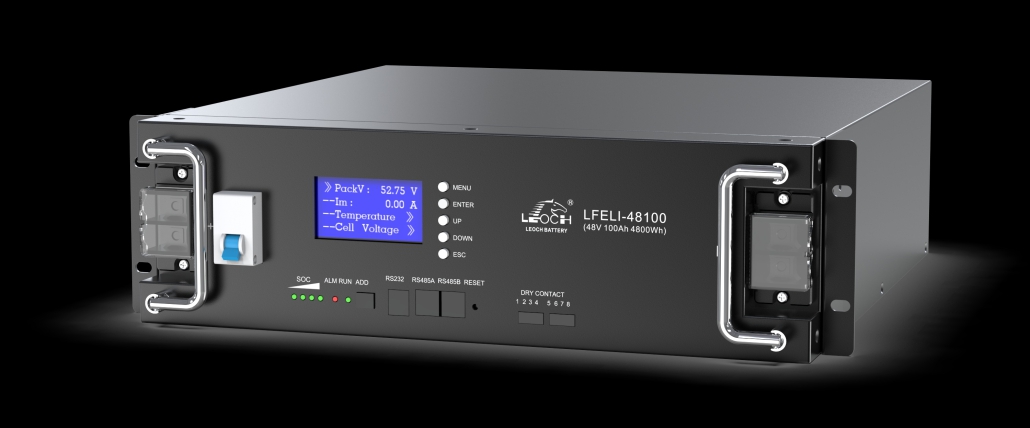
A telecom battery pack is an integrated energy storage system that combines multiple battery cells, a battery management system (BMS), and structural components into a unified solution designed for telecom power applications such as base stations, data transmission nodes, and backup power systems.
Unlike individual telecom batteries, battery packs are engineered for system-level performance, including voltage configuration (e.g., 48V), communication interfaces, thermal design, and long-term operational reliability.
Why Telecom Battery Packs Matter in Modern Networks
As telecom infrastructure evolves toward:
- 5G network densification
- Edge computing deployment
- Distributed base station architectures
Power systems are no longer simple backup units—they are core infrastructure components.
Modern telecom battery packs are expected to:
- Support longer backup durations
- Provide real-time system visibility and operational insights
- Operate reliably in demanding environments
- Integrate seamlessly with DC power systems
This shift explains why more professionals search for battery pack rather than just battery—the focus has moved from components to complete system performance.
Telecom Battery Pack vs. Telecom Battery: What’s the Difference?
| Aspect | Telecom Battery | Telecom Battery Pack |
| Scope | Single unit | Integrated system |
| Components | Cells only | Cells + BMS + enclosure |
| Application | Replacement / small systems | Engineered telecom systems |
| Voltage | Usually fixed | Configurable (e.g., 48V, 51.2V) |
| Intelligence | Limited | System-level data and control capabilities |
Key insight:
If you’re designing or upgrading a telecom power system, you’re not simply selecting a battery—you’re defining a battery system architecture.
Core Components of a Telecom Battery Pack
Understanding the internal structure helps avoid specification gaps and integration issues.
- Battery Cells (The Foundation)
Common chemistries:
- Lithium iron phosphate (LiFePO4)
- Lead-acid
They determine:
- Energy density
- Cycle life
- Safety characteristics
In modern telecom deployments, lithium-based systems are increasingly adopted due to longer lifecycle performance and reduced maintenance requirements.
- Battery Management System (BMS)
The BMS acts as the control layer of the battery pack.
Key functions:
- Cell balancing
- Overcharge and over-discharge protection
- Temperature tracking
- State of charge (SOC) estimation
In telecom applications, BMS also enables:
- Data communication (RS485, CAN, SNMP)
- Integration with energy and network management platforms
- Structural Design (Form Factor & Integration)
Typical formats include:
- 19-inch rack-mounted systems
- Wall-mounted units
- Outdoor cabinet-integrated solutions
Design considerations:
- Physical space constraints
- Installation standardization
- Maintenance accessibility
- Thermal Management
Telecom sites often operate under:
- High ambient temperatures
- Limited airflow conditions
Effective thermal design ensures:
- Stable performance
- Reduced degradation
- Safe long-term operation
Key Design Considerations Before Choosing a Telecom Battery Pack
Many deployment challenges arise not from the product itself, but from incomplete system planning.
- Voltage Standardization (48V and Variants)
Most telecom systems operate on:
- 48V DC (industry standard)
However, variations such as 51.2V lithium systems are common.
Mismatch risks include:
- Compatibility issues
- Reduced system efficiency
- Capacity and Backup Time
Rather than focusing only on amp-hour (Ah) ratings, define:
- Required backup duration (e.g., 2h / 4h / 8h)
- Actual load profile (steady vs. variable)
In practice, inaccurate assumptions often lead to:
- Oversizing (unnecessary cost)
- Undersizing (insufficient backup reliability)
- Communication Interface Compatibility
This is a frequently overlooked but critical factor.
Ensure compatibility with:
- Power systems
- Site management platforms
Common interfaces:
- RS485
- CAN
- SNMP
Without proper integration, system data may not be fully accessible or usable.
- Scalability and Parallel Expansion
Consider whether the system:
- Supports parallel operation
- Allows future capacity expansion
This is especially important for:
- Network growth
- Incremental infrastructure upgrades
- Environmental Adaptability
Deployment conditions vary significantly:
- Indoor urban sites
- Remote outdoor installations
- High-temperature or high-humidity regions
Key factors:
- Operating temperature range
- Protection level (IP rating)
Common Challenges in Telecom Battery Pack Deployment
Challenge 1: Limited System Visibility
Cause:
- Incompatible communication interfaces
Result:
- Difficulty accessing operational data
Consideration:
- Verify communication alignment early in the design phase
Challenge 2: Shorter-than-Expected Service Life
Cause:
- Thermal stress
- Cell quality variation
- Unrealistic lifecycle assumptions
Consideration:
- Evaluate performance under real operating conditions
Challenge 3: Complex Installation
Cause:
- Mechanical or structural mismatch
Consideration:
- Confirm rack compatibility, connectors, and layout requirements
Challenge 4: Difficult Future Expansion
Cause:
- Lack of modular or parallel-ready design
Consideration:
- Prioritize systems designed for scalability
Often Overlooked Factors That Impact Long-Term Performance
- Depth of Discharge (DoD) vs. Cycle Life
Higher usable capacity does not always translate into longer lifespan.
- BMS Software Stability
System performance depends not only on hardware, but also on software reliability and data consistency.
- Rated vs. Field Performance
Laboratory specifications may differ from real-world operating conditions.
- Compatibility with Hybrid Energy Systems
Increasingly relevant for:
- Solar-powered telecom sites
- Off-grid or weak-grid deployments
Expanding Beyond Battery Packs: System-Level Perspective
While battery packs are a critical component, they are only one part of the overall telecom power architecture.
Understanding how battery systems interact with:
- Power supply units
- Energy management strategies
- Lifecycle optimization planning
can significantly improve long-term system efficiency.
For a broader perspective on telecom battery strategies and system-level optimization, you may also explore:
https://leochlithium.us/telecom-battery-solutions-how-to-choose-optimize-and-future-proof-your-network-power/
When Should You Choose a Telecom Battery Pack?
A battery pack is generally the preferred choice when:
- Deploying or upgrading a complete telecom power system
- Requiring structured installation (rack or cabinet integration)
- Needing system-level data access and control
- Planning for long-term scalability and lifecycle management
Final Thoughts
Telecom battery packs have evolved from simple storage units into integrated energy systems that influence network reliability, operational efficiency, and long-term cost structure.
Selecting the right solution requires more than comparing specifications. It involves understanding:
- System architecture
- Integration requirements
- Real-world operating conditions
In modern telecom infrastructure, the key question is no longer which battery to use, but rather:
Which battery system design best aligns with the network’s performance and future expansion needs?
Recommended Reading
To further explore related topics:
- Telecom Battery Solutions: How to Choose, Optimize, and Future-Proof Your Network Power
https://leochlithium.us/telecom-battery-solutions-how-to-choose-optimize-and-future-proof-your-network-power/ - Telecom Power Supply Buying Guide: How to Select, Integrate, and Future-Proof Your Network Power System
https://leochlithium.us/telecom-power-supply-buying-guide-how-to-select-integrate-and-future-proof-your-network-power-system/
Lithium Battery for Telecom: A Practical Guide to Building Reliable and Efficient Network Power Systems
https://leochlithium.us/lithium-battery-for-telecom-a-practical-guide-to-building-reliable-efficient-and-future-proof-network-power-systems/