Utility-Scale BESS Manufacturers: A Procurement & Bankability Guide for Developers and EPCs
Introduction
As utility-scale energy storage becomes a cornerstone of modern power systems, selecting the right Battery Energy Storage System (BESS) manufacturer is no longer just a technical decision—it is a financial, operational, and long-term risk decision.
For developers, EPC contractors, and utilities, the real challenge is not identifying manufacturers—but choosing a bankable, scalable, and project-ready partner.
What Are Utility-Scale BESS Manufacturers?
Featured Snippet Answer:
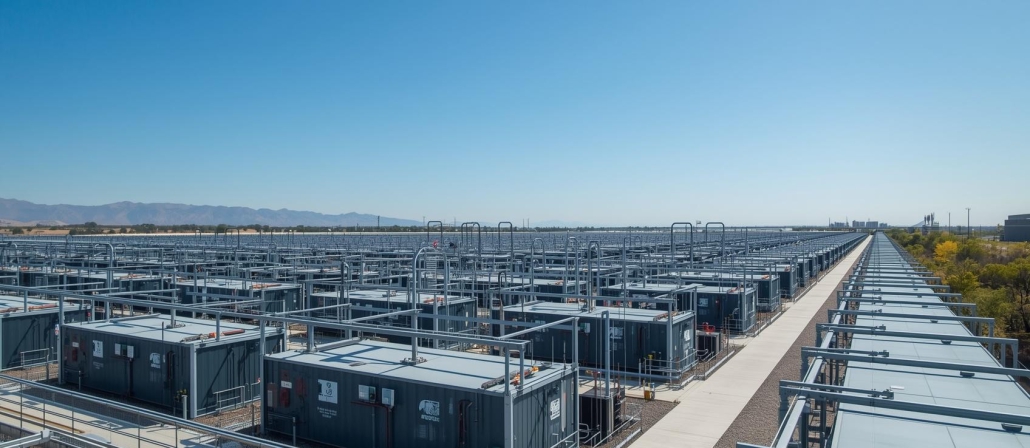
Utility-scale BESS manufacturers are companies that design, supply, and integrate large-scale battery energy storage systems—typically ranging from tens of megawatts (MW) to gigawatt-scale deployments—used for grid stabilization, renewable integration, and energy market optimization. These manufacturers may operate as battery producers, system integrators, or full-scope solution providers depending on their capabilities.
Key Categories of BESS Manufacturers
Understanding the ecosystem is critical before supplier selection:
- System Integrators (Most Critical Layer)
- Deliver full BESS solutions (battery + PCS + EMS)
- Responsible for system performance and project delivery
- Battery Manufacturers (Upstream Suppliers)
- Produce lithium-ion cells/modules (primarily LFP)
- Focus on energy density, cycle life, and safety
- Hybrid or Full-Scope Providers
- Offer vertically integrated solutions
- Increasingly common in large-scale deployments
Why Manufacturer Selection Is a High-Stakes Decision
At the utility scale, mistakes in supplier selection can result in:
- Project delays and liquidated damages (LDs)
- Safety incidents (thermal runaway risks)
- Underperformance affecting revenue models
- Financing challenges due to lack of bankability
👉 In many cases, the BESS supplier directly impacts whether a project can reach financial close.
How to Evaluate Utility-Scale BESS Manufacturers
Featured Snippet Answer:
To evaluate utility-scale BESS manufacturers, developers should assess system integration capability, bankability, project experience, safety design, delivery capacity, and lifecycle service support. The goal is to select a supplier that can ensure both technical performance and long-term project reliability.
- Bankability & Financial Credibility
This is the first filter for utility-scale projects.
Key questions:
- Has the supplier supported financed projects?
- Are they accepted by lenders and investors?
- Do they have a track record in GW-scale deployments?
👉 Without bankability, even the best technology may be rejected.
- System Integration Capability
The industry is shifting from battery competition → system-level competition.
Evaluate:
- EMS (Energy Management System) sophistication
- PCS compatibility and optimization
- Thermal management design
- Grid compliance capability
👉 A strong integrator ensures stable operation across 10–20 years.
- Safety Architecture (Critical Priority)
Utility-scale BESS projects face increasing scrutiny due to fire risks.
Look for:
- Cell-level safety design (LFP preferred)
- Multi-layer fire protection systems
- Compliance with UL9540 / IEC standards
- Proven incident-free project record
- Delivery & Supply Chain Reliability
Large-scale projects require consistent and on-time delivery.
Assess:
- Manufacturing capacity (GWh/year)
- Supply chain control (cells, PCS, components)
- Lead times and logistics capability
- Lifecycle Services & O&M Support
BESS is a 20-year asset, not a one-time purchase.
Check:
- Warranty structure (performance vs product)
- Remote monitoring capabilities
- Maintenance and replacement strategy
- Project Experience in Similar Applications
Not all experience is equal.
Prioritize suppliers with:
- Utility-scale (not just C&I) deployments
- Similar grid conditions
- Comparable project sizes (e.g., 100MW+)
Key Trends Shaping Utility-Scale BESS Manufacturers
- Shift Toward System-Level Differentiation
Competitive advantage is moving beyond batteries to:
- Software (EMS optimization)
- Grid services capability
- Revenue stacking performance
- Rise of Long-Duration Energy Storage (LDES)
Driven by:
- Renewable penetration
- Data center and AI energy demand
👉 Increasing demand for:
- 4-hour → 8-hour → longer duration systems
- Increasing Importance of Bankability
Financial institutions now require:
- Proven suppliers
- Strong warranties
- Risk mitigation strategies
👉 Supplier selection is now finance-driven, not just engineering-driven.
- Multi-Revenue Business Models
Modern BESS projects rely on:
- Energy arbitrage
- Capacity markets
- Ancillary services
👉 System performance directly impacts ROI.
Common Mistakes When Selecting BESS Manufacturers
Avoid these critical errors:
- Choosing based on price alone
- Ignoring system integration capability
- Overlooking long-term O&M requirements
- Selecting suppliers without utility-scale references
How This Fits into Your Overall BESS Strategy
If you’re planning or evaluating a project, this guide should be used alongside:
- Battery Energy Storage System Manufacturers guide article
https://leochlithium.us/battery-energy-storage-system-manufacturers-how-to-identify-reliable-partners-for-commercial-and-utility-projects/ - Solar Battery Supplier sourcing guide
https://leochlithium.us/solar-battery-supplier-how-installers-and-epc-contractors-source-reliable-lithium-energy-storage/
👉 These resources provide additional insights into supplier sourcing and evaluation frameworks.
Conclusion: From “Who Makes BESS” to “Who Can Deliver Bankable Projects”
The utility-scale BESS market is no longer about identifying manufacturers—it is about selecting partners capable of delivering reliable, financeable, and scalable energy storage systems.
Developers and EPCs that adopt a structured procurement and evaluation framework will significantly reduce project risk and improve long-term returns.
CTA: Talk to a BESS Solution Partner
If you are sourcing utility-scale or commercial energy storage systems and need:
- Scalable lithium battery solutions
- Reliable system configurations
- Project-oriented technical support
👉 Contact our team to discuss your project requirements:
https://leochlithium.us/contact-us/