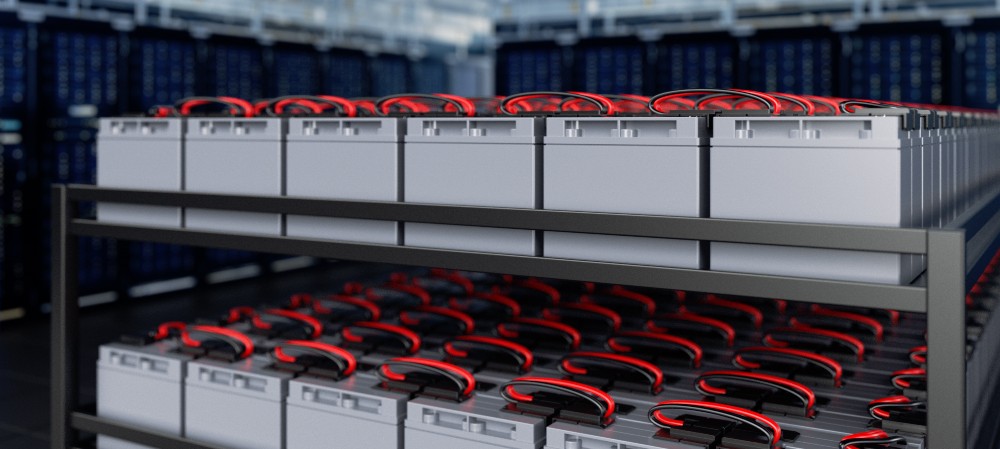
UPS Battery Basics: Lithium vs Lead-Acid for Reliable Backup Power
What Is a UPS Battery?
A UPS battery is the energy storage component inside an uninterruptible power supply that provides temporary electricity during power outages or voltage disturbances. When utility power fails, the UPS battery supplies stored energy to keep connected equipment running long enough to prevent data loss, system crashes, or unsafe shutdowns.
The type of battery used in a UPS system directly affects runtime, reliability, maintenance requirements, and long-term operating cost.
What Role Does a Battery Play in a UPS System?
In a UPS system, the battery acts as the bridge between power loss and continuity.
When utility power is stable, the battery remains charged and on standby. During an outage or severe fluctuation, it instantly supplies DC power to the inverter, which converts it into usable AC power for connected loads. This transition happens in milliseconds, ensuring uninterrupted operation.
Because of this role, battery performance determines:
- How long equipment can remain powered
- How stable the output power remains under load
- How often the UPS requires maintenance or battery replacement
For readers new to UPS systems, a broader explanation of how batteries fit into overall UPS operation can be found here:
👉 What Is a UPS Power Supply? Definition, How It Works, and When You Need One
https://leochlithium.us/what-is-a-ups-power-supply-definition-how-it-works-and-when-you-need-one/
Common Types of UPS Batteries
Most modern UPS systems rely on one of two main battery chemistries: lead-acid or lithium-ion.
Lead-Acid UPS Batteries
Lead-acid batteries have been used in UPS systems for decades and remain common, especially in legacy and budget-sensitive installations.
Typical variants include:
- Flooded lead-acid (less common in indoor UPS systems)
- Sealed lead-acid (SLA), including AGM and gel batteries
Advantages:
- Lower upfront cost
- Widely available
- Proven, well-understood technology
Limitations:
- Shorter cycle life
- Larger and heavier for the same capacity
- Performance degrades faster under frequent discharge
Lithium-Ion UPS Batteries
Lithium-ion batteries—particularly lithium iron phosphate (LiFePO4)—are increasingly adopted in modern UPS systems.
Advantages:
- Higher energy density
- Longer cycle life
- Lighter and more compact
- More stable performance over time
- Lower maintenance requirements
Limitations:
- Higher upfront cost
- Requires advanced battery management systems
Other Battery Types (Brief Overview)
Some niche UPS systems may use nickel-based or emerging chemistries, but these are far less common and typically reserved for specialized environments.
Lithium vs Lead-Acid: Side-by-Side Comparison
| Feature | Lithium Batteries | Lead-Acid Batteries |
| Energy density | High | Lower |
| Cycle life | Long (thousands of cycles) | Shorter |
| Weight & size | Compact and lightweight | Heavy and bulky |
| Runtime stability | Consistent under load | Declines with age |
| Maintenance | Minimal | Periodic checks or replacements |
| Operating temperature range | Wider | Narrower |
| Upfront cost | Higher | Lower |
| Long-term cost | Often lower | Often higher |
This comparison highlights why lithium batteries are increasingly favored in performance-critical environments, despite their higher initial investment.
Which UPS Battery Is Best for Your Application?
The right UPS battery depends on how and where the system is used.
Small Office and Home Backup
For basic protection of PCs, routers, or NAS devices:
- Lead-acid batteries are often sufficient
- Lithium may be preferred where space, weight, or long service life matters
Enterprise and Data Centers
In high-load environments:
- Predictable runtime
- High reliability
- Reduced maintenance windows
Lithium batteries are often better suited due to their longevity and stable performance. For a deeper look at UPS use cases across industries, see:
👉 Uninterruptible Power Supply Applications: Where and Why UPS Systems Are Essential
https://leochlithium.us/uninterruptible-power-supply-applications-where-and-why-ups-systems-are-essential/
Medical and Industrial Systems
Here, battery reliability is directly linked to safety. Long cycle life and consistent output often make lithium-based UPS batteries the preferred choice.
Remote and Distributed Sites
Telecom sites and remote facilities benefit from batteries that require minimal maintenance and tolerate wide temperature ranges—another area where lithium batteries excel.
Cost Considerations: Upfront Price vs Lifecycle Cost
While lead-acid batteries typically cost less initially, they often require more frequent replacement. Lithium batteries, though more expensive upfront, tend to last significantly longer and maintain performance over time.
When evaluating total cost of ownership (TCO), factors to consider include:
- Replacement frequency
- Labor and downtime costs
- Performance degradation over time
- Energy efficiency losses
In many long-term or mission-critical deployments, lithium batteries can offer a lower overall cost despite the higher initial investment.
Battery Runtime and Sizing Basics
UPS battery runtime depends on:
- Battery capacity
- Load size
- System efficiency
- Discharge characteristics
Lead-acid batteries are more affected by high discharge rates, while lithium batteries typically deliver more consistent runtime under similar conditions.
For server rooms and high-density IT loads, battery sizing becomes especially critical. This topic is explored in greater depth here:
👉 High-Capacity UPS Battery for Servers: Key Considerations for Reliable Backup
https://leochlithium.us/high-capacity-ups-battery-for-servers-key-considerations-for-reliable-backup/
Safety and Maintenance Considerations
Regardless of chemistry, UPS batteries require proper design and management.
Key considerations include:
- Temperature control and ventilation
- Proper charging and discharge limits
- Monitoring battery health and end-of-life indicators
- Safe recycling and disposal
Lithium batteries rely on battery management systems (BMS) to ensure safe operation, while lead-acid systems often depend more on external monitoring and scheduled replacement.
Common Misconceptions About UPS Batteries
Several misunderstandings can lead to poor system choices:
- All UPS batteries perform the same — they do not
- Higher capacity always means longer runtime — load matters
- Lead-acid is always cheaper — lifecycle cost often tells a different story
Understanding these distinctions helps avoid unexpected downtime and premature battery failure.
Final Thoughts: Choosing the Right UPS Battery
Choosing the right UPS battery chemistry is a balance between performance, reliability, maintenance expectations, and long-term cost. Lead-acid batteries remain a viable option for basic backup needs, while lithium batteries increasingly define the standard for modern, high-reliability UPS systems.
A clear understanding of UPS battery basics allows organizations and users to design backup power systems that are both resilient and cost-effective.