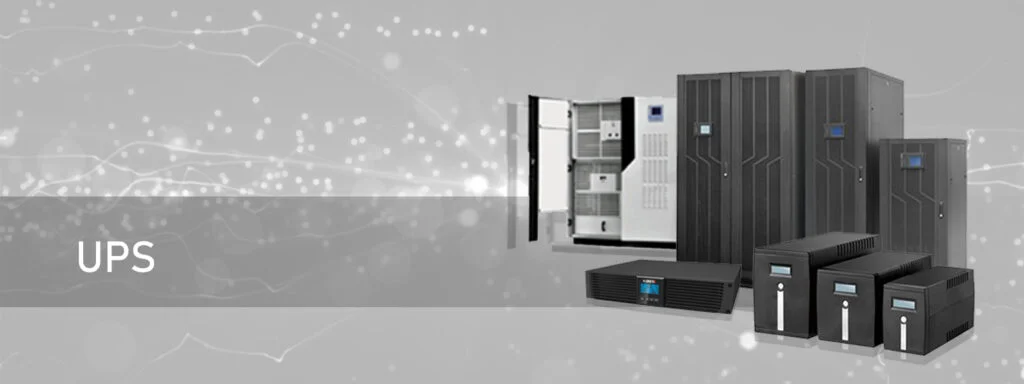
UPS Application vs UPS Topology Selection: How to Match the Right Architecture to Real-World Use Cases
Choosing a UPS system is not only about capacity or battery runtime. One of the most common—and costly—mistakes is selecting a UPS topology without fully considering the application it is meant to support.
Different applications impose very different requirements on power continuity, transfer time, power quality, and system resilience. Understanding how UPS applications align with specific UPS topologies is essential for building a reliable and cost-effective backup power strategy.
What Is UPS Topology and Why It Matters
UPS topology refers to the internal design and operating principle of a UPS system—specifically, how power flows from the utility source to the load and how the battery is integrated into that process.
The topology directly determines:
- Transfer time during power interruptions
- Level of power conditioning
- System efficiency
- Suitability for sensitive or mission-critical loads
This is why UPS topology selection should always follow application analysis—not the other way around.
Common UPS Topologies Explained
Before mapping applications to topologies, it is important to understand the three most widely used UPS architectures.
Standby (Offline) UPS
- Normally feeds load directly from the utility
- Switches to battery only during power failure
- Short transfer time, limited power conditioning
Typically used for non-critical, low-risk environments.
Line-Interactive UPS
- Actively regulates voltage without switching to battery
- Provides better protection against minor power disturbances
- Moderate transfer time and efficiency balance
Common in small IT and commercial applications.
Online (Double-Conversion) UPS
- Continuously converts AC to DC and back to AC
- Zero transfer time during outages
- Provides the highest level of power conditioning
Designed for mission-critical and highly sensitive loads.
Featured Decision Insight: Matching UPS Topology to Application
UPS topology should be selected based on how critical the load is, how tolerant it is to transfer time, and how stable the input power environment is.
Applications with zero tolerance for power interruption or voltage distortion typically require online UPS systems, while less critical applications can operate reliably with simpler topologies.
Application-Driven UPS Topology Selection
Data Centers and Server Rooms
Application characteristics:
- High sensitivity to voltage fluctuations
- Zero tolerance for downtime
- Mission-critical workloads
Recommended topology:
Online (Double-Conversion) UPS
Data centers require continuous, clean power. Even millisecond-level transfer delays or minor voltage distortion can cause server faults or data corruption. Online UPS systems provide complete isolation from utility power issues, making them the preferred architecture for this application.
Telecommunications Infrastructure
Application characteristics:
- Distributed and remote sites
- Long runtime requirements
- Continuous operation expectations
Recommended topology:
Online UPS (often DC-integrated or modular designs)
Telecom systems demand extremely high availability. Because power quality varies significantly across sites, online UPS architectures ensure consistent output regardless of grid instability.
A broader view of UPS systems designed for different operating environments can be found in the UPS product category:
https://leochlithium.us/ups-4/
Healthcare and Medical Facilities
Application characteristics:
- Life-critical equipment
- Regulatory and safety requirements
- Zero acceptable interruption
Recommended topology:
Online (Double-Conversion) UPS
Medical equipment such as surgical systems and diagnostic devices cannot tolerate transfer delays or waveform distortion. Online UPS systems are essential to meet both safety and compliance expectations in healthcare environments.
Industrial and Manufacturing Environments
Application characteristics:
- Harsh electrical environments
- High inrush currents
- Power quality issues more frequent than full outages
Recommended topology:
Line-Interactive or Online UPS (application-dependent)
For control systems and PLCs, online UPS systems provide maximum protection. For less sensitive industrial loads, line-interactive designs may offer a practical balance between protection and efficiency.
Commercial Buildings and Office Applications
Application characteristics:
- Mixed criticality loads
- Cost-sensitive environments
- Moderate tolerance for brief transfer time
Recommended topology:
Line-Interactive UPS
Office IT systems, security infrastructure, and transaction equipment often benefit from line-interactive UPS systems, which provide adequate voltage regulation without the complexity of full double conversion.
Why Application-First Selection Reduces Total Cost of Ownership
Selecting UPS topology based on application—not habit or price alone—helps avoid:
- Overengineering low-risk systems
- Underprotecting mission-critical loads
- Excessive energy losses
- Premature battery and component wear
In many cases, the wrong topology costs more over time than a higher-quality system properly matched to its application.
Common Topology Selection Mistakes
- Using standby UPS systems for sensitive IT equipment
- Deploying line-interactive UPS units in unstable power environments
- Assuming all “online UPS” solutions are interchangeable
- Ignoring future load growth and redundancy needs
These mistakes often surface only after downtime or equipment failure occurs.
How to Evaluate UPS Topology for Your Application
Before selecting a topology, decision-makers should consider:
- How critical is uninterrupted operation?
- Is the load sensitive to voltage distortion or frequency variation?
- How stable is the utility power?
- Is scalability or redundancy required?
Answering these questions ensures that topology selection supports real operational needs rather than theoretical specifications.
Conclusion: Application Defines Topology, Not the Other Way Around
UPS topology selection should never be a purely technical exercise divorced from real-world usage. The same UPS architecture that works well in an office may fail catastrophically in a data center or hospital environment.
By starting with application requirements and then selecting the appropriate UPS topology, organizations can achieve higher reliability, better efficiency, and lower long-term risk.