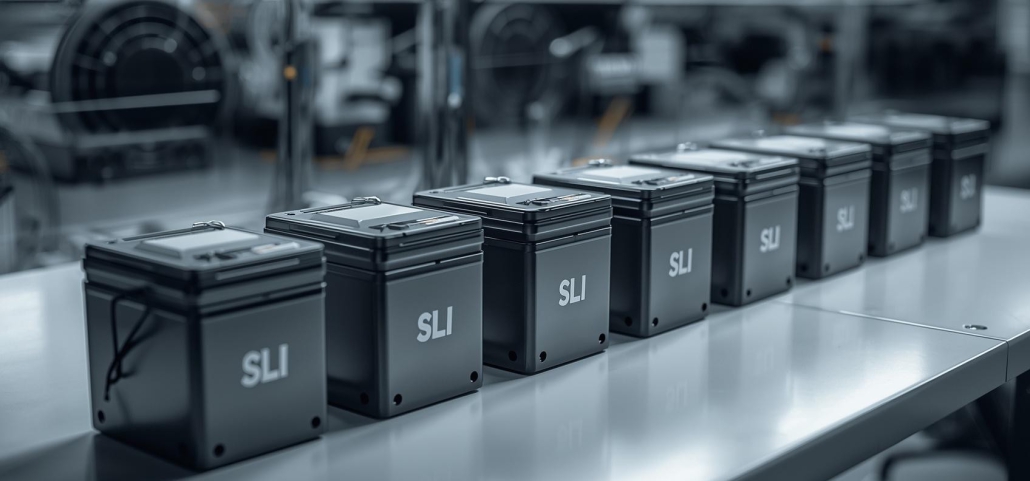
SLI Battery Types: Differences, Limitations, and the Shift to Lithium Alternatives
What Are SLI Battery Types?
SLI batteries (Starting, Lighting, and Ignition) are designed to deliver short bursts of high current to start engines and power essential electrical systems. They are commonly used in:
- Passenger vehicles
- Motorcycles and powersports
- Marine starting systems
- Backup generators
The most widely used SLI battery types include flooded (wet cell), AGM (Absorbent Glass Mat), and gel batteries. Each type offers different performance characteristics, maintenance requirements, and cost structures.
Main Types of SLI Batteries
- Flooded (Wet Cell) Batteries
Flooded batteries are the traditional and most cost-effective SLI option.
Key characteristics:
- Liquid electrolyte (sulfuric acid)
- Requires periodic maintenance (water refilling)
- Widely available
Advantages:
- Low upfront cost
- Proven reliability
- Suitable for standard vehicles
Limitations:
- Requires maintenance
- Risk of leakage and corrosion
- Shorter lifespan
- AGM (Absorbent Glass Mat) Batteries
AGM batteries use fiberglass mats to hold the electrolyte, making them sealed and maintenance-free.
Key characteristics:
- Spill-proof design
- Lower internal resistance
- Improved vibration resistance
Advantages:
- Maintenance-free
- Higher starting performance
- Faster charging
Limitations:
- Higher cost than flooded batteries
- Sensitive to overcharging
- Gel Batteries
Gel batteries use a silica-based gel electrolyte and are fully sealed.
Key characteristics:
- Thickened electrolyte
- Low self-discharge rate
- Suitable for deep-cycle conditions
Advantages:
- Good deep discharge performance
- Maintenance-free
- Longer storage life
Limitations:
- Lower starting current than AGM
- Higher cost
- Requires precise charging control
Key Differences Between SLI Battery Types
| Feature | Flooded | AGM | Gel |
| Maintenance | High | None | None |
| Cost | Low | Medium | High |
| Lifespan | Short | Medium | Medium |
| Starting Power | Standard | High | Moderate |
| Vibration Resistance | Low | High | Medium |
👉 In modern automotive and marine applications, AGM batteries are often preferred due to their balance of performance, durability, and convenience.
Limitations of Traditional SLI Batteries
Despite their widespread use, traditional lead-acid SLI batteries face several limitations in modern applications:
- Limited Lifespan
Frequent engine starts and partial charge cycles accelerate degradation.
- Heavy and Bulky
Lead-acid batteries are significantly heavier, limiting efficiency and design flexibility.
- Poor Deep Cycle Capability
They are designed for short bursts—not sustained energy delivery.
- Maintenance and Safety Issues
Flooded batteries require maintenance and may release gases or leak electrolyte.
👉 As performance expectations increase, these limitations are becoming more critical—especially for commercial fleets, marine systems, and high-performance applications.
The Shift from SLI Batteries to Lithium Alternatives
As battery technology evolves, lithium batteries—particularly LiFePO4—are increasingly being adopted in applications traditionally dominated by SLI batteries.
Compared to lead-acid SLI batteries, lithium solutions offer:
- 3–5× longer lifespan
- Up to 70% weight reduction
- Higher energy efficiency
- Faster charging
- Stable performance under high-load conditions
👉 This shift is especially noticeable in:
- Motorcycles and powersports
- Marine starting systems
- Commercial and specialty vehicles
- Fleet and performance upgrades
For many businesses, lithium is no longer an alternative—it is becoming the next standard for starter battery applications.
Lithium Battery Solutions for SLI Applications
Transitioning from traditional SLI batteries to lithium is not just a technical upgrade—it is a strategic decision that impacts:
- Total cost of ownership
- System reliability
- Product differentiation
- Long-term scalability
As lithium adoption accelerates, many distributors, OEMs, and system integrators are actively evaluating how to source reliable and scalable battery solutions.
For businesses planning large-scale deployment or product upgrades, supplier selection becomes a critical factor.
➡️ Learn how to source scalable lithium battery solutions for commercial and industrial projects:
https://leochlithium.us/wholesale-lithium-batteries-how-to-source-reliable-scalable-battery-solutions-for-commercial-and-industrial-projects/
👉 Need Help Evaluating Lithium for Your SLI Applications?
Businesses transitioning from lead-acid SLI batteries to lithium often require customized solutions based on specific applications and performance requirements.
👉 Discuss your project with our team to evaluate the most suitable lithium battery solution:
https://leochlithium.us/contact-us/
How to Choose the Right Battery Type for Your Application
Selecting between SLI battery types—or transitioning to lithium—depends on your specific use case:
- Application Type
- Standard vehicles → Flooded or AGM
- High-performance or premium systems → AGM or lithium
- Marine / off-road → AGM or lithium
- Cost vs Long-Term Value
- Lowest upfront cost → Flooded
- Balanced performance → AGM
- Best lifecycle value → Lithium
- Environmental Conditions
- High vibration → AGM or lithium
- Extreme temperatures → Lithium performs better
- Maintenance Requirements
- Maintenance acceptable → Flooded
- Maintenance-free → AGM, gel, or lithium
From Battery Selection to Supplier Strategy
For individual users, choosing the right battery type is mainly about performance and cost.
However, for businesses—including distributors, OEMs, and project developers—the challenge goes further:
👉 It is not just about choosing a battery type, but selecting a reliable supply partner that can support:
- Consistent product quality
- Scalable production capacity
- Long-term supply stability
➡️ Explore how to identify reliable battery wholesale suppliers in a competitive global market:
https://leochlithium.us/battery-wholesale-suppliers-how-to-find-reliable-bulk-battery-suppliers-in-2026/
Conclusion: From Understanding SLI Types to Adopting Lithium
Understanding SLI battery types—flooded, AGM, and gel—is essential for traditional starting applications. However, as industries move toward higher efficiency, longer lifespan, and reduced maintenance, lithium batteries are rapidly emerging as a superior alternative.
👉 Today, the decision is no longer just about selecting an SLI battery type—it is about whether to upgrade to lithium and optimize long-term performance and cost.
👉 Planning to Transition from SLI to Lithium?
If your business is evaluating lithium battery alternatives for automotive, marine, or industrial applications, making the right transition requires more than just selecting a product—it requires the right technical and supply strategy.
- Compare lithium vs lead-acid performance and lifecycle cost
- Evaluate compatibility with your current SLI applications
- Identify scalable and reliable supply options for long-term deployment
👉 Contact our team to discuss your project requirements and get a customized lithium battery solution:
https://leochlithium.us/contact-us/