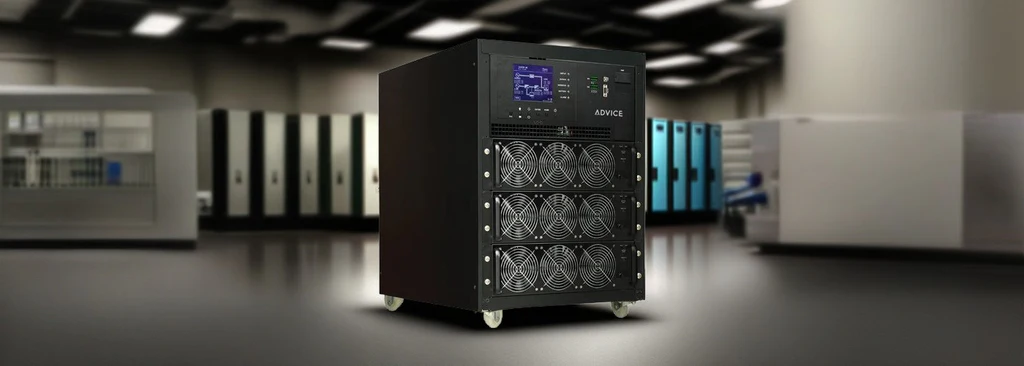
Long Runtime UPS Systems: How to Design Backup Power for Extended Operation
What Is a Long Runtime UPS?
A long runtime UPS (Uninterruptible Power Supply) is a backup power system designed to provide extended electricity supply—typically ranging from 30 minutes to several hours—by integrating high-capacity battery banks or scalable external battery systems. These solutions are widely used in data centers, industrial facilities, telecom infrastructure, and other critical environments where prolonged power continuity is essential.
Why Standard UPS Systems Cannot Deliver Long Runtime
Most standard UPS systems are designed for short-duration backup (5–15 minutes), mainly to:
- Allow safe system shutdown
- Bridge the gap before generators start
- Protect sensitive equipment
However, they fall short in long runtime scenarios due to:
- Limited Internal Battery Capacity
Built-in batteries are constrained by physical space and thermal limits.
- Power vs. Runtime Trade-Off
Higher loads drastically reduce available runtime.
- Heat and Efficiency Constraints
Extended discharge periods generate heat, reducing system efficiency and lifespan.
👉 As a result, achieving long runtime requires system-level design—not just a larger UPS unit.
How to Achieve Long Runtime UPS Systems
Designing a long runtime UPS system is fundamentally about battery strategy and scalability. The following are the three most common approaches:
- External Battery Cabinets
Adding external battery banks significantly increases total energy storage.
- Suitable for: Data centers, large facilities
- Advantage: Scalable runtime (30 min → several hours)
- Limitation: Requires additional space and maintenance
- Lithium Battery Upgrades (Recommended)
Replacing traditional lead-acid batteries with lithium batteries offers:
- Higher energy density (more runtime in less space)
- Longer cycle life
- Faster charging
- Lower total cost of ownership (TCO)
👉 For projects requiring extended backup time and space optimization, lithium-based UPS battery systems are increasingly the preferred solution.
➡️ Explore lithium UPS solutions for large-scale and industrial applications:
https://leochlithium.us/ups-wholesale-lithium-battery-solutions-for-distributors-integrators-industrial-projects/
- Modular Battery Expansion Systems
Modern UPS systems allow modular battery scaling:
- Add battery modules as runtime requirements grow
- Flexible for phased deployments
- Ideal for evolving infrastructure
How to Calculate UPS Runtime Accurately
UPS runtime is determined by the relationship between battery capacity and load demand.
Key variables include:
- Battery capacity (Ah / kWh)
- Load power (kW)
- System efficiency
- Discharge characteristics
Even small miscalculations can lead to:
- Insufficient backup time
- Overinvestment in battery capacity
- System reliability risks
👉 For a detailed, step-by-step calculation method, refer to:
https://leochlithium.us/ups-battery-runtime-calculation-how-to-estimate-backup-time-for-critical-power-systems/
👉 For system-level design and sizing strategies, see:
https://leochlithium.us/data-center-ups-battery-selection-sizing-architecture-future-proofing-guide/
Applications of Long Runtime UPS Systems
Long runtime UPS systems are critical in industries where downtime is not acceptable:
Data Centers
- Ensure uptime during extended outages
- Support controlled shutdown or workload migration
Industrial & Manufacturing Facilities
- Maintain operation of critical machinery
- Prevent production losses
👉 Learn more about industrial UPS system design:
https://leochlithium.us/industrial-ups-battery-systems-backup-power-design-for-manufacturing-and-critical-facilities/
Telecom Infrastructure
- Provide backup for base stations and network equipment
- Essential in areas without reliable grid or generator support
Healthcare & Critical Facilities
- Support life-saving equipment
- Ensure uninterrupted operation during emergencies
Long Runtime UPS vs Generator: Which Is Better?
| Factor | Long Runtime UPS | Generator |
| Response Time | Instant | কয়েক秒延迟 |
| Runtime | Limited (battery-dependent) | Long (fuel-dependent) |
| Maintenance | Low (especially lithium) | High |
| Emissions | None | Yes |
| Reliability | High for short-to-medium duration | Better for long-duration outages |
👉 In practice, many facilities use UPS + generator hybrid systems:
- UPS = instant backup
- Generator = long-term power
How to Choose the Right Long Runtime UPS Solution
When selecting a long runtime UPS system, consider:
- Required Runtime
- 15–30 minutes → basic expansion
- 1–2 hours → lithium or large battery bank
- 4+ hours → hybrid system (UPS + generator)
- Battery Technology
| Type | Pros | Cons |
| Lead-acid | Lower upfront cost | Large size, short lifespan |
| Lithium | Compact, long life, high efficiency | Higher initial cost |
👉 For most modern projects, lithium is becoming the default choice.
- Space Constraints
Battery footprint is often the limiting factor in long runtime design.
- Scalability Requirements
Future expansion capability is critical for:
- Data centers
- Industrial plants
- Telecom networks
Conclusion: Long Runtime UPS Is a Battery-Driven Solution
A long runtime UPS is not just a larger UPS—it is a carefully designed energy storage system built around:
- Battery capacity
- System architecture
- Application requirements
👉 The key to success lies in selecting the right battery technology and system design approach.
👉 Request a Customized Long Runtime UPS Solution
If you’re planning a project that requires extended backup time—whether for data centers, industrial systems, or telecom infrastructure—choosing the right battery solution is critical.
- Get expert support on UPS runtime sizing
- Evaluate lithium vs lead-acid options
- Design scalable, high-efficiency backup systems
👉 Contact us to discuss your project requirements and receive a tailored UPS battery solution.