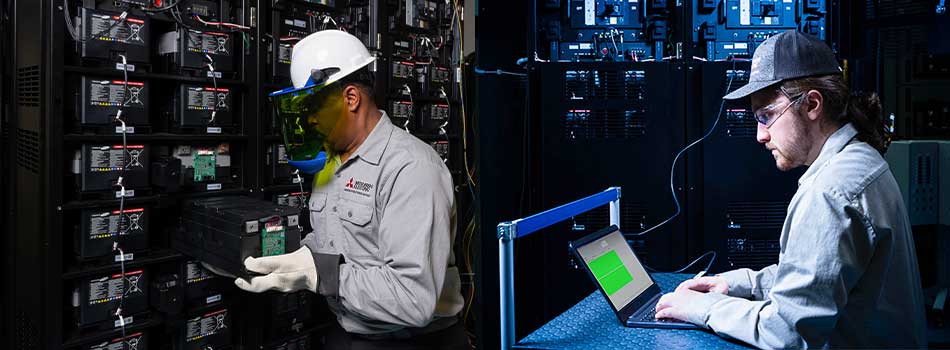
Industrial UPS Battery Systems: Backup Power Design for Manufacturing and Critical Facilities
Industrial facilities depend on reliable electrical power to maintain continuous operations. Even short power interruptions can disrupt production lines, damage sensitive equipment, and cause significant financial losses. To prevent these risks, many industrial environments deploy industrial UPS battery systems to provide immediate backup power during grid failures.
In most industrial applications, UPS battery systems support critical equipment such as automation controllers, robotics systems, safety infrastructure, and industrial IT networks. These systems ensure that operations can continue during short outages or that equipment can be safely shut down during longer disruptions.
Understanding how industrial UPS battery systems work—and how they are designed—is essential for facility engineers, system integrators, and infrastructure planners responsible for maintaining reliable industrial power environments.
What Are Industrial UPS Battery Systems?
Industrial UPS battery systems are backup power solutions designed to maintain stable electricity supply for critical equipment when the main power source fails. A UPS (uninterruptible power supply) system immediately switches to battery power during outages, ensuring that connected devices continue operating without interruption.
Unlike consumer or office UPS systems, industrial UPS solutions are built for demanding environments where reliability, scalability, and long-term performance are essential.
Industrial UPS systems are commonly deployed in facilities such as:
- manufacturing plants
- industrial automation environments
- oil and gas facilities
- transportation infrastructure
- healthcare and laboratory facilities
- large-scale data centers
These systems are typically designed to support higher power loads and longer operational lifetimes compared with small commercial UPS units.
For a broader overview of where UPS systems are used across industries, see:
https://leochlithium.us/uninterruptible-power-supply-applications-where-and-why-ups-systems-are-essential/
Why Industrial Facilities Require UPS Battery Backup
Power interruptions in industrial environments can create several operational risks. Production equipment, control systems, and automated processes rely on stable electrical supply to function correctly.
When power outages occur, facilities may face challenges such as:
- production line shutdowns
- data loss in industrial control systems
- equipment damage from sudden power loss
- safety risks for operators and machinery
Industrial UPS battery systems help mitigate these risks by providing instantaneous backup power during grid disturbances.
In many facilities, UPS systems perform two critical functions:
- Maintaining continuous power for sensitive systems such as industrial control units, programmable logic controllers (PLCs), and network infrastructure.
- Providing enough time for controlled shutdown procedures, preventing damage to equipment and minimizing operational disruption.
In environments where even a few seconds of downtime can result in costly interruptions, UPS battery systems play a central role in maintaining operational stability.
Key Components of an Industrial UPS Battery System
Industrial UPS battery systems consist of several core components that work together to provide uninterrupted power.
Rectifier
The rectifier converts incoming AC power from the grid into DC power. This DC power is used both to charge the batteries and to supply the inverter.
Battery Bank
The battery bank stores electrical energy that will be used during power outages. Battery banks may consist of multiple battery modules connected in series or parallel to achieve the required voltage and capacity.
Inverter
The inverter converts DC power from the battery bank back into AC power, allowing connected equipment to continue operating normally when grid power is unavailable.
Battery Management System (BMS)
In modern UPS installations—especially those using lithium batteries—a battery management system monitors parameters such as voltage, temperature, and charge status to ensure safe and reliable battery operation.
Together, these components create a system capable of delivering seamless power transition during outages.
Common Battery Technologies Used in Industrial UPS Systems
Industrial UPS battery systems commonly use two primary battery technologies: lead-acid and lithium-based batteries.
Lead-Acid Batteries
Lead-acid batteries have historically been the standard for UPS applications. They are widely used because of their relatively low upfront cost and established reliability.
However, lead-acid batteries have several limitations:
- shorter cycle life
- lower energy density
- higher maintenance requirements
- limited depth of discharge
Because of these factors, lead-acid batteries may require larger battery banks to provide the required runtime.
Lithium Batteries
Lithium battery technology—especially lithium iron phosphate (LFP)—is increasingly being adopted for industrial UPS systems.
Lithium batteries offer several advantages:
- higher energy density
- longer operational lifespan
- deeper depth of discharge
- reduced maintenance requirements
These characteristics allow lithium battery systems to deliver reliable backup power with smaller physical footprints and longer replacement intervals.
As industrial facilities seek to improve efficiency and reduce maintenance costs, lithium UPS battery systems are becoming more common in modern installations.
How Industrial UPS Battery Capacity Is Determined
Designing an industrial UPS battery system requires careful evaluation of several engineering factors.
The most important considerations include:
Power Load
The total power consumption of connected equipment determines how much energy the battery system must provide during an outage.
Industrial UPS loads may include:
- automation controllers
- industrial network switches
- robotics systems
- monitoring equipment
- process control systems
Required Backup Runtime
Facilities must determine how long critical equipment should continue operating during power loss.
Typical industrial UPS runtime requirements may range from:
- a few minutes for controlled shutdown
- up to several hours for mission-critical operations
System Voltage and Architecture
Large UPS systems often operate at specific voltage levels and may include modular battery banks to support scalability and redundancy.
Battery Aging and Environmental Conditions
Engineers must also account for long-term battery performance. Over time, battery capacity gradually decreases due to aging and environmental factors such as temperature.
For this reason, UPS systems are typically designed with additional capacity margins to ensure reliable performance throughout the battery lifecycle.
A detailed discussion of battery sizing and system architecture for critical power infrastructure can be found in:
https://leochlithium.us/data-center-ups-battery-selection-sizing-architecture-future-proofing-guide/
Typical Industrial UPS Applications
Industrial UPS battery systems are used across many sectors where power reliability is essential.
Common applications include:
| Industry | UPS Application |
| Manufacturing | automated production lines |
| Oil and gas | control and monitoring systems |
| Healthcare | medical equipment and laboratory systems |
| Transportation | signaling and control infrastructure |
| Data centers | IT infrastructure and network systems |
In each of these environments, UPS battery systems provide protection against unexpected power disturbances.
For example, in manufacturing facilities, automation systems must maintain stable power to prevent production disruptions. In healthcare environments, backup power ensures that critical medical devices remain operational during outages.
Advantages of Lithium Batteries for Industrial UPS Systems
As industrial power requirements evolve, lithium battery systems are becoming an increasingly attractive option for UPS deployments.
Several advantages make lithium batteries particularly well suited for industrial applications.
Higher Energy Density
Lithium batteries can store more energy in a smaller footprint, reducing the space required for battery installations.
Longer Lifespan
Lithium battery systems typically offer significantly longer cycle life compared with lead-acid batteries, which can reduce long-term replacement costs.
Reduced Maintenance
Traditional lead-acid batteries often require periodic inspection and maintenance. Lithium batteries generally require less maintenance due to integrated battery management systems.
Faster Charging Capability
Lithium batteries can recharge more quickly after power events, improving system readiness for future outages.
These advantages make lithium technology an increasingly popular choice for modern industrial UPS installations.
Conclusion
Industrial UPS battery systems play a critical role in protecting manufacturing processes, automation systems, and other critical infrastructure from power interruptions. By providing immediate backup power during outages, these systems help maintain operational stability and prevent costly disruptions.
As industrial environments become increasingly automated and digitally connected, the demand for reliable backup power solutions continues to grow. Properly designed UPS battery systems ensure that critical equipment remains operational, supporting both productivity and safety across a wide range of industrial applications.
For engineers and facility planners, understanding how industrial UPS battery systems are designed and deployed is essential for building resilient power infrastructure in modern industrial environments.