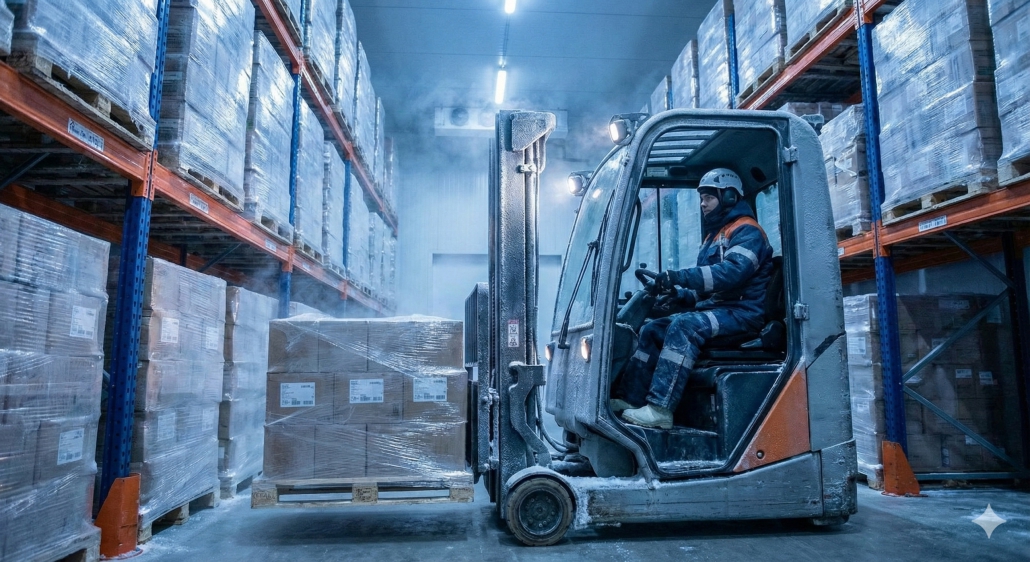
How to Choose the Right Lithium Battery for Freezer Forklifts in Cold Storage Environments
What Is a Lithium Battery for Freezer Forklifts? (Featured Snippet)
A lithium battery for freezer forklifts is a specialized energy system designed to operate reliably in sub-zero environments, typically featuring low-temperature charging capability, integrated heating systems, and stable discharge performance in conditions as low as -20°C or below.
Why Freezer Environments Are Challenging for Forklift Batteries
Cold storage operations introduce conditions that standard forklift batteries are not designed to handle.
Typical freezer environments include:
- Temperatures ranging from -10°C to -30°C
- High humidity and condensation risks
- Frequent transitions between cold and ambient zones
These factors create several critical challenges.
- Charging Limitations at Low Temperatures
Most conventional lithium batteries:
- Cannot safely charge below 0°C
- Risk lithium plating, which can permanently damage cells
In multi-shift cold storage operations, where opportunity charging is common, this limitation becomes a major operational constraint.
- Reduced Capacity and Runtime
At low temperatures:
- Battery capacity can drop by 20%–40%
- Voltage stability may fluctuate under load
This directly impacts:
- Forklift runtime
- Operational efficiency
- Condensation and Moisture Exposure
When forklifts move between cold and warm zones:
- Condensation can form inside battery enclosures
- Connectors and electronics may be exposed to corrosion risks
- Increased Downtime Risk
Unstable battery performance can lead to:
- More frequent charging cycles
- Increased need for spare batteries
- Reduced equipment availability
For high-throughput warehouses, this translates into measurable productivity loss.
How Lithium Batteries Are Engineered for Freezer Applications
Lithium battery systems designed for cold storage environments incorporate specific engineering solutions to address these challenges.
- Integrated Self-Heating Systems
Freezer-grade lithium batteries often include:
- Internal heating elements
- Automatic temperature control
This allows the battery to:
- Safely charge in sub-zero conditions
- Maintain optimal internal operating temperatures
- Low-Temperature BMS Optimization
Advanced battery management systems (BMS) are designed to:
- Adjust charging current based on temperature
- Prevent damage from unsafe charging conditions
- Ensure stable system performance
- Thermal Insulation Design
To improve efficiency:
- Insulated enclosures reduce heat loss
- Energy consumption for heating is minimized
- Stable Discharge Performance
Properly engineered lithium batteries:
- Maintain consistent voltage output
- Perform reliably under high load, even in low temperatures
Lithium vs. Lead-Acid Batteries in Freezer Forklifts
Choosing between battery types is a key decision for cold storage operations.
| Factor | Lead-Acid Battery | Lithium Battery (Freezer-Ready) |
| Low-Temperature Charging | Limited but possible | Requires heating system |
| Runtime Stability | Drops significantly | More stable |
| Maintenance | High | Low |
| Charging Time | Long | Faster (temperature managed) |
| Operational Efficiency | Lower | Higher |
Key Insight:
Lead-acid batteries may continue to function in low temperatures, but with reduced efficiency and higher maintenance requirements. Lithium batteries, when designed for freezer environments, offer more stable long-term performance.
How to Choose the Right Lithium Battery for Freezer Forklifts
Selecting the right system involves more than reviewing specifications.
- Confirm the supported operating temperature range
- Evaluate whether the battery includes automatic heating functionality
- Ensure compatibility with your charging strategy
- Verify environmental protection levels (moisture, condensation)
- Check mechanical and electrical compatibility with existing forklifts
Choosing the right battery also requires understanding how different suppliers approach system design, reliability, and long-term performance in industrial environments.
For a broader perspective on evaluating lithium battery suppliers for material handling applications, this guide provides useful insights:
https://leochlithium.us/forklift-battery-supplier-how-warehouse-operators-and-equipment-dealers-choose-reliable-lithium-battery-partners/
Hidden Costs Most Buyers Overlook
Battery decisions in cold storage environments should not be based on upfront cost alone.
- Downtime Costs
Battery instability can:
- Interrupt workflows
- Reduce operational throughput
- Maintenance and Replacement
Lead-acid systems typically require:
- Regular maintenance
- More frequent replacement cycles
- Energy Efficiency Loss
Cold environments amplify inefficiencies, particularly for traditional battery technologies.
In cold storage operations, where uptime and efficiency directly affect operating costs, evaluating battery solutions based only on purchase price can be misleading.
To better understand how lithium and lead-acid batteries compare in terms of total cost of ownership, lifecycle cost, and return on investment, this detailed cost analysis provides a structured breakdown for fleet managers and procurement teams:
https://leochlithium.us/forklift-battery-price-expert-guidance-for-fleet-managers-and-procurement-teams-evaluating-true-cost-and-roi/
When Is Lithium the Better Choice?
Lithium batteries are typically the better option when:
- Operations run across multiple shifts
- Charging speed and uptime are critical
- Maintenance resources are limited
- Long-term cost efficiency is a priority
However, the benefits depend on selecting a system specifically engineered for low-temperature environments.
Final Thoughts
Freezer forklift applications place unique demands on battery systems that go beyond standard specifications.
The key challenge is not simply choosing between lithium and lead-acid, but understanding:
- How batteries perform in sub-zero environments
- How system design affects reliability
- How operational conditions influence long-term cost
In cold storage operations, the battery is not just a power source—it is a critical component of operational continuity.