Wholesale Solar Battery Storage: How Large-Scale Solar Projects Source Reliable Energy Storage Systems
As solar projects scale from standalone PV installations to fully integrated solar + storage systems, battery storage has become a core component of project economics, grid compliance, and long-term performance.
For EPCs, developers, and system integrators, the question is no longer whether to add storage—but how to source solar battery storage reliably at the wholesale level.
This guide explains what wholesale solar battery storage really means, how large-scale projects approach procurement, and what decision-makers should evaluate beyond headline pricing.
Wholesale Solar Battery Storage: A Practical Definition for Project Buyers
Wholesale solar battery storage refers to sourcing lithium-based energy storage systems in bulk for commercial, industrial, and utility-scale solar projects.
Unlike residential storage, wholesale procurement prioritizes system compatibility, certification compliance, long-term reliability, and lifecycle cost over upfront unit pricing.
In practice, wholesale solar storage is not about buying “more batteries”—it is about sourcing project-ready energy storage systems that can be deployed, financed, and supported over decades.
Why Solar Projects Source Battery Storage at the Wholesale Level
Cost Control Across the Full Project Lifecycle
At scale, battery storage decisions are evaluated using lifecycle metrics rather than sticker price. Wholesale sourcing allows project owners to optimize:
- Total installed cost per kWh
- Long-term degradation and usable capacity
- Replacement and maintenance planning
- LCOS (Levelized Cost of Storage) in solar-linked applications
A lower-cost system with poor thermal design or rapid degradation often increases long-term project risk rather than reducing it.
Standardization for Multi-Site Solar Deployment
For developers and EPCs managing portfolios of solar assets, standardization is critical. Wholesale procurement enables:
- Consistent battery architecture across sites
- Unified commissioning and monitoring processes
- Simplified spare parts and O&M workflows
- Faster replication of proven system designs
This is especially relevant for commercial and industrial (C&I) solar programs with repeated site rollouts.
Supply Chain Stability for EPCs and Developers
Solar projects often span 12–36 months from design to commissioning. Wholesale sourcing reduces risk by securing:
- Production capacity aligned with project timelines
- Predictable delivery schedules
- Framework agreements for phased deployments
For long-horizon projects, supply reliability can be as important as technical performance.
Key System Types in Wholesale Solar Battery Storage
DC-Coupled vs. AC-Coupled Storage in Solar Projects
From a project perspective, coupling architecture affects more than system diagrams:
- DC-coupled storage is often favored in new-build solar projects where maximizing PV-to-storage efficiency and minimizing conversion losses are priorities.
- AC-coupled storage is commonly used in retrofit scenarios or where operational flexibility and independent system control are required.
The right choice depends on inverter strategy, grid requirements, and long-term operational goals—not just theoretical efficiency.
System Form Factors at Wholesale Scale
Wholesale solar battery storage systems typically fall into three categories:
- Rack-based systems for indoor or controlled environments
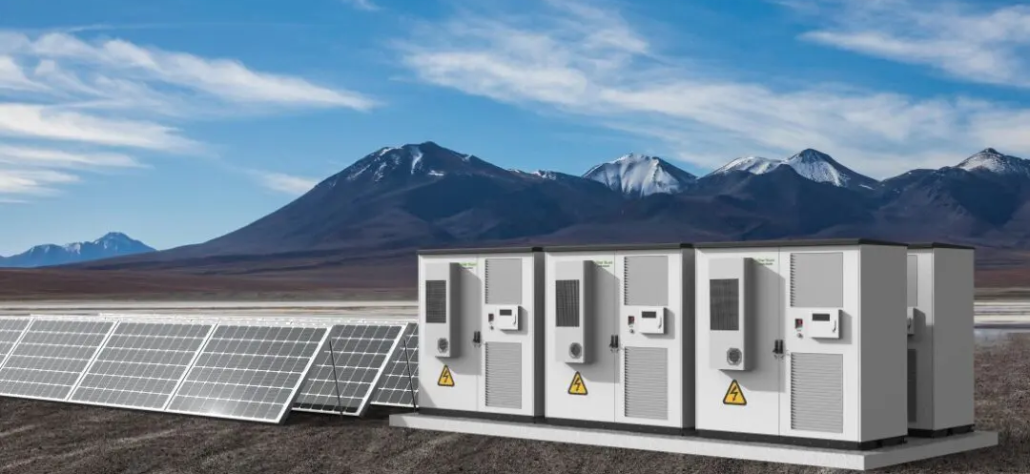
- Outdoor cabinets for distributed C&I solar installations
- Containerized BESS for large-scale or utility-linked projects
Each form factor reflects trade-offs in scalability, site preparation, thermal management, and deployment speed.
For a deeper breakdown of system-level architecture choices, see
Battery Energy Storage System Architecture Explained:
https://leochlithium.us/bess-storage-system-explained-architecture-components-and-when-a-battery-energy-storage-system-makes-sense/
Why LiFePO₄ Dominates Wholesale Solar Storage
Lithium iron phosphate (LiFePO₄) has become the default chemistry for wholesale solar storage because it aligns with project-level priorities:
- Strong thermal stability and safety profile
- Long cycle life under partial and daily cycling
- Predictable degradation curves favored by financiers
- Lower fire risk compared to high-nickel chemistries
For solar-linked applications where reliability outweighs peak energy density, LiFePO₄ remains the most bankable option.
How to Evaluate a Wholesale Solar Battery Storage Supplier
Manufacturing and Engineering Capability
At the wholesale level, suppliers are evaluated as system partners, not component vendors. Key questions include:
- Is the supplier delivering complete storage systems or assembling third-party parts?
- Are BMS and system controls developed in-house or outsourced?
- Can system design be adapted to specific solar project requirements?
Engineering depth often determines how smoothly a project moves from design to commissioning.
Certification and Grid Compliance
Solar battery storage systems must meet regulatory requirements across multiple layers:
- Cell and pack safety (e.g., UL, IEC)
- Transport compliance (UN38.3)
- Grid and interconnection standards
Certification gaps can delay commissioning, grid approval, or financing—creating costs far beyond the battery itself.
Proven Experience in Solar + Storage Projects
Not all energy storage experience translates to solar applications. A qualified wholesale supplier should demonstrate:
- Real-world solar-linked deployments
- Familiarity with inverter and EMS integration
- Understanding of PV-driven charge and discharge behavior
Experience with telecom or UPS alone is not a substitute for solar project expertise.
Delivery, Warranty, and Long-Term Support
Wholesale buyers should assess support over the full system lifespan:
- Production lead times aligned with construction schedules
- Clear warranty structures tied to usable capacity
- Defined responsibilities for remote monitoring and field support
Long-term serviceability is often overlooked during procurement—but becomes critical years after commissioning.
Common Procurement Risks in Wholesale Solar Battery Storage
Low-Price Systems with Hidden Lifecycle Costs
The most common pitfall is selecting systems based solely on initial pricing. Hidden risks include:
- Overstated nominal capacity
- Rapid degradation under real solar cycling
- Inadequate thermal management in outdoor environments
These issues often surface after warranties expire—when corrective action is most expensive.
BMS, Inverter, and EMS Compatibility Issues
Solar + storage systems operate as integrated ecosystems. Incompatibility between BMS, inverter, and EMS can lead to:
- Commissioning delays
- Limited usable capacity
- Responsibility disputes between vendors
Clear system ownership and integration responsibility are essential at the wholesale stage.
Certification Gaps That Delay Grid Connection
A system that is “in testing” is not the same as one that is certified. Incomplete certification can:
- Delay grid approval
- Trigger redesigns late in the project
- Affect project financing and insurance
Verification should occur before contracts are finalized—not after delivery.
Who Wholesale Solar Battery Storage Is (and Is Not) For
Best-Fit Use Cases
Wholesale solar battery storage is best suited for:
- Commercial and industrial solar installations
- Utility-scale solar farms
- Solar retrofit projects adding storage for peak shaving or resilience
In these scenarios, scale justifies system-level optimization.
When Wholesale Procurement Is Not the Right Choice
Wholesale sourcing may be unnecessary or inefficient for:
- Small residential systems
- One-off demonstration projects
- Short-term backup applications without daily cycling
In such cases, off-the-shelf solutions may be more practical.
How Wholesale Solar Battery Storage Fits into a Broader Energy Storage Strategy
Solar battery storage does not exist in isolation. At scale, it intersects with:
- C&I energy management strategies
- Grid-interactive storage deployments
- Broader battery energy storage systems (BESS) planning
For readers evaluating storage beyond solar-specific use cases,
Large-Scale Battery Energy Storage Systems: Applications, Architecture, and Grid Value provides additional context:
https://leochlithium.us/large-scale-battery-energy-storage-systems-applications-architecture-and-grid-value/
Final Takeaway: Sourcing Solar Battery Storage Beyond Price
Wholesale solar battery storage is not about finding the cheapest battery—it is about reducing project risk over decades of operation.
Successful procurement prioritizes system integration, certification readiness, and long-term support as much as initial cost.
For EPCs and developers, the right storage partner is one that understands solar projects not as products—but as long-term assets.