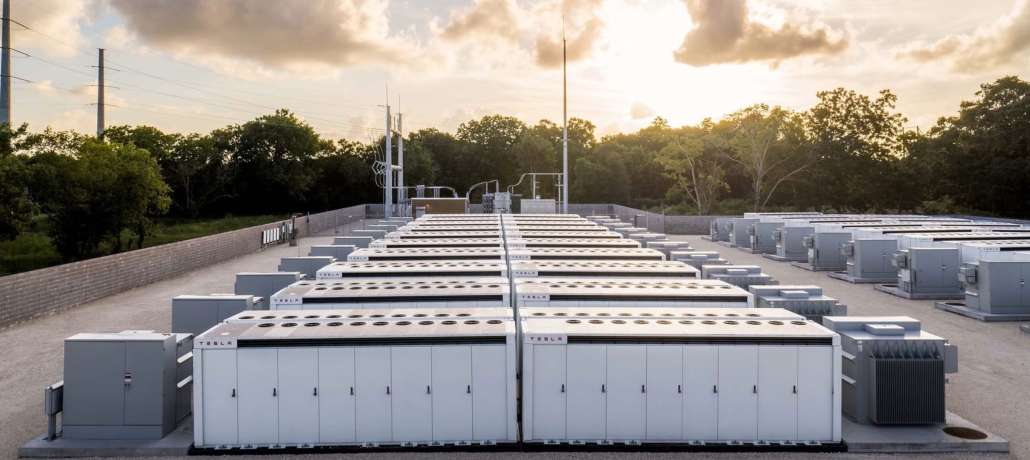
Utility-Scale BESS Sizing Guide: How to Calculate Battery Capacity for Grid-Scale Projects
How Do You Size a Utility-Scale Battery Energy Storage System?
Sizing a utility-scale battery energy storage system (BESS) involves determining the optimal combination of power capacity (MW) and energy capacity (MWh) based on the project’s application, grid requirements, and financial objectives. In most cases, system sizing is driven by required discharge duration, target use case (such as frequency regulation or energy shifting), and expected revenue streams.
Step 1: Define the Primary Application
The first step in sizing a BESS is identifying its main use case, as this directly determines system configuration.
Common Utility-Scale Applications
Frequency Regulation
- Requires fast response and high power capability
- Typically shorter duration (0.5–2 hours)
Energy Arbitrage (Load Shifting)
- Stores energy during low-price periods
- Discharges during peak pricing
- Typically 2–4 hours duration
Renewable Energy Integration
- Smooths solar or wind output
- Often requires 2–6 hours duration
Capacity Firming / Backup
- Provides extended supply support
- May require 4–8+ hours duration
👉 Key insight:
Application determines duration, and duration defines MWh sizing.
Step 2: Calculate Power Capacity (MW)
Power capacity defines how much electricity the system can deliver at any given moment.
Basic Formula
P=EtP = \frac{E}{t}P=tE
Where:
- PPP = Power (MW)
- EEE = Energy (MWh)
- ttt = discharge duration (hours)
Example
If a project requires:
- 100 MWh capacity
- 4-hour discharge
Then:
- Power = 25 MW
👉 In practice, MW is often dictated by:
- Grid interconnection limits
- Market participation rules
- Contractual obligations
Step 3: Determine Energy Capacity (MWh)
Energy capacity defines how long the system can sustain output.
Basic Formula
E=P×tE = P \times tE=P×t
Example Scenarios
| Application | Power (MW) | Duration (h) | Energy (MWh) |
| Frequency regulation | 50 | 1 | 50 |
| Solar shifting | 100 | 4 | 400 |
| Capacity support | 200 | 6 | 1200 |
👉 Important:
Energy capacity has the largest impact on total project cost.
Step 4: Account for System Losses and Efficiency
Real-world systems do not operate at 100% efficiency.
Key Factors to Include:
- Round-trip efficiency (typically 85–92%)
- Conversion losses (PCS)
- Auxiliary consumption (cooling, controls)
Practical Adjustment
If your target is 100 MWh usable energy, you may need to install:
- 110–120 MWh nominal capacity
👉 This ensures the system meets performance targets under real operating conditions.
Step 5: Consider Depth of Discharge (DoD)
Depth of discharge impacts both usable capacity and battery lifespan.
- Higher DoD → more usable energy
- Lower DoD → longer cycle life
Typical Range (LFP systems):
- 80–95% usable DoD
👉 Engineering trade-off:
Maximize usable capacity vs. extend battery life
Step 6: Align with Grid and Regulatory Requirements
Utility-scale projects must comply with grid-specific constraints:
- Interconnection limits (MW cap)
- Dispatch requirements
- Grid codes and safety standards
👉 In many cases:
Grid requirements override theoretical sizing calculations
Step 7: Evaluate Financial Performance (ROI-Driven Sizing)
Sizing is not purely technical—it must align with financial outcomes.
Key Revenue Drivers:
- Energy arbitrage
- Frequency regulation
- Capacity payments
Key Cost Factors:
- $/MWh installation cost
- Cycle life and degradation
- Operation and maintenance
👉 Critical insight:
The optimal system size is the one that maximizes ROI—not necessarily the largest system.
Common Sizing Mistakes to Avoid
- Oversizing Without Revenue Justification
- Leads to underutilized assets
- Ignoring Efficiency Losses
- Results in underperformance
- Misaligned Application Design
- Wrong duration for the target market
- Underestimating Degradation
- Reduces long-term returns
- Focusing Only on Upfront Cost
- Ignores lifecycle economics
How to Work with a BESS Supplier on System Sizing
Sizing is typically a collaborative process between developers, EPCs, and battery suppliers.
A reliable supplier should be able to:
- Support preliminary system sizing
- Provide performance assumptions
- Align system design with project goals
- Offer scalable configuration options
For a broader framework on evaluating suppliers, see:
https://leochlithium.us/battery-energy-storage-system-manufacturers-how-to-identify-reliable-partners-for-commercial-and-utility-projects/
Start Your Utility-Scale BESS Planning
Accurate sizing is the foundation of a successful utility-scale energy storage project. It requires balancing engineering constraints, market opportunities, and long-term system performance.
If you are planning a project and need support with system sizing or configuration, you can start a technical discussion here:
https://leochlithium.us/contact-us/