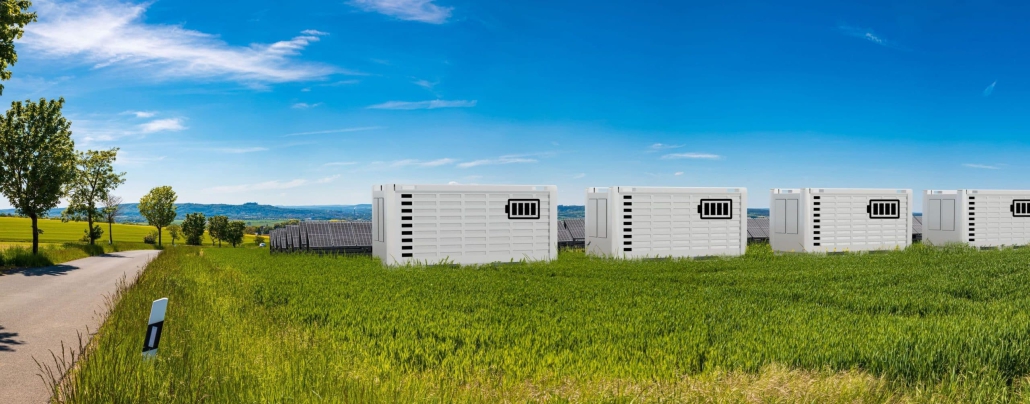
Utility Scale BESS: Large-Scale Battery Energy Storage Systems for Grid Applications
Utility-scale battery energy storage systems (BESS) are a foundational technology for modern power grids. Unlike residential or commercial-scale storage, utility-scale systems operate at multi-megawatt (MW) and multi-megawatt-hour (MWh) levels, delivering grid-level flexibility, reliability, and energy balancing. Utilities, independent power producers, and grid operators deploy utility-scale BESS to stabilize networks, integrate renewable energy, and optimize system-wide performance.
What is Utility Scale BESS?
Utility-scale BESS refers to large, grid-connected battery energy storage systems, typically exceeding 10 MW in power capacity and tens to hundreds of MWh in energy capacity. These systems are engineered for continuous operation under dynamic grid conditions and are treated as critical infrastructure assets.
A typical utility-scale BESS includes:
- Battery modules (Li-ion, LiFePO₄, or flow batteries)
- Power conversion systems (PCS) for DC–AC conversion
- Battery management systems (BMS) for monitoring and safety
- Thermal management and fire protection systems
- Grid communication and control interfaces
From an architectural perspective, utility-scale systems emphasize modularity, redundancy, and grid compliance, which differentiates them from behind-the-meter installations. A deeper discussion of system architecture and grid value is covered in this guide on large-scale battery energy storage systems and grid applications:
https://leochlithium.us/large-scale-battery-energy-storage-systems-applications-architecture-and-grid-value/
Key Applications of Utility Scale BESS
Utility-scale BESS supports a wide range of grid services:
- Frequency regulation and grid stabilization
- Peak shaving and load shifting to reduce system congestion
- Renewable energy integration, smoothing solar and wind variability
- Reserve capacity and black-start support
- Ancillary services participation in wholesale electricity markets
Because of their fast response time and dispatch flexibility, battery systems increasingly replace or complement traditional peaker plants in modern grids.
Typical Technical Configurations
Utility-scale BESS deployments vary by project requirements and regulatory environments:
- Containerized modular systems for fast deployment and scalability
- Centralized plant layouts for high-density, long-duration storage
- Single-chemistry vs. hybrid systems, combining lithium and flow batteries
- SCADA and EMS integration for real-time grid coordination
Battery chemistry selection balances energy density, lifecycle cost, safety, and thermal behavior, with lithium-based systems currently dominating utility-scale deployments.
Procurement Considerations for Utility Scale BESS
From a sourcing and project development perspective, utility-scale BESS procurement focuses on long-term performance rather than upfront cost alone. Key evaluation criteria include:
- Supplier vs. manufacturer vs. EPC delivery models
- Bankability, warranties, and performance guarantees
- Supply chain stability and project lead times
- Expandability and long-term serviceability
- Compliance with grid codes and safety standards
For teams evaluating systems at smaller but still grid-connected scales, this C&I battery storage procurement guide provides useful context on sourcing logic and supplier evaluation, even though utility-scale projects involve higher complexity:
https://leochlithium.us/ci-battery-storage-supplier-how-commercial-industrial-projects-source-reliable-energy-storage-systems/
Market Trends and Deployment Insights
The global utility-scale BESS market is expanding rapidly, driven by:
- Accelerated renewable energy deployment
- Grid modernization and resilience programs
- Declining lithium-ion system costs
- Policy incentives for flexible generation assets
North America, Europe, and Asia-Pacific currently lead installations, with project sizes trending toward larger MW blocks and longer-duration storage.
Real-World Deployment Examples
- Solar + Storage Integration: A utility-scale solar plant paired with BESS to deliver firm, dispatchable power.
- Urban Grid Support: MW-scale BESS deployed to defer substation upgrades and reduce peak demand stress.
- Hybrid Storage Projects: Combining lithium batteries for fast response with long-duration technologies for energy shifting.
These deployments demonstrate how utility-scale BESS delivers both technical and economic value to grid operators.
Benefits and Challenges of Utility Scale BESS
Key benefits include:
- Improved grid reliability and flexibility
- Enhanced renewable energy utilization
- Reduced operational and fuel costs
- Faster response compared to conventional generation
Key challenges include:
- High upfront capital investment
- Complex permitting and interconnection processes
- Thermal management and fire safety requirements
- Long-term asset monitoring and degradation management
Future Outlook
Utility-scale BESS is evolving alongside grid digitization and decarbonization. Future developments include:
- Longer-duration battery chemistries
- Advanced energy management systems with predictive analytics
- Greater integration with transmission planning and market operations
As power systems transition toward higher renewable penetration, utility-scale BESS will increasingly function as a core grid asset rather than a supplemental technology.
Conclusion
Utility-scale BESS represents the backbone of flexible, resilient, and low-carbon power systems. By delivering large-scale, fast-responding energy storage, these systems enable utilities and grid operators to manage variability, reduce costs, and improve reliability. Careful attention to system architecture, procurement strategy, and lifecycle performance is essential to unlocking the full value of utility-scale battery energy storage.