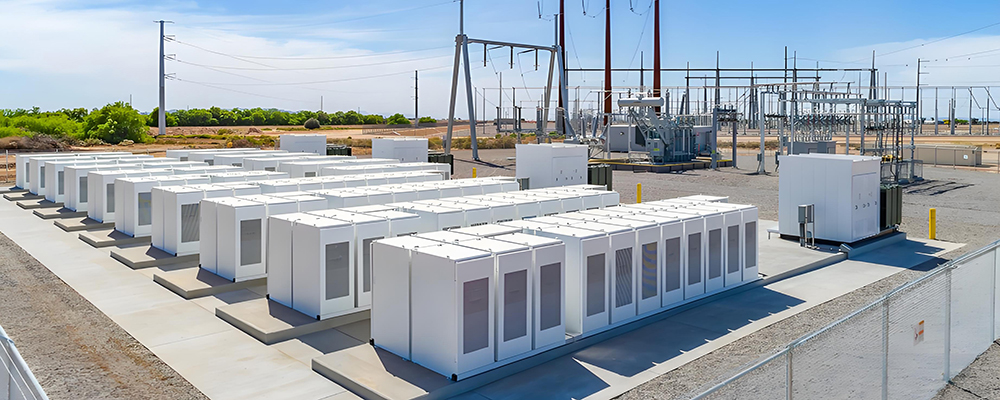
Utility-Scale Battery Energy Storage System Wholesale: Procurement Considerations for Grid-Scale Projects
As battery energy storage systems move from pilot deployments to core grid infrastructure, procurement models have shifted accordingly. For utility-scale projects, energy storage is rarely sourced as a standalone product. Instead, it is procured as a fully integrated system, delivered at scale and aligned with long-term grid and regulatory requirements.
This article focuses specifically on utility-scale battery energy storage system wholesale, examining how grid-scale projects evaluate, source, and deploy BESS as critical infrastructure rather than as equipment purchases.
What Defines a Utility-Scale Battery Energy Storage System?
A utility-scale battery energy storage system is typically defined as a grid-connected energy storage installation operating at the megawatt (MW) and megawatt-hour (MWh) scale, designed to support transmission or distribution networks rather than individual facilities.
Unlike commercial or industrial systems, utility-scale BESS is characterized by centralized control, high availability requirements, long operational lifetimes, and direct interaction with grid operators and market mechanisms.
Why Utility-Scale BESS Is Almost Always Procured at the Wholesale Level
Project Size and Capital Structure
Utility-scale storage projects involve significant upfront capital investment and long development timelines. As a result, procurement decisions are closely tied to financing structures, performance guarantees, and lifecycle cost considerations—factors that naturally favor wholesale, project-based sourcing.
System Complexity and Integration Requirements
At grid scale, energy storage systems must integrate seamlessly with substations, protection schemes, and grid control platforms. Wholesale procurement allows utilities and EPCs to evaluate system-level design, rather than assembling components from multiple retail sources.
Risk Allocation Across the Project Lifecycle
Wholesale BESS sourcing also clarifies responsibility. System performance, grid compliance, commissioning, and long-term operation are typically addressed within a defined project scope, reducing interface risk and operational uncertainty.
Common Applications of Utility-Scale Battery Energy Storage Systems
Renewable Energy Integration
Utility-scale BESS plays a central role in stabilizing solar and wind generation by mitigating intermittency and reducing curtailment. Storage enables renewable assets to behave more like dispatchable resources.
Frequency Regulation and Grid Services
Fast-response battery systems are increasingly used for frequency regulation, voltage support, and other ancillary services, where response speed and control accuracy are critical.
Capacity Firming and Peak Load Management
In many regions, utility-scale storage supports resource adequacy by shifting energy across time and deferring investments in traditional generation or grid upgrades.
A broader discussion of how large-scale storage delivers grid value across these use cases is explored in:
https://leochlithium.us/large-scale-battery-energy-storage-systems-applications-architecture-and-grid-value/
Key Technical Considerations for Utility-Scale BESS Wholesale Procurement
System Architecture and Grid Connection
Wholesale procurement decisions often hinge on architectural choices, including AC-coupled versus DC-coupled configurations, substation interfaces, and protection coordination. These choices affect efficiency, expandability, and long-term operational flexibility.
Scalability and Long-Term Expansion
Utility-scale projects are frequently developed in phases. Modular system design enables capacity to scale from initial deployments to multi-hundred-MWh or even GWh-level installations without reengineering the entire site.
Safety, Redundancy, and Compliance
At grid scale, safety is addressed through system-level design rather than individual components. Fire mitigation strategies, spatial layout, redundancy, and regulatory compliance are core evaluation criteria in wholesale BESS procurement.
Utility-Scale Wholesale Supply Models Explained
OEM Platforms for Grid-Scale Storage
OEM-based wholesale models emphasize standardized platforms designed for repeatable deployment. This approach can reduce engineering complexity and streamline approvals for large portfolios of projects.
Customized or Project-Specific Systems
In some cases, site conditions, grid codes, or operational objectives require customized system configurations. Wholesale procurement enables these adaptations while maintaining centralized quality control.
Turnkey Delivery vs Multi-Vendor Models
Turnkey models consolidate responsibility under a single supplier, while multi-vendor approaches distribute risk across multiple parties. Utilities and EPCs typically weigh these models based on project risk tolerance and internal capabilities.
How Utilities and EPCs Evaluate Wholesale BESS Suppliers
Grid-Scale Project Experience
Past deployment experience at similar scales and grid environments is a key indicator of execution capability. Utilities often prioritize suppliers with proven operational track records.
Engineering and Integration Capability
Wholesale BESS suppliers are evaluated on their ability to deliver integrated systems—including controls, communications, and grid interfaces—not just battery hardware.
Long-Term Service and Performance Commitments
Because utility-scale energy storage is a long-term asset, evaluation extends beyond commissioning to include monitoring, maintenance strategies, and performance guarantees over the system’s lifecycle.
How Utility-Scale Wholesale Procurement Differs from Commercial and C&I Storage
While commercial and industrial storage often focuses on site-level economics and short payback periods, utility-scale wholesale procurement emphasizes:
- Grid compliance and regulatory approval
- System reliability at scale
- Long-term operational performance
- Integration with market and dispatch frameworks
These differences fundamentally change how systems are specified, evaluated, and sourced.
When Utility-Scale Battery Energy Storage Wholesale Makes Strategic Sense
Utility-scale wholesale procurement is most appropriate when energy storage is deployed as part of grid infrastructure, renewable integration strategies, or long-term capacity planning. It is generally unsuitable for small, short-duration, or facility-level backup applications.
Final Thoughts: Utility-Scale BESS Wholesale as Grid Infrastructure
Utility-scale battery energy storage system wholesale is not about purchasing batteries—it is about deploying grid infrastructure. Successful projects align system design, procurement strategy, and long-term operational objectives from the outset.
For readers seeking a broader framework on how wholesale procurement applies across commercial, industrial, and utility contexts, the overarching perspective is outlined in:
https://leochlithium.us/battery-energy-storage-system-wholesale-a-practical-guide-for-large-scale-and-project-based-procurement/