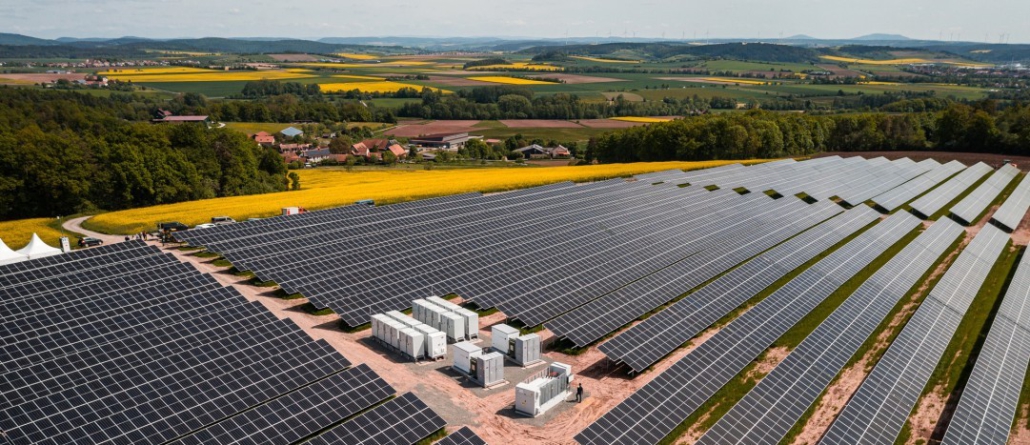
Solar + Storage System Integration: From Design to Commissioning in Commercial and Utility Projects
For commercial and utility-scale solar projects, sourcing batteries is only the first step. The true value of solar + storage emerges when systems are properly designed, integrated, and commissioned. Without careful integration, even the best wholesale battery systems can underperform, leading to lost revenue, operational inefficiencies, and increased risk.
This guide focuses on practical integration strategies, engineering considerations, and commissioning best practices for commercial and industrial (C&I) solar + storage deployments.
Why Integration Matters in Commercial and Utility Projects
Integration is not just a technical step—it directly affects project economics and operational reliability. Key reasons include:
- Maximizing usable energy: Proper EMS and inverter coordination ensures storage cycles match solar generation and load patterns.
- Ensuring safety and compliance: Thermal management, BMS oversight, and grid interconnection standards must be rigorously applied.
- Protecting long-term asset value: Poorly integrated systems degrade faster, require more maintenance, and may void warranties.
Integration bridges the gap between procurement (Hub / Commercial page) and real-world performance, making it the critical link in the project lifecycle.
Key Phases of Solar + Storage System Integration
- System Design and Architecture
Effective integration begins with design. Core considerations:
- Energy flow modeling: Assess facility load, solar generation profiles, and battery dispatch scenarios.
- Coupling strategy: Choose between DC-coupled or AC-coupled storage based on existing PV infrastructure and operational priorities.
- Form factor selection: Indoor racks, outdoor cabinets, or containerized BESS should align with site constraints, thermal management needs, and scalability.
Tip: At the wholesale scale, design must also account for standardization across multiple sites to simplify commissioning and maintenance.
- Component Selection and Compatibility
Integration requires careful alignment between multiple system elements:
- Batteries and BMS: Ensure LiFePO₄ or other chemistries are correctly managed for cycle life, charge/discharge limits, and safety.
- Inverters and EMS: Confirm interoperability with battery management software, and verify functionality under peak, partial, and daily cycling scenarios.
- Monitoring and controls: Integrate SCADA or cloud-based monitoring for real-time performance tracking and predictive maintenance.
A supplier’s engineering capability is often the difference between seamless integration and ongoing operational issues.
- Electrical Integration and Interconnection
- Grid compliance: Verify compliance with local utility interconnection standards, including voltage regulation, anti-islanding protection, and frequency response.
- Power quality management: Address harmonics, phase balancing, and load fluctuations to prevent system instability.
- Redundancy and safety: Incorporate fault protection, emergency disconnects, and fire safety measures tailored to commercial installations.
- Commissioning and System Verification
Commissioning is the stage where design and procurement meet reality. Steps include:
- Pre-commissioning checks: Validate wiring, insulation resistance, grounding, and hardware integrity.
- Functional tests: Confirm BMS, EMS, inverters, and auxiliary systems respond correctly under realistic load and charge scenarios.
- Performance benchmarking: Measure energy throughput, cycle efficiency, and thermal behavior to ensure system meets projected performance metrics.
Note: Thorough commissioning prevents long-term degradation, warranty disputes, and costly downtime.
- Operational Handover and Documentation
After commissioning:
- Provide as-built diagrams, equipment manuals, and integration schematics.
- Train site personnel on operational procedures and emergency protocols.
- Establish remote monitoring dashboards and alert systems for ongoing performance management.
This step ensures that commercial and utility operators can confidently manage energy storage as a core asset.
Common Integration Challenges and How to Mitigate Them
| Challenge | Mitigation |
| BMS-Inverter-EMS incompatibility | Early-stage vendor alignment and functional testing |
| Thermal stress in outdoor cabinets | Proper thermal design and environmental testing |
| Load mismatch and inefficient cycling | Detailed energy modeling and simulation before procurement |
| Regulatory compliance gaps | Pre-verify all local interconnection standards and certifications |
Addressing these challenges during integration avoids expensive retrofits and maximizes ROI.
Why Wholesale Procurement and Integration Must Work Together
A high-quality commercial battery system alone is not enough. Integration quality determines actual usable capacity, safety, and lifecycle performance.
By linking wholesale procurement decisions (from Hub or Commercial pages) directly to detailed integration planning, project teams can ensure:
- Predictable energy delivery
- Long-term operational reliability
- Reduced maintenance costs
- Alignment with financial projections
Recommended Next Steps for Project Teams
- Reference the Hub page for a comprehensive overview of wholesale solar battery storage:
Wholesale Solar Battery Storage Hub - Consider commercial-specific strategies with the dedicated procurement guide:
Commercial Solar Battery Storage Wholesale - Integrate early: Start design and vendor alignment before procurement contracts are finalized to avoid post-delivery issues.
Final Takeaway
Integration is the bridge between procurement and performance.
Even the best wholesale battery system underperforms without careful design, component compatibility, commissioning, and operational handover. For C&I and utility-scale solar projects, successful integration is as important as the batteries themselves—and is the key determinant of long-term financial and operational success.