Residential BESS Systems: Architecture, Safety Standards, and Integration Pathways for Modern Homes
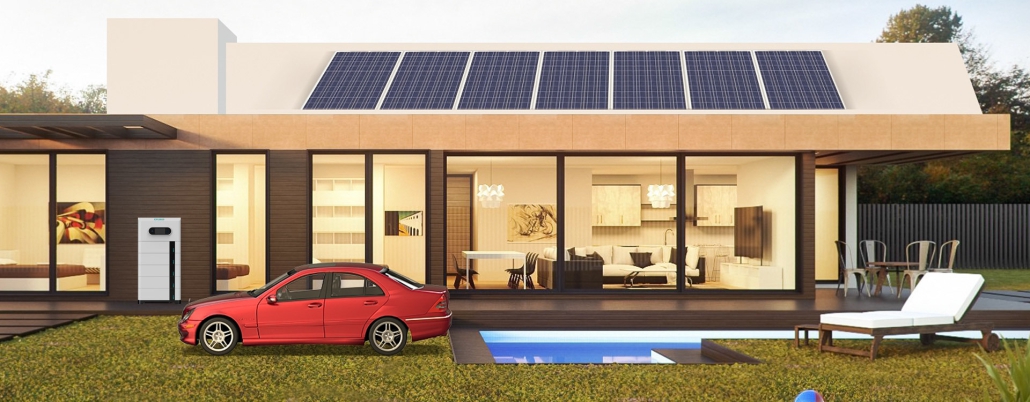
Residential energy storage is no longer a niche upgrade for eco-conscious homeowners; it has become a core component of electrical system design for installers, integrators, and energy professionals across the United States. As grid instability, electrification, and rooftop solar adoption rise, modern residential BESS (Battery Energy Storage Systems) must meet increasingly complex demands for safety, interoperability, and whole-home power continuity.
Most online resources oversimplify BESS into a consumer buying guide—battery size, lifespan, or ROI. But residential BESS is fundamentally a system-level engineering challenge, involving power electronics, communication protocols, regulatory compliance, and thermal management. This article provides a deeper, architecture-driven perspective aimed at installers, EPCs, and distributors who need to design, deploy, and maintain systems—not just explain them.
To understand how residential solutions are evolving, it’s also worth recognizing that the sector is shaped by advancements from leading lithium ion battery manufacturers in usa, whose module designs, cell formats, and safety technologies influence compatibility and system performance across the industry.
- System Architecture: What Actually Makes Up a Residential BESS?
A modern residential BESS is more than “a battery.” It is a coordinated system composed of:
- Battery Pack & Module Structure
Most residential systems use a modular architecture, typically in the 5–15 kWh range per module. Designs generally fall into two categories:
- Stacked modular units (scalable, flexible, easier serviceability)
- All-in-one enclosed systems (cleaner installation, integrated PCS/BMS)
Key engineering considerations include:
- Series vs. parallel configuration
- Voltage platform (48 V, 100 V, or HV 200–400 V)
- Cell format (prismatic LFP is now predominant)
- Fire propagation suppression within each module
These structural distinctions affect efficiency, cycle life, and installation requirements.
- PCS (Power Conversion System) or Hybrid Inverter
PCS architecture varies significantly across residential systems:
- AC-coupled systems
- Ideal for retrofit markets
- Decouples PV and battery operation
- DC-coupled systems
- Higher efficiency
- Better for new solar-plus-storage installs
- Hybrid inverters
- Combine PV inversion + battery control + grid management
Modern PCS often supports bidirectional flows, enabling advanced features such as home microgrids and VPP (virtual power plant) aggregation.
- Layered BMS (Battery Management System)
BESS relies on a multi-layer BMS stack:
- Cell-level sensing for balancing and temperature monitoring
- Module-level BMS ensuring local safety and SOC estimation
- Pack-level BMS coordinating charge/discharge, communication, and system protection
Communication protocols include CAN, RS485, Modbus, or increasingly secure wireless connectivity.
- Thermal Management
Thermal design is a major differentiator:
- Air cooling (common in cost-sensitive systems)
- Liquid cooling (growing rapidly due to higher cycle stability, faster charge, and greater fire protection)
In residential applications with garage or outdoors installation, stable temperature control significantly reduces system stress during extreme heat or cold.
- Compliance and Safety Standards: The Core of Professional BESS Deployment
Unlike consumer products, residential BESS installation is regulated at multiple levels. Installers must consider:
- UL9540 and UL9540A
- UL9540 certifies the entire energy storage system
- UL9540A tests thermal runaway and fire propagation characteristics
For residential applications where systems are placed near living spaces, UL9540A’s “module propagation” test is especially critical.
- NEC 2023 Requirements
The latest NEC (National Electrical Code) introduces several changes:
- Conductor sizing and insulation requirements
- Limits on where ESS can be installed (e.g., not in habitable rooms)
- Arc-fault protection
- Requirements for shutdown systems and labeling
Upgrading to a 200A panel is becoming increasingly common when integrating home ESS with EV chargers and heat pumps.
- NFPA 855
This standard governs energy storage system installation, covering:
- Setback distances
- Enclosure fire ratings
- Maximum allowable energy per fire area
These rules directly shape site layout, especially in dense urban installations.
- AHJ (Authority Having Jurisdiction) Inspection
Approval often requires:
- Correct battery identification labeling
- Proper conduit routing
- Compliance with inverter rapid-shutdown codes
To explore how regulatory environments differ across U.S. states—and how they affect deployment timelines—see this regional regulatory overview:
https://leochlithium.us/mapping-the-u-s-residential-energy-storage-landscape-regional-opportunities-and-regulatory-frameworks/
III. Integration Pathways: Designing How the BESS Interacts with the Home
- Partial vs. Whole-Home Backup
Installers typically choose between:
- Essential loads panel (critical circuits only)
- Whole-home backup (larger PCS required, high surge tolerance needed)
Whole-home designs must consider motor loads like HVAC and well pumps, which may require oversizing PCS capacity.
- Time-of-Use Load Shifting
PCS software can optimize energy flows by:
- Charging during low-cost periods
- Discharging during peak pricing
- Smoothing load spikes to reduce demand charges (in some states)
- Microgrid-Ready Home Systems
Advanced BESS now support:
- Islanding operation
- Frequency/watt control
- Grid-forming inverter capabilities for stable off-grid microgrids
These features are increasingly valuable for resiliency-focused homeowners and remote properties.
- Professional System Sizing: A Framework for Installers
Residential BESS sizing is both an engineering and economic decision.
- Designing for Backup Duration
Key variables include:
- Average daily consumption
- Peak demand vs. continuous load
- Climate-driven energy usage variability
- Expected outage frequency
- Designing for Daily Cycling
Daily cycling systems require:
- Higher round-trip efficiency
- Greater thermal stability
- Lower degradation at high cycle counts
- Optimized depth-of-discharge behavior
- Renewable Integration Modeling
For solar-plus-storage installations:
- DC-coupled setups generally yield higher charge efficiency
- PV oversizing ensures adequate charging in winter
- Systems should support dynamic export limits and load estimation
For an in-depth breakdown of inverters, batteries, and PV integration, this technical guide is highly relevant:
https://leochlithium.us/residential-solar-power-battery-storage-a-complete-technical-guide-for-homeowners/
- Product Spotlight (Inserted Once, Non-Promotional)
For installers seeking a UL-compliant, modular building block for residential BESS design, the Leoch residential BESS module provides a reference architecture suitable for scalable home systems:
https://leochlithium.us/10911/
Its modular format supports system integration flexibility while aligning with the safety and communication requirements discussed above.
- Common Failure Points in Residential BESS Projects
BESS installation failures typically trace back to these five issues:
- Undersized or Outdated Electrical Panels
Many older U.S. homes have 100A service panels, incompatible with ESS + EV + solar systems.
- Inverter and Battery Protocol Mismatch
PCS must support the battery’s communication protocol; otherwise, SOC drift, derating, or charge lockout may occur.
- Improper Thermal Spacing
Insufficient ventilation increases thermal stress, especially in enclosed garages.
- Commissioning Errors
Common problems include:
- Incorrect battery capacity configuration
- Poor CT (current transformer) placement
- Incorrect grid-profile selection
- Incorrect Grid-Tie or Backup Settings
Overly restrictive export limits or incorrect voltage/frequency windows can prevent systems from operating properly.
VII. The Future Roadmap of Residential BESS Technology
The next wave of home storage innovations includes:
- Liquid-cooled residential ESS modules
- 10–30 kWh stackable home energy towers
- AI-enhanced load prediction for TOU optimization
- VPP-ready, grid-interactive home systems
- Hybrid inverters capable of fully forming microgrids
- High-voltage residential platforms for whole-home electrification
These advancements will make BESS increasingly central to modern home energy design.
Conclusion
Residential BESS has evolved into a highly engineered ecosystem that combines advanced battery modules, intelligent PCS control, layered BMS protection, and stringent safety regulations. For installers and integrators, success depends on understanding system architecture—not just component specifications.
As electrification accelerates across the U.S., residential BESS will continue transitioning from optional backup to an essential energy infrastructure component. Those who master its technical, regulatory, and integration complexities will lead the next decade of home energy deployment.