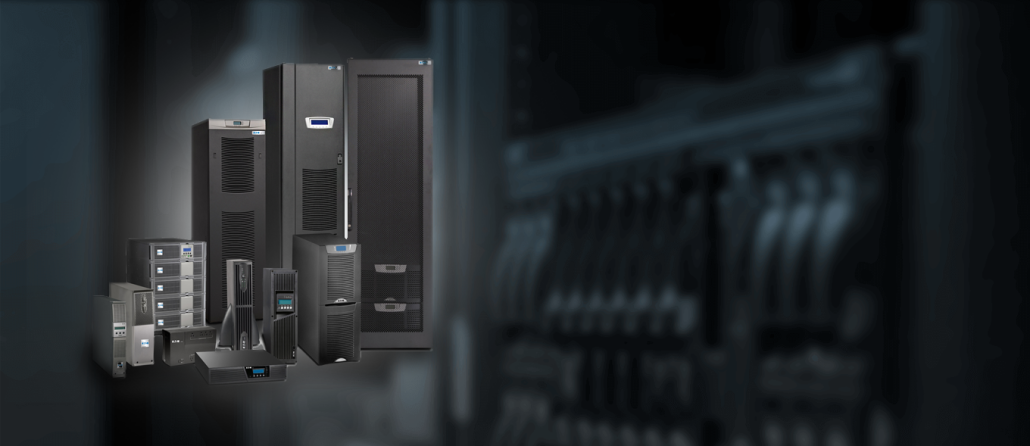
Online vs Line-Interactive UPS: Which Is Right for Your Application?
Selecting the right UPS topology is crucial for ensuring reliable power protection. After understanding your UPS application and the general principles of topology selection, the next step is deciding between Online (Double-Conversion) UPS and Line-Interactive UPS. The choice depends on load sensitivity, criticality, and the power environment.
Quick Comparison: Online vs Line-Interactive UPS
| Feature | Online (Double-Conversion) | Line-Interactive |
| Transfer Time | Zero | Few milliseconds |
| Power Conditioning | Complete isolation from utility disturbances | Voltage regulation (AVR), limited surge protection |
| Efficiency | Moderate | Higher under normal conditions |
| Typical Applications | Data centers, medical, industrial control, mission-critical loads | Small offices, light IT, non-critical equipment |
| Cost Implication | Higher initial cost | Lower initial cost |
Understanding Line-Interactive UPS
Line-Interactive UPS systems regulate voltage without switching to battery under minor disturbances, thanks to automatic voltage regulation (AVR). They provide moderate protection against sags, surges, and brownouts and are generally more energy-efficient than online UPS units.
Best suited for:
- Small office IT equipment
- Non-critical servers
- Security and surveillance systems
Advantages:
- Cost-effective for lower-risk applications
- Higher efficiency during normal operation
Limitations:
- Limited protection against severe power disturbances
- Not suitable for highly sensitive or mission-critical loads
Understanding Online (Double-Conversion) UPS
Online UPS systems continuously convert incoming AC power to DC and then back to AC, providing full isolation from utility power issues. This ensures zero transfer time during outages and the highest level of power conditioning.
Best suited for:
- Data centers and server rooms
- Hospitals and medical equipment
- Industrial automation and control systems
- Any mission-critical or sensitive load
Advantages:
- Provides the highest level of power quality
- Eliminates interruptions even during power failures
- Compatible with sensitive electronics
Limitations:
- Higher initial cost
- Slightly lower efficiency compared to line-interactive UPS
How to Decide Between Online and Line-Interactive UPS
Choosing the right UPS topology requires a structured, application-driven approach. Consider the following factors:
- Load Sensitivity: Critical servers, medical equipment, and industrial controls typically require online UPS to avoid downtime or equipment damage.
- Power Quality Requirements: If the utility power is unstable or prone to frequent disturbances, online UPS provides full isolation.
- Redundancy and Fault Tolerance: Online UPS architectures often offer modular or redundant configurations to eliminate single points of failure.
- Cost and Efficiency Considerations: For non-critical loads with stable power, line-interactive UPS units can reduce costs while providing sufficient protection.
Example scenarios:
- Data center → Online UPS
- Office IT → Line-Interactive UPS
- Industrial PLCs → Online or line-interactive depending on criticality
Common Mistakes in Topology Selection
- Choosing topology solely based on upfront cost rather than application requirements
- Ignoring load startup characteristics and power fluctuations
- Not planning for future growth or redundancy
- Confusing battery runtime with continuous power requirements
Avoiding these mistakes ensures long-term reliability and reduces the risk of unexpected downtime.
Recommended Next Step: Explore Suitable UPS Models
Once the appropriate topology is identified, the next step is selecting actual UPS systems that meet your requirements. A curated list of UPS products covering both Online and Line-Interactive topologies is available here:
Explore UPS models to match your application needs
This resource allows you to filter and compare models based on load capacity, runtime, and topology type, providing practical guidance for your decision.
Conclusion
Selecting between Online and Line-Interactive UPS systems is a decision that must be driven by the specific application. Both topologies have their value: Online UPS for highly sensitive, mission-critical environments, and Line-Interactive UPS for less critical, cost-conscious applications. By following an application-first approach:
- Analyze load and sensitivity
- Determine topology requirements
- Select compatible UPS products
you ensure maximum reliability, optimal performance, and efficient resource allocation.