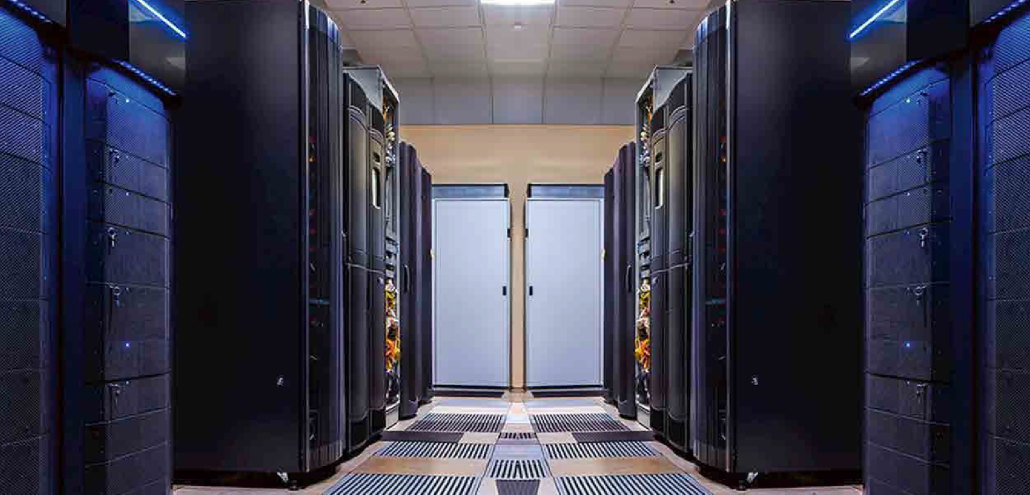
Industrial UPS Solution Hub
A Comprehensive Overview of Industrial-Grade UPS Systems for Mission-Critical Applications
Introduction: Why Industrial UPS Systems Require a Dedicated Solution Framework
Industrial environments place fundamentally different demands on power protection compared to commercial or office settings. Manufacturing plants, industrial data centers, utilities, and critical infrastructure facilities operate under conditions where power disturbances can result in production losses, safety incidents, or system-wide failures.
The Industrial UPS Solution Hub is designed to provide a structured, system-level overview of how industrial-grade uninterruptible power supply (UPS) systems are planned, specified, and deployed. Rather than focusing on individual products, this hub addresses industrial UPS solutions from an architectural, operational, and lifecycle perspective.
What Defines an Industrial UPS System?
Industrial UPS systems are engineered to support high-load, mission-critical applications under demanding electrical and environmental conditions. Key characteristics typically include:
- Medium to high power capacity (from tens of kVA to multi-megawatt systems)
- Continuous online power conditioning
- High fault tolerance and redundancy
- Compatibility with industrial power quality challenges
- Long service life with predictable maintenance cycles
Unlike commercial UPS deployments, industrial UPS systems are rarely standalone purchases. They are integrated into broader electrical and operational infrastructure.
Industrial UPS Application Scenarios
Industrial UPS solutions are deployed across a wide range of mission-critical environments, each with distinct operational priorities.
Manufacturing and Automated Production Facilities
UPS systems protect programmable logic controllers (PLCs), robotics, quality inspection systems, and industrial networks from voltage instability and unplanned outages that can disrupt production or damage equipment.
Industrial Data Centers and Edge Computing
Many industrial operations rely on on-site or edge data centers to support automation, monitoring, and analytics. In these environments, UPS systems must integrate seamlessly with generators, switchgear, and energy storage.
Utilities, Energy, and Process Industries
Power generation plants, substations, oil and gas facilities, and chemical processing sites depend on UPS systems to support control rooms, SCADA systems, and safety instrumentation during grid disturbances.
Transportation and Critical Infrastructure
Rail networks, ports, airports, and logistics hubs rely on industrial UPS systems to ensure continuity of signaling, communications, and automated control systems.
Core Industrial UPS Architectures and Topologies
Selecting the appropriate UPS architecture is a foundational decision in industrial power protection design.
Online Double-Conversion UPS
Online double-conversion topology is the most common choice for industrial applications due to its ability to isolate loads from grid disturbances and deliver consistent, high-quality power.
Modular vs Monolithic UPS Systems
- Modular UPS systems offer scalability, redundancy, and easier maintenance, making them suitable for facilities expecting load growth.
- Monolithic UPS systems are often used in stable-load environments where simplicity and lower initial complexity are prioritized.
The optimal architecture depends on load criticality, redundancy strategy, and long-term expansion plans.
Redundancy, Scalability, and System Resilience
Industrial UPS systems are designed with resilience as a core objective.
Common Redundancy Strategies
- N+1: Provides fault tolerance while optimizing cost and efficiency
- 2N: Offers maximum redundancy for safety-critical operations
- Parallel Systems: Enable capacity expansion and load sharing
Scalability is particularly important in industrial environments where production capacity, automation levels, or digital infrastructure may increase over time.
Battery Technologies in Industrial UPS Solutions
Battery systems play a decisive role in the reliability and total cost of ownership of industrial UPS deployments.
VRLA Batteries
Valve-regulated lead-acid batteries remain widely used due to established standards, lower upfront costs, and familiarity within industrial maintenance teams.
Lithium Battery Systems
Lithium-based UPS batteries are increasingly adopted in industrial environments where:
- High ambient temperatures are common
- Floor space is limited
- Long service life and reduced maintenance are prioritized
Battery selection should be based on lifecycle performance, environmental conditions, and operational strategy rather than initial cost alone.
Environmental and Power Quality Considerations
Industrial UPS systems must operate reliably under challenging conditions, including:
- Voltage fluctuations and harmonics
- Elevated ambient temperatures
- Dust, vibration, and humidity
- Inconsistent grid quality
Proper system design includes input conditioning, thermal management, and monitoring capabilities tailored to the site environment.
Compliance, Standards, and Safety Requirements
Industrial UPS solutions must comply with regional and application-specific standards, which may include:
- Electrical safety and performance standards (such as UL and IEC)
- Grid interconnection and power quality requirements
- Industry-specific safety regulations
Beyond certification, system reliability depends on proper factory acceptance testing (FAT), site acceptance testing (SAT), and commissioning processes.
Procurement and Lifecycle Management in Industrial UPS Projects
Industrial UPS solutions are typically sourced through project-based procurement rather than transactional purchasing.
Stakeholders in Industrial UPS Deployment
- UPS manufacturers
- System integrators
- Battery suppliers
- Electrical and EPC contractors
Coordination among these stakeholders is essential to ensure system compatibility, delivery reliability, and long-term support.
Lifecycle-Oriented Decision Making
Effective industrial UPS planning considers:
- Installation and commissioning requirements
- Maintenance and monitoring strategies
- Battery replacement cycles
- Future scalability and upgrades
Common Challenges in Industrial UPS System Design
Industrial organizations frequently encounter challenges such as:
- Undersized battery systems
- Limited allowance for future load growth
- Inadequate environmental protection
- Fragmented responsibility between UPS and battery suppliers
Addressing these risks requires a system-level approach rather than isolated equipment selection.
Using This Industrial UPS Solution Hub
This hub serves as a central reference point for organizations evaluating or managing industrial UPS systems. It is designed to connect high-level solution concepts with more detailed technical, procurement, and application-specific resources, including:
- Industrial UPS procurement strategies
- Battery selection and wholesale sourcing
- Architecture and topology comparisons
- Application-focused deep dives
As industrial power requirements continue to evolve, this hub will be updated to reflect emerging technologies, best practices, and real-world deployment considerations.
Final Perspective: Building Reliable Industrial Power Protection
Industrial UPS systems are not simply backup devices—they are integral components of resilient industrial infrastructure. By approaching UPS planning as a system-level, lifecycle-driven process, industrial organizations can achieve higher reliability, lower operational risk, and better long-term value.
The Industrial UPS Solution Hub is intended to support that approach by providing a structured framework for understanding, designing, and deploying industrial-grade UPS solutions at scale.