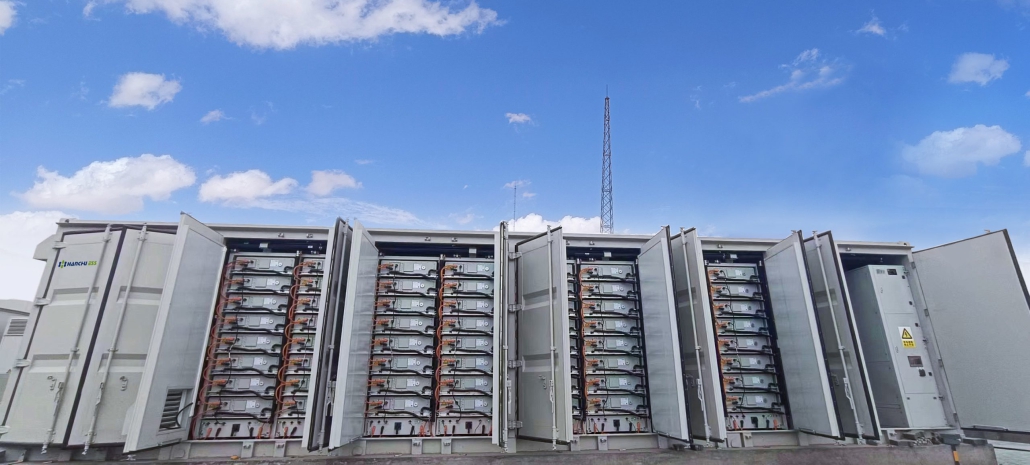
Commercial Solar Battery Storage Wholesale
How Businesses and EPCs Source Reliable Energy Storage Systems at Scale
Commercial solar projects are increasingly paired with battery storage—not as an optional add-on, but as a core asset for cost control, resilience, and energy optimization.
For EPCs, developers, and commercial asset owners, the challenge is no longer whether to deploy storage, but how to source commercial solar battery storage reliably at the wholesale level.
This guide focuses specifically on commercial and industrial (C&I) solar battery storage procurement, outlining system options, supplier evaluation criteria, and the practical considerations that determine long-term project success.
What Commercial Solar Battery Storage Wholesale Really Means
Commercial solar battery storage wholesale refers to bulk sourcing of lithium-based energy storage systems designed for C&I solar projects, typically ranging from tens of kilowatt-hours to multi-megawatt-hour deployments.
Unlike residential storage, commercial wholesale procurement emphasizes:
- System-level performance rather than individual battery specs
- Compatibility with commercial inverters and EMS platforms
- Long-term cycling reliability under daily operational loads
- Predictable degradation aligned with financial models
In short, wholesale commercial storage is about deploying bankable systems, not just purchasing batteries.
Why Commercial Solar Projects Choose Wholesale Battery Storage
Lower Total Cost of Ownership at Scale
For commercial solar projects, storage economics are evaluated over 10–20 years. Wholesale procurement enables:
- Reduced per-kWh system cost
- Optimized balance between usable capacity and degradation
- Predictable replacement and augmentation planning
A lower upfront price does not guarantee lower lifetime cost—especially in daily-cycling commercial environments.
Tailored System Design for Business Load Profiles
Commercial facilities rarely have flat or predictable demand. Wholesale sourcing allows systems to be designed around:
- Peak shaving and demand charge reduction
- Load shifting aligned with solar generation windows
- Backup power for critical operations
This flexibility is difficult to achieve with standardized off-the-shelf solutions.
Long-Term Supply and Support for Multi-Site Rollouts
For businesses deploying solar across multiple locations, wholesale sourcing ensures:
- Consistent system architecture
- Unified monitoring and maintenance processes
- Scalable support models across sites
This is particularly valuable for retail chains, logistics hubs, and industrial campuses.
Common Commercial Solar Battery Storage System Configurations
DC-Coupled vs. AC-Coupled Storage for C&I Solar
From a commercial project standpoint:
- DC-coupled systems are often favored in new solar installations where efficiency and PV utilization are priorities.
- AC-coupled systems are commonly used in retrofit projects or facilities with existing PV infrastructure.
The optimal choice depends on site conditions, inverter strategy, and operational priorities—not theoretical efficiency alone.
Typical System Form Factors in Commercial Projects
Commercial solar battery storage systems are usually deployed as:
- Rack-based indoor systems for controlled environments
- Outdoor cabinets for distributed or space-constrained sites
- Modular containerized systems for higher-capacity commercial facilities
Each configuration balances footprint, scalability, and installation complexity differently.
For a deeper architectural perspective, see:
https://leochlithium.us/bess-storage-system-explained-architecture-components-and-when-a-battery-energy-storage-system-makes-sense/
How to Evaluate a Commercial Solar Battery Storage Wholesale Supplier
System Engineering Capability Matters More Than Cell Specs
At the commercial level, performance depends on how the system is engineered—not just on battery chemistry. Buyers should assess:
- In-house BMS and system integration capability
- Compatibility with major commercial inverters and EMS platforms
- Proven experience designing systems for daily cycling
A supplier that understands solar applications reduces commissioning risk significantly.
Certification and Compliance for Commercial Deployment
Commercial solar storage systems must meet multiple regulatory requirements, including:
- Safety and performance certifications (UL, IEC)
- Transport compliance (UN38.3)
- Local grid and interconnection standards
Incomplete certification is a common cause of project delays and should be verified early in procurement.
Commercial Project Experience and References
Not all energy storage experience translates to commercial solar. Relevant indicators include:
- Deployed C&I solar + storage projects
- Familiarity with commercial load profiles
- Ability to support commissioning and post-installation monitoring
Experience in unrelated sectors alone is not sufficient.
Delivery Timelines, Warranty, and Long-Term Support
Commercial projects require predictable execution. Wholesale suppliers should clearly define:
- Production lead times aligned with construction schedules
- Warranty terms tied to usable capacity, not just nominal ratings
- Long-term support models, including remote diagnostics
Support quality often becomes most visible years after installation.
Procurement Risks Specific to Commercial Solar Battery Storage
Undersized or Overstated Capacity
Commercial systems must match real load behavior. Risks include:
- Systems sized for nameplate capacity rather than usable energy
- Degradation curves that erode peak-shaving benefits
- Insufficient thermal design for outdoor installations
These issues directly affect financial performance.
Integration Gaps Between Storage and Energy Management
Commercial value often depends on EMS-driven optimization. Poor integration can result in:
- Limited control over charge/discharge behavior
- Missed savings opportunities
- Operational complexity for facility managers
Clear responsibility for system integration is essential.
Short-Term Pricing That Ignores Long-Term Performance
Aggressive pricing can mask long-term risks such as:
- Accelerated degradation
- Reduced warranty coverage
- Limited post-installation support
For commercial projects, reliability is often more valuable than marginal upfront savings.
Who Commercial Solar Battery Storage Wholesale Is Best Suited For
Ideal Applications
Wholesale commercial solar battery storage is well-suited for:
- Office buildings and business parks
- Manufacturing and industrial facilities
- Warehouses, logistics centers, and cold storage
- Retail chains with predictable demand peaks
In these cases, storage directly improves operating economics.
When Wholesale Procurement May Not Be Necessary
Wholesale sourcing may be excessive for:
- Small commercial sites with limited load variability
- Pilot or demonstration projects
- Short-term backup-only applications
In such scenarios, standardized solutions may be sufficient.
How Commercial Solar Storage Fits Into Broader Energy Strategies
Commercial solar battery storage often complements:
- Demand-side energy management programs
- Grid-interactive storage initiatives
- Broader commercial and industrial energy storage strategies
For a wider view of storage beyond commercial solar, see:
https://leochlithium.us/large-scale-battery-energy-storage-systems-applications-architecture-and-grid-value/
You may also find context in the overarching wholesale perspective here:
https://leochlithium.us/wholesale-solar-battery-storage-how-large-scale-solar-projects-source-reliable-energy-storage-systems/
Final Takeaway: Commercial Solar Storage Is a System Investment
Commercial solar battery storage wholesale is not a commodity purchase—it is a long-term system investment.
Successful projects prioritize integration quality, lifecycle performance, and supplier reliability over headline pricing.
For EPCs and commercial asset owners, the right storage strategy delivers predictable savings, operational resilience, and scalable deployment across sites.