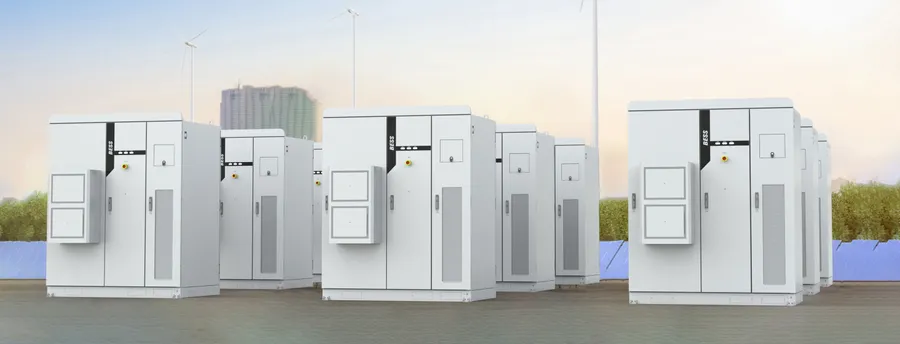
Commercial & Industrial Battery Energy Storage System Wholesale: Procurement Strategies for Enterprise-Scale Projects
Commercial and industrial (C&I) energy storage projects are increasingly adopting battery systems at scale to optimize energy costs, enhance operational reliability, and integrate renewable resources. Unlike residential storage solutions or utility-scale deployments, C&I wholesale projects involve procurement of full energy storage systems, often for multiple sites or high-capacity applications.
This article explores C&I battery storage wholesale, covering procurement models, supplier evaluation criteria, and long-term operational considerations. For a broader understanding of wholesale procurement across all project scales, see:
Battery Energy Storage System Wholesale: A Practical Guide for Large-Scale and Project-Based Procurement.
What Makes C&I Battery Storage Wholesale Different?
C&I battery storage wholesale differs from residential or utility-scale procurement in several key ways:
- Scale: Systems are designed for enterprise use, potentially across multiple facilities.
- Integration complexity: They must integrate with building management systems, industrial control systems, and corporate energy management platforms.
- Contractual scope: Projects involve long-term service agreements, performance guarantees, and often multi-vendor coordination.
While utility-scale wholesale focuses on grid compliance and megawatt-level performance, C&I wholesale is tailored to meet enterprise-specific operational and financial objectives.
Common Procurement Models for C&I Battery Storage
Turnkey Supplier Contracts
Turnkey arrangements assign a single supplier responsibility for design, engineering, installation, commissioning, and ongoing support. This simplifies project management, reduces risk, and ensures system integration aligns with enterprise objectives.
Modular / Multi-Vendor Approaches
Some projects adopt a modular approach, sourcing components or subsystems from multiple suppliers. This can allow phased deployment, risk distribution, and flexibility for site-specific requirements.
OEM Platforms vs Customized Systems
- OEM Platforms: Standardized solutions that simplify deployment across multiple sites and reduce engineering complexity.
- Customized Systems: Tailored designs to accommodate specific load profiles, facility constraints, or operational strategies.
Choosing between standard and customized solutions depends on site complexity, scalability requirements, and long-term operational goals.
Key Considerations in C&I Wholesale Procurement
System Integration and Technical Capability
A supplier must have expertise in integrating battery management systems (BMS), power conversion systems (PCS), and energy management systems (EMS). Proper integration ensures efficiency, reliability, and compatibility with enterprise energy systems.
Supplier Experience and Track Record
Evaluate suppliers based on past project experience, particularly with multi-site deployments and diverse load types. Verified performance data and operational references are critical.
Long-Term Support and Maintenance
Service level agreements (SLA), remote monitoring, and preventive maintenance plans are vital to maximize system uptime and lifecycle value.
Scalability and Future Expansion
Systems should be modular and expandable, allowing enterprises to increase capacity or deploy storage across additional sites without major redesigns.
Applications of C&I Battery Storage in Wholesale Projects
C&I battery storage enables enterprises to:
- Reduce peak demand charges and manage energy costs
- Provide backup power for critical infrastructure such as production lines, data centers, and hospitals
- Optimize energy consumption and integrate renewable generation
For guidance on selecting suppliers capable of delivering these solutions, see our previous article:
C&I Battery Storage Supplier
How Enterprises Evaluate Wholesale Suppliers
Enterprise decision-makers typically assess suppliers based on:
- Technical capability: System integration, controls, and performance optimization
- Delivery and installation capacity: Ability to meet project timelines across multiple sites
- Risk management: Reliability, warranty coverage, and SLA terms
- Financial stability: Ensures the supplier can support long-term projects without disruption
These evaluation criteria help mitigate risk and ensure the energy storage system aligns with enterprise goals.
C&I Wholesale vs Utility-Scale Wholesale
While utility-scale wholesale emphasizes grid integration, compliance, and large-scale energy dispatch, C&I wholesale focuses on enterprise-level objectives such as:
- Site-specific load management
- Energy cost optimization
- Multi-site deployment flexibility
- Operational reliability for critical functions
For a deeper look at utility-scale wholesale procurement, see:
Utility-Scale Battery Energy Storage System Wholesale
Final Thoughts: Strategic C&I Wholesale Procurement
Procurement of commercial & industrial battery energy storage systems at wholesale scale is a strategic decision that impacts operational efficiency, energy cost management, and renewable integration. Selecting the right suppliers, understanding procurement models, and planning for long-term service are key to project success.
For a comprehensive view of wholesale procurement across all project types, revisit the Battery Energy Storage System Wholesale Hub:
https://leochlithium.us/battery-energy-storage-system-wholesale-a-practical-guide-for-large-scale-and-project-based-procurement/