Business Intelligence Energy Management: How Smart Commercial Storage Systems Are Transforming Cost, Efficiency, and Operational Strategy
Smart energy is no longer just about installing solar panels, adding backup power, or monitoring utility bills. In today’s data-driven business environment, business intelligence (BI) energy management has emerged as a core pillar of how commercial facilities reduce costs, boost operational efficiency, and future-proof their energy strategy.
Facilities managers, sustainability teams, and operations leaders are increasingly adopting BI-driven processes to analyze consumption patterns, forecast demand, automate load balancing, and integrate advanced battery storage assets. And among all technologies entering this ecosystem, commercial energy storage systems—especially those designed for peak shaving, demand response, and real-time power optimization—now play a central role.
This article explores
- what BI-based energy management really means for modern businesses,
- how peak shaving fits into the framework,
- the additional functions intelligent battery storage systems deliver, and
- what facility operators should understand before integrating advanced solutions like outdoor air-cooled energy storage cabinets.
- What Is Business Intelligence Energy Management?
Business intelligence energy management refers to the application of data analytics, machine learning, automation, and real-time monitoring to optimize how a business consumes, stores, and pays for energy.
In traditional energy systems, businesses make decisions reactively—after receiving an electricity bill or after a power event occurs. BI-powered energy management flips the model by using:
- Real-time visibility into energy use
- Historical data pattern analysis
- Predictive analytics for load forecasting
- Automated optimization algorithms
- Integration with distributed energy resources (DERs) such as solar + storage
- Facility-wide orchestration of power flows
BI energy management typically relies on an EMS (Energy Management System) or BEMS (Building Energy Management System) with advanced analytics layers. But in the last five years, an increasing number of businesses are shifting toward AI-enhanced EMS, which integrates seamlessly with commercial battery systems to execute smarter and faster decisions.
- Peak Shaving: A Foundational Strategy in BI Energy Management
Peak shaving is one of the clearest examples of how data intelligence and energy storage work together. For most commercial facilities in the United States, demand charges make up a significant portion of the electricity bill—often 30% to 70% depending on the utility territory.
BI-driven peak shaving addresses this by:
- Analyzing historical load curves to identify the specific times of day when power spikes occur.
- Predicting future peaks based on weather, occupancy, production schedules, and equipment usage.
- Automatically dispatching stored energy to prevent the facility from crossing the threshold that triggers high demand charges.
This is where commercial battery systems become essential. Instead of passively reacting to energy consumption, BI management systems intelligently decide:
- When to charge the battery (e.g., during off-peak hours)
- When to discharge (e.g., during 3–5 p.m. load spikes)
- How much capacity to reserve for backup power
- How to integrate solar PV production into the load profile
Peak shaving alone can reduce a facility’s electricity costs by 10–40%, depending on rate structures and facility usage patterns.
But business intelligence energy management goes far beyond just peak shaving.
- Beyond Peak Shaving: Other BI-Driven Functions Enabled by Smart Commercial Energy Storage Systems
Modern commercial energy storage systems now serve as core intelligence assets, not just backup power sources. Below are the BI-friendly functions that matter most to businesses adopting digital energy strategies.
3.1 Load Shifting and Time-of-Use Optimization
When electricity rates vary throughout the day, BI analytics determine:
- Optimal times to store excess power
- Best discharge periods to avoid expensive peak pricing
- How to coordinate battery, solar, and grid power to minimize total cost
With time-of-use (TOU) rate structures becoming increasingly common across U.S. utilities, this BI capability is now one of the highest-value use cases for commercial facilities.
3.2 Solar Energy Smoothing and PV Self-Consumption
Solar generation is intermittent—cloud cover and weather conditions cause rapid fluctuations in power output. Intelligent BI-supported storage systems:
- Stabilize PV fluctuations
- Smooth erratic output to protect sensitive equipment
- Prioritize self-consumption when solar is abundant
This increases the ROI of renewable installations and reduces strain on the grid.
3.3 Backup Power and Outage Resilience
With the U.S. experiencing a rising number of outages driven by extreme weather, aging infrastructure, and grid congestion, BI-enabled storage systems ensure:
- Automatic switchover during outages
- Sufficient energy reserved for critical loads
- Real-time state-of-charge forecasts
- Smart allocation of stored power to maintain uptime
This moves beyond traditional generator-based backup strategies, giving facilities more control and higher resilience.
3.4 Automated Demand Response Participation
Several utilities offer incentives for businesses to reduce load when the grid is under stress. BI-enhanced commercial storage systems can:
- Integrate with OpenADR platforms
- Automatically reduce load when a DR event is called
- Dispatch stored energy to meet commitments
- Generate incentive revenue with minimal operator involvement
This transforms energy storage from a cost-center asset into a revenue-generating one.
3.5 Power Quality Optimization
Sensitive electronics, automation equipment, and production machinery depend on stable voltage and frequency. Intelligent storage systems can:
- Correct voltage sags and swells
- Deliver reactive power support
- Provide harmonic mitigation
BI analytics help determine when and how these services are deployed to protect operational continuity.
3.6 Facility-Wide Energy Transparency and Predictive Maintenance
Through BI dashboards and automated reporting, facility managers gain:
- Real-time load breakdowns
- Equipment-level energy insights
- Forecasted usage curves
- Alerts for unusual consumption
- Predictive maintenance indicators for batteries and high-load systems
This turns energy management from guesswork into decision-grade intelligence.
- Why Outdoor Air-Cooled Commercial Energy Storage Cabinets Matter in BI Energy Architectures
As BI energy management matures, hardware reliability and deployment flexibility become just as important as analytics. Many facilities need storage solutions that:
- Can be deployed outdoors
- Operate effectively in varied climates
- Offer modular capacity for multi-stage upgrades
- Have built-in EMS or can integrate easily with third-party BI platforms
- Deliver high safety standards and thermal stability
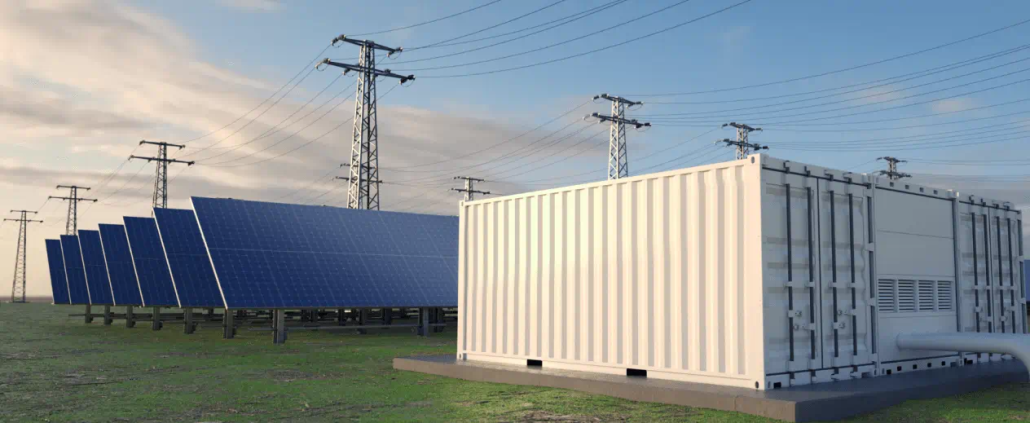
One example is the outdoor cabinet air-cooling energy storage system offered here:
👉 https://leochlithium.us/outdoor-cabinet-air-cooling-energy-storage-system/
Air-cooled outdoor cabinets are increasingly popular because they offer:
- Lower maintenance complexity
- Wider ambient temperature adaptability
- Suitable deployment for commercial rooftops, parking areas, and facility perimeters
- Faster installation capability
- Reduced interior facility modification requirements
For businesses shifting toward BI-powered energy strategies, these cabinets provide the physical foundation for intelligence-based optimization across peak shaving, resilience planning, TOU management, and automated demand response.
- Practical Steps for Businesses Moving Toward BI-Driven Energy Management
Businesses adopting BI energy management typically follow a structured maturity path:
Step 1: Establish Real-Time Energy Visibility
Integrate meters, submeters, and IoT sensors across the facility.
Step 2: Analyze Historical and Real-Time Data
Identify patterns such as seasonal loads, equipment inefficiencies, and daily peaks.
Step 3: Deploy Commercial Storage Systems
Install modular battery solutions capable of interacting with the EMS.
Step 4: Integrate BI and Predictive Algorithms
Use data models to forecast consumption and automate energy decisions.
Step 5: Add Revenue-Oriented Functions
Enable demand response, grid services, and ancillary support.
Step 6: Continuous Optimization
Leverage machine learning to improve decision-making over time.
This roadmap enables businesses to capture both immediate cost benefits and long-term resilience and sustainability gains.
- Which Types of Businesses Benefit Most From BI-Enabled Storage?
Nearly every commercial or industrial facility can benefit, but the impact is greatest for:
- Manufacturing plants with heavy machinery
- Cold storage and food processing facilities
- Big-box retail stores
- Data centers and telecommunications facilities
- Logistics hubs and distribution centers
- Office buildings with fluctuating occupancy
- Hospitality and entertainment venues
- Schools and universities with predictable load cycles
- Healthcare facilities prioritizing reliability
- Solar-rich sites seeking higher self-consumption
The combination of BI analytics and commercial energy storage reduces both operational uncertainty and energy-related inefficiencies across these sectors.
- The Strategic Value of BI-Driven Energy Management for U.S. Businesses
As U.S. utilities restructure rate models around demand charges, TOU pricing, and capacity constraints, BI-driven energy management is becoming a strategic differentiator.
Key long-term benefits include:
✔ Lower operational costs
✔ Reduced risk during outages
✔ Improved sustainability metrics and ESG reporting
✔ Deferred infrastructure upgrades
✔ Greater control over multi-faceted energy assets
✔ Automated participation in grid programs
✔ Enhanced lifespan and performance of backup systems
✔ Facility insights that support CAPEX and OPEX planning
✔ Integration readiness for future DER technologies
In short, BI energy management transforms commercial energy systems from reactive utilities into smarter, data-driven profit and resilience engines.
When energy storage is evaluated as part of a long-term operational or financial strategy, sourcing models play a critical role. For multi-site or high-capacity deployments, storage systems are commonly procured through wholesale, project-based frameworks rather than retail channels.
A detailed discussion on this procurement perspective is available in Battery Energy Storage System Wholesale: A Practical Guide for Large-Scale and Project-Based Procurement:
https://leochlithium.us/battery-energy-storage-system-wholesale-a-practical-guide-for-large-scale-and-project-based-procurement/
Conclusion
Business intelligence energy management is reshaping how commercial facilities operate, spend, and plan for the future of energy. While peak shaving remains a foundational strategy, modern BI-driven frameworks extend far beyond cost reduction—unlocking new advantages in uptime, automation, revenue generation, and long-term operational excellence.
Commercial battery storage systems, especially intelligent modular outdoor solutions, have become essential to this transformation. As U.S. power markets evolve and the grid becomes more dynamic, the businesses that embrace BI-powered energy management today will gain the flexibility, efficiency, and resilience required for tomorrow.
Recommended Reading
To explore deeper insights into commercial energy storage and BI-driven power strategies, here are two high-value articles from your library:
- Commercial Energy Storage Solutions: A Complete Guide for Businesses
https://leochlithium.us/commercial-energy-storage-solutions-a-complete-guide-for-businesses/ - BESS Battery: A Complete Guide for Industrial and Commercial Energy Storage Solutions
https://leochlithium.us/bess-battery-a-complete-guide-for-industrial-and-commercial-energy-storage-solutions/